
Why gate size is so important
The gate controls molten plastic flow into the mold.
Its size affects:
- pressure
- flow speed
- shear stress
- surface quality
Even small geometrical variations may change process behavior.
Gates that are too small
A gate that is too small increases:
- pressure loss
- material speed
- shear stress
This may create:
- burn marks
- material degradation
- unstable filling
- cosmetic defects
However, small gates often improve final aesthetics.
Gates that are too large
A gate that is too large reduces:
- pressure loss
- shear stress
- material speed
But it may create:
- longer cooling times
- visible gate marks
- cosmetic problems
The correct solution depends on the application.
Relationship between gate size and viscosity
Gate size also changes:
- apparent viscosity
- flow behavior
- pressure distribution
Different materials require different gate geometries.
Temperature also influences final results.
Mold flow simulation
Mold flow software allows engineers to simulate:
- pressure
- flow speed
- temperature
- material behavior
This helps optimize:
- gate size
- gate position
- process parameters
Simulation reduces mistakes and development time.
Integration with modern engineering
Modern molds integrate:
- hot runner systems
- hydraulic components
- core pulling systems
- automated movements
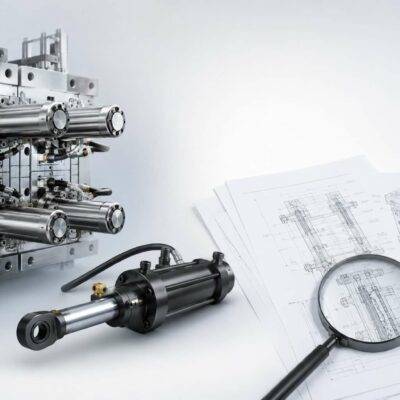
Platforms such as Vega Cylinders allow engineers to:
- configure hydraulic cylinders online
- download 3D CAD models
- verify compatibility
- accelerate engineering workflow
This improves engineering precision and development speed.
The future of gate engineering
In the future of injection molding:
- industrial AI
- advanced simulation
- automation
- real-time manufacturing
will become increasingly interconnected.
Companies capable of optimizing pressure and flow behavior will achieve higher quality and efficiency.