
What is laminar flow
In laminar flow, molten plastic moves in an organized way.
Material layers flow parallel to each other.
This behavior improves:
- flow stability
- pressure control
- surface quality
Laminar flow is the ideal condition in most injection molding applications.
What is turbulent flow
In turbulent flow, material moves irregularly.
This generates:
- vortices
- instability
- pressure variations
This may create:
- cosmetic defects
- burn marks
- unstable filling
- dimensional problems
How injection speed affects flow
Injection speed changes material behavior.
If speed becomes too high, laminar flow may become turbulent.
This increases:
- shear stress
- temperature
- process instability
Correct speed control is critical.
Importance of runner and gate geometry
Runners and gates directly influence flow behavior.
Sharp corners and sudden diameter changes increase turbulence.
Optimized geometries improve:
- uniformity
- stability
- final quality
Mold flow simulation
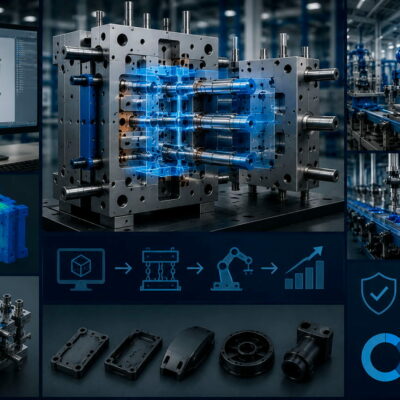
Mold flow software helps engineers simulate:
- flow speed
- pressure
- flow behavior
- thermal distribution
This allows optimization of:
- runners
- gates
- process parameters
Simulation reduces engineering mistakes and development time.
Integration with modern engineering
Modern molds integrate:
- hot runner systems
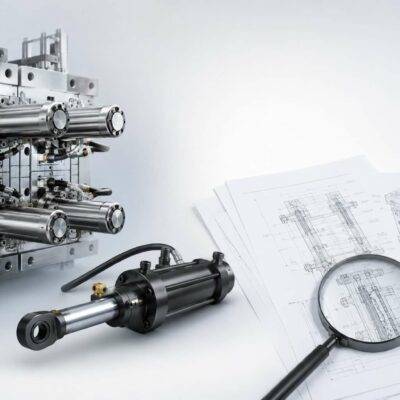
- hydraulic components
- core pulling systems
- mechanical movements
For this reason, parametric engineering and 3D CAD integration are becoming essential.
Platforms such as Vega Cylinders allow engineers to:
- configure hydraulic cylinders online
- download 3D CAD
- verify compatibility
- accelerate engineering workflow
This improves engineering precision and development speed.
The future of flow control
In the future of injection molding:
- industrial AI
- advanced simulation
- automation
- real-time manufacturing
will become increasingly interconnected.
Companies capable of controlling flow behavior will achieve higher quality and production efficiency.