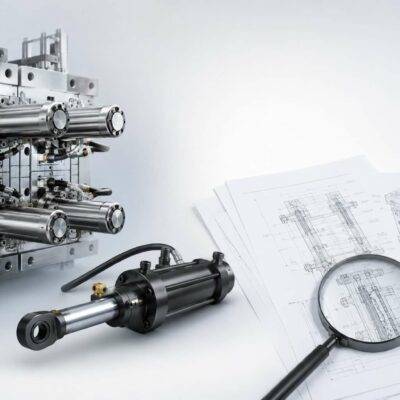

A Real Failure Analysis from a Die Casting Application
Hydraulic cylinders are generally regarded as extremely robust mechanical components. Designed to withstand millions of operating cycles under high pressures, they are often expected to tolerate harsh industrial environments with little maintenance.
Yet, in many cases, hydraulic cylinder failures are not caused by excessive pressure, poor seal design or manufacturing defects.
Instead, they originate from something far simpler.
A small dent on the piston rod.
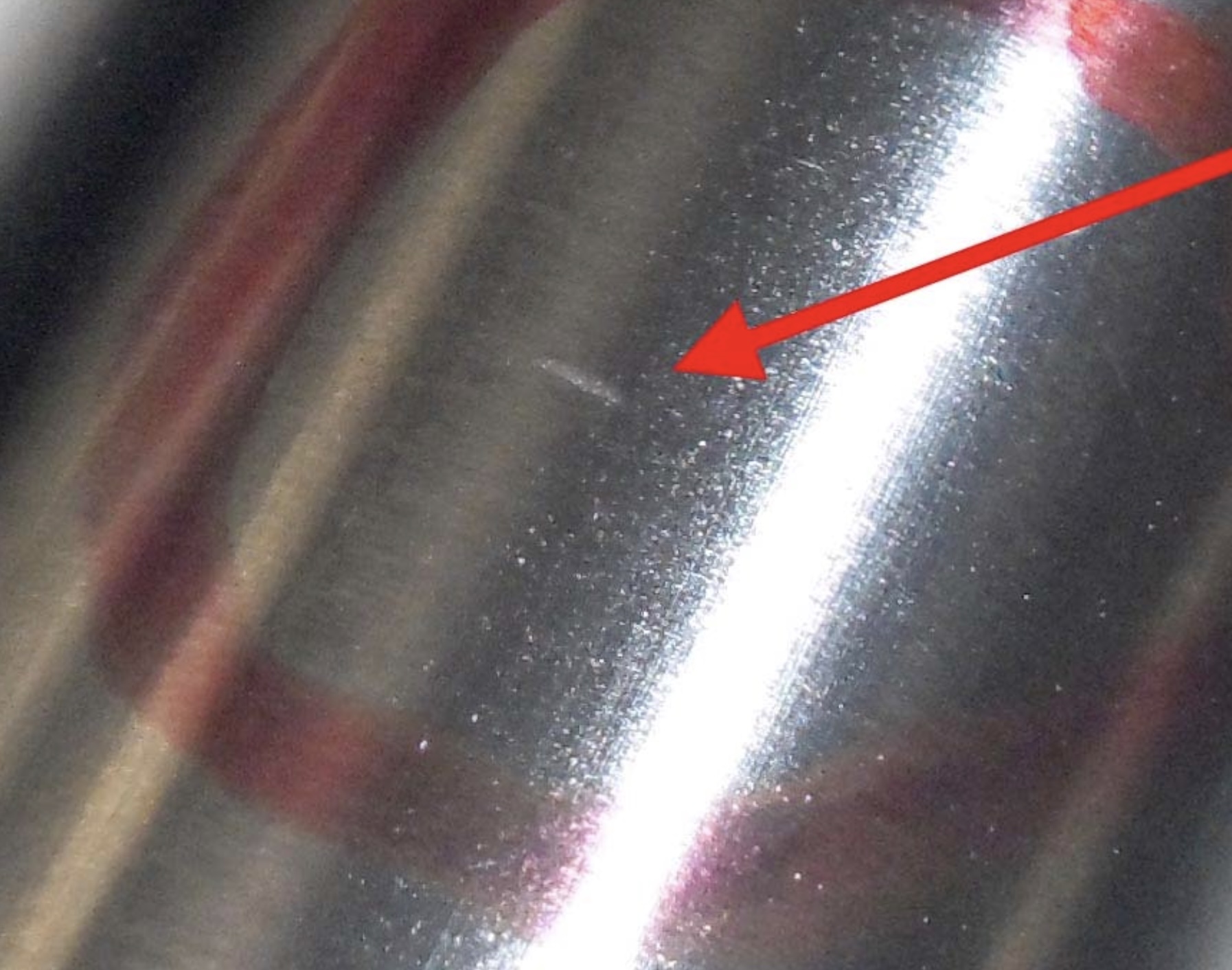
Dent Rod Scratch
To an inexperienced observer, a minor impact mark may appear to be only a cosmetic defect.
For a hydraulic engineer, however, it represents one of the most dangerous types of damage a cylinder can suffer.
Even a barely visible dent can permanently damage the sealing system, initiate oil leakage and eventually require complete rod replacement.
A real repair case submitted to the Vega Technical Department clearly demonstrates why protecting the piston rod is one of the most important aspects of hydraulic cylinder reliability.
The Customer’s Request
The customer initially returned several hydraulic cylinders for what appeared to be a relatively simple repair.
The original request concerned the reworking of the IN and OUT threaded hydraulic ports because of oil leakage.
During the inspection, however, Vega’s technicians discovered a second and far more significant problem.
Three cylinders presented mechanically damaged piston rods.
During the pressure tests, a slight presence of hydraulic oil was observed on the rod surface, indicating that the sealing system had already been affected.
After the technical inspection, Vega concluded that replacing the damaged rods was the only reliable solution.
The Technical Report
The subsequent inspection report identified the damage more precisely.
According to the analysis:
- three piston rods showed localized dents;
- the rods were manufactured from 42CrMo4 alloy steel;
- the surface was protected by 30–40 μm hard chrome plating;
- the dents most likely originated either from accidental impacts during mould maintenance or from inadequate packaging during transportation back to Vega.
The corrective action consisted of replacing all damaged rods together with the associated repair operations.
At first glance this decision may appear excessive.
Why replace an entire piston rod because of a few small dents?
The answer lies in understanding how hydraulic seals actually work.
The Rod Is Part of the Sealing System
Many people imagine that oil sealing is performed exclusively by the seal itself.
In reality, the sealing system consists of two components working together:
- the seal;
- the piston rod surface.
The sealing lip continuously slides on the rod during every operating cycle.
This means the rod is not merely a structural component.
It is an active sealing surface.
The Vega Technical Manual explains that the rod surface requires extremely tight manufacturing tolerances together with excellent surface finish and hardness.
Standard Vega rods are manufactured from alloy steel, hard chrome plated, ground and polished specifically to provide the smoothness and wear resistance required for reliable sealing.
Without this high-quality surface, even the best hydraulic seal cannot function correctly.
Why Hard Chrome Is Used
The repair report specifies that the damaged rods were manufactured from 42CrMo4 alloy steel and protected by a 30–40 μm hard chrome coating.
The Vega Technical Manual explains the engineering reasons behind this construction.
The alloy steel core provides the mechanical strength necessary to withstand tensile and compressive loads.
The hard chrome layer, which can reach approximately 67 HRC, provides:
- excellent wear resistance;
- very low surface roughness;
- high resistance against normal scratching;
- long seal life.
However, the manual also highlights an important limitation.
The chrome layer is not designed to withstand abuse or misuse.
It is intended to resist normal sliding wear—not impacts caused by tools, accidental collisions or improper handling.
This distinction is fundamental.
Hard chrome is extremely hard, but it is not indestructible.
Why a Small Dent Can Destroy a Seal
A hydraulic rod seal works by maintaining a very thin oil film between the elastomer and the polished rod surface.
When the rod surface is perfectly smooth, the seal lip slides uniformly while controlling the oil film thickness.
A dent changes this situation completely.
Instead of encountering a continuous polished surface, the seal suddenly meets a sharp discontinuity.
Each extension and retraction cycle forces the sealing lip over the damaged area.
The edge of the dent behaves almost like a microscopic cutting tool.
Initially, leakage may be almost imperceptible.
As the seal continues to wear, the leakage progressively increases until repair becomes unavoidable.
The Technical Manual states that once scoring or visible damage appears on a rod, it is an indication that operating conditions or mould design are no longer optimal, and that seal damage should also be expected.
This explains why the slight oil traces observed during testing were considered an important warning rather than a minor defect.
Was the Damage Caused by the Cylinder?
One of the most interesting aspects of this failure analysis is that the evidence does not suggest an internal design problem.
The inspection instead points toward external mechanical damage.
According to the technical report, the dents most likely resulted from:
- accidental impacts during mould maintenance;
- inadequate protection during transportation.
Both explanations are fully consistent with the recommendations contained in the Vega Technical Manual.
The manual explicitly states that no external force should ever be applied to the rod sliding surface, including gripping the rod with pliers or striking it with tools outside the designated wrench flats.
In other words, the technical documentation independently supports the conclusions reached during the repair investigation.
Small Damage, Large Consequences
Perhaps the most valuable lesson from this case is that hydraulic cylinder failures often begin long before significant oil leakage becomes visible.
A tiny impact mark may seem harmless immediately after it occurs.
Yet every operating cycle gradually transforms that minor defect into permanent seal damage.
By the time leakage becomes obvious, the rod surface has usually already compromised the entire sealing system.
This is precisely why experienced repair departments inspect piston rods so carefully, even when customers initially report completely different symptoms.
Suggested Internal Links (icvega.com)
- https://www.icvega.com/support/how-to-prevent-hydraulic-cylinder-oil-leaks
- https://www.icvega.com/support/common-hydraulic-cylinder-failures-and-how-to-prevent-them
- https://www.icvega.com/maintenance/hydraulic-cylinder-maintenance-complete-guide
- https://www.icvega.com/support/why-hydraulic-cylinder-seals-fail
- https://www.icvega.com/materials/42crmo4-steel-for-hydraulic-cylinder-rods
- https://www.icvega.com/materials/hard-chrome-plating-for-hydraulic-cylinder-rods
- https://www.icvega.com/support/how-to-transport-hydraulic-cylinders-safely