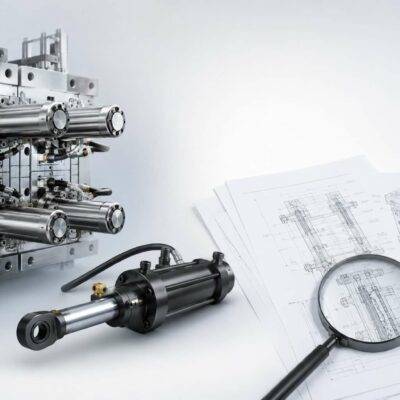

The Real Causes of Oil Leakage in Hydraulic Cylinders
Hydraulic cylinder oil leakage is one of the most common problems encountered in injection moulds, die-casting equipment and industrial automation systems.
When oil appears around the piston rod, the immediate assumption is often that the operating temperature is too high and that the sealing material has deteriorated.
Although excessive temperature can shorten seal life, it is rarely the primary cause of premature seal failure.
In many applications, the real problem is mechanical rather than thermal.
Cylinder misalignment, side loading, rod scoring and incorrect installation frequently damage the sealing system long before temperature becomes a limiting factor. Misalignment is widely recognised as one of the leading causes of premature hydraulic cylinder seal wear because it introduces continuous side loads on the rod and guide system.
A real engineering case analysed by the Vega Technical Department clearly demonstrates this principle.
A customer believed that the hydraulic cylinder seals were failing because the cylinder body reached approximately 60°C during operation. After analysing the application, the engineering team concluded that this temperature was perfectly acceptable for the standard sealing system and suspected that the real cause of the leakage was a possible misalignment between the cylinder and the moving slide, capable of scoring the piston rod.
The Customer’s Concern
The customer explained that:
- the hydraulic oil entered the cylinder at approximately 40–45°C;
- continuous high-speed cycling increased the cylinder body temperature to approximately 60°C;
- the cylinder performed very little mechanical work;
- the concern was that the seals might not withstand this operating temperature.
This is a common assumption in hydraulic maintenance.
However, operating temperature alone rarely provides enough information to diagnose seal failure correctly.
Is 60°C Too Hot for Hydraulic Cylinder Seals?
The answer is simple:
No.
The Vega Technical Department confirmed that an operating temperature of 60°C is fully compatible with the standard sealing system.
Before considering special seals, the engineers requested additional information, including:
- whether the temperature was reached only after several hours of continuous operation;
- the actual working pressure;
- the condition of the piston rod surface.
These questions illustrate an important engineering principle:
Temperature must always be evaluated together with the operating conditions.
The Real Suspect: Cylinder Misalignment
Rather than blaming temperature, the Vega Technical Department proposed another possible explanation.
A misalignment between the hydraulic cylinder and the moving slide could generate side loading on the piston rod.
Under these conditions:
- the rod no longer moves perfectly along its axis;
- guide rings become unevenly loaded;
- seals are compressed asymmetrically;
- the rod surface may develop scratches or scoring;
- oil leakage appears long before the seals reach their thermal limits.
This diagnosis reflects what is commonly observed in industrial hydraulic systems, where misalignment often causes seal wear even when operating temperatures remain well within specification.
Why a Scratched Rod Destroys Seals
Hydraulic seals are designed to run on a perfectly smooth and hard piston rod.
Even very small scratches can act like cutting tools.
Every stroke causes the damaged surface to:
- abrade the sealing lip;
- remove lubrication film;
- trap contamination;
- accelerate wear;
- create external oil leakage.
Replacing the seals without repairing or replacing the damaged rod usually results in the same failure occurring again.
Temperature Limits Are Often Misunderstood
Another important point emerged during the engineering discussion.
Many users believe that seal material determines the maximum operating temperature of the hydraulic cylinder.
In reality, this is not always true.
The Vega Technical Department explained that:
- the standard seals and O-rings are already suitable for temperatures between 180°C and 200°C;
- the 140°C limitation of the standard cylinder configuration is actually determined by the polyester guide rings;
- applications requiring higher temperatures can use PTFE guide rings, which withstand temperatures above 200°C, although they have lower compressive strength and therefore require excellent alignment without significant radial loads.
This distinction is frequently overlooked during hydraulic cylinder specification.
Why Guide Rings Matter
Guide rings are often less visible than seals, but they perform an equally important function.
Their role is to:
- maintain rod alignment;
- absorb radial loads;
- prevent metal-to-metal contact;
- protect the sealing system.
If guide rings wear excessively or are overloaded by misalignment, the seals are forced to compensate for loads they were never designed to withstand.
Seal failure is therefore often the consequence rather than the original cause of the problem.
How to Diagnose Seal Leakage Correctly
Whenever external leakage appears around the piston rod, engineers should investigate the complete hydraulic system rather than replacing the seal kit immediately.
A systematic inspection should include:
- piston rod surface condition;
- cylinder alignment;
- guide ring wear;
- operating pressure;
- oil contamination;
- operating temperature;
- mounting geometry;
- radial loads acting on the cylinder.
Only after evaluating all these factors can the true cause of the leakage be identified.
Common Misconceptions About Hydraulic Seal Failures
Several myths continue to influence maintenance decisions.
Myth: Oil leakage always means the seals are defective.
Reality: Seals are often the first visible component to fail rather than the original cause of the problem.
Myth: Temperatures around 60°C require special high-temperature seals.
Reality: Standard hydraulic sealing systems generally operate safely at this temperature.
Myth: Installing new seals permanently solves oil leakage.
Reality: If misalignment, rod damage or guide ring wear remain unchanged, leakage usually returns.
Engineering Lessons Learned
This engineering case demonstrates several important principles:
- 60°C is not normally a critical temperature for standard hydraulic seals;
- operating conditions are more important than temperature alone;
- misalignment frequently causes premature seal failure;
- scratched piston rods rapidly destroy new seals;
- guide rings often determine the thermal limits of the cylinder rather than the sealing material itself.
Conclusions
Premature hydraulic cylinder seal failure is rarely caused by temperature alone.
In this engineering investigation, the Vega Technical Department confirmed that an operating temperature of 60°C was well within the capabilities of the standard sealing system and instead directed the investigation towards possible cylinder misalignment, piston rod scoring and operating pressure.
The engineers also clarified that the standard seals are suitable for temperatures up to approximately 180–200°C, while the standard cylinder’s thermal limitation is determined primarily by the polyester guide rings. Applications requiring even higher temperatures may use PTFE guide rings, provided that cylinder alignment is excellent and radial loads are minimised.
The most effective way to prevent repeated oil leakage is not simply replacing seals, but identifying and eliminating the mechanical conditions that caused the seals to fail in the first place.
Further Technical Reading
For more hydraulic cylinder troubleshooting and design guidance, explore these related articles from the Vega Technical Blog:
- How to Calculate the Correct Hydraulic Cylinder Size for Injection Molds
https://www.icvega.com/support/how-to-calculate-the-correct-hydraulic-cylinder-size-for-injection-molds - Hydraulic Cylinder Misalignment: The Hidden Cause of Broken Rods
https://www.icvega.com/support/hydraulic-cylinder-misalignment-the-hidden-cause-of-broken-rods - Why Hydraulic Cylinder Rods Break: The Most Common Engineering Causes
https://www.icvega.com/support/why-hydraulic-cylinder-rods-break-the-most-common-engineering-causes - How Long Do Hydraulic Cylinder Seals Last? Factors That Determine Seal Life
https://www.icvega.com/support/hydraulic-cylinder-seal-life - Hydraulic Cylinder Internal Leakage: Causes, Diagnosis and Solutions
https://www.icvega.com/support/hydraulic-cylinder-internal-leakage-causes-diagnosis-and-solutions