
Why Two Identical Hydraulic Cylinders May Not Move at Exactly the Same Speed
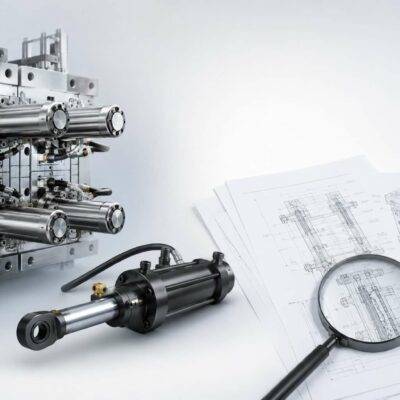
When two hydraulic cylinders are installed on the same injection mold, designers generally expect them to move at exactly the same speed.
After all, if the cylinders have the same bore, stroke, seals and operating pressure, their movement should be perfectly synchronized.
In practice, however, this is not always the case.
Even two hydraulic cylinders manufactured to the same design can exhibit small differences in operating speed.
The important question for engineers is not whether small differences exist.
The important question is whether those differences remain within normal manufacturing tolerances or indicate a problem elsewhere in the hydraulic system.
A real engineering case handled by the Vega Technical Department clearly illustrates this distinction and shows why engineers should investigate the complete hydraulic circuit before assuming that one cylinder is defective.
The Customer’s Concern
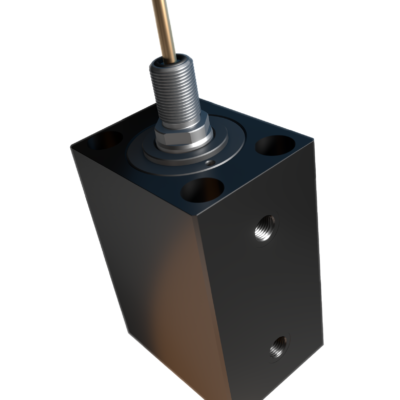
A customer operating an injection mold reported that two identical CM040COFG080MFA hydraulic cylinders, designed to move simultaneously, were not operating at the same speed.
During the investigation, the customer measured the oil flow passages and found that the diameters of the hydraulic orifices differed by approximately 30%.
The slower cylinder was then modified by machining one of the passages in an attempt to improve synchronization.
At first glance, it appeared that the difference in orifice size was the cause of the problem.
However, the engineering analysis followed a much broader approach.
Identical Cylinders Are Never Absolutely Identical
The first observation made by the Vega Technical Department is one that every hydraulic engineer should understand.
Although hydraulic cylinders are manufactured according to the same technical drawings, no two cylinders are absolutely identical.
The engineers explained that small manufacturing tolerances always exist.
The same applies to sealing elements and guide rings.
For this reason, two cylinders may naturally exhibit slight differences in movement speed, even when both comply fully with production specifications.
This is not a manufacturing defect.
It is a normal consequence of precision manufacturing tolerances.
Small Speed Differences Are Usually Negligible
One of the most important points raised by the Vega Technical Department is that these normal manufacturing variations should produce only very small differences in operating speed.
Under normal conditions, such differences are practically insignificant and do not affect mold performance.
This observation provides engineers with an important diagnostic criterion.
If two hydraulic cylinders operate with only a slight difference in speed, the behaviour may simply reflect normal manufacturing tolerances.
If the speed difference becomes clearly visible, the investigation should continue beyond the cylinders themselves.
Manufacturing Tolerances Affect More Than Metal Components
When engineers think about manufacturing tolerances, they often focus only on machined metal parts.
The Vega Technical Department highlighted another important aspect.
Not only cylinder components, but also seals and guide rings may present small dimensional variations resulting from their own manufacturing processes.
These variations influence:
- friction forces;
- breakaway force;
- running resistance;
- overall movement characteristics.
Although these effects are normally very small, they explain why perfect synchronization cannot always be expected.
Perfect Synchronization Requires More Than Identical Cylinders
This engineering case demonstrates an important principle frequently misunderstood in hydraulic design.
Installing two identical hydraulic cylinders does not automatically guarantee perfectly synchronized movement.
Synchronization depends on many factors, including:
- manufacturing tolerances;
- seal friction;
- guide ring characteristics;
- hydraulic circuit design;
- oil flow distribution;
- machine operating conditions.
The hydraulic cylinder represents only one part of the complete system.
Engineering Begins by Eliminating the Most Obvious Causes
Another remarkable aspect of this case is the diagnostic method used by the Vega Technical Department.
Rather than immediately concluding that one cylinder was defective, the engineers first explained the normal influence of manufacturing tolerances.
Only after establishing that these differences should be negligible did they begin considering other possible causes of the synchronization problem.
This systematic approach prevents incorrect conclusions and unnecessary replacement of perfectly functional hydraulic cylinders.
Good Engineering Distinguishes Between Normal Variation and Real Problems
Every manufactured component exhibits some degree of dimensional variation.
Professional engineering does not attempt to eliminate these unavoidable tolerances.
Instead, engineers determine whether the observed behaviour remains within acceptable limits or indicates a more significant issue requiring further investigation.
This distinction is fundamental when diagnosing synchronization problems in hydraulic systems.
Why the Hydraulic Circuit Is Often the Real Cause of Synchronization Problems
In Part 1, we saw that two hydraulic cylinders manufactured to the same design are never perfectly identical.
Small manufacturing tolerances affecting machined components, seals and guide rings may produce very slight differences in operating speed, but these differences are normally negligible and should not affect the performance of the injection mold.
The real engineering challenge begins when the difference in speed becomes clearly noticeable.
According to the Vega Technical Department, in such cases the hydraulic cylinders themselves may not be the primary cause of the problem.
The Hydraulic Circuit Must Be Investigated First
After explaining the influence of manufacturing tolerances, the Vega Technical Department immediately shifted its attention to another possible cause.
The engineers stated that if the difference in movement speed was significant, the most likely cause was an unbalanced hydraulic circuit rather than a defect in one of the cylinders.
This is an important engineering principle.
Hydraulic cylinders respond to the oil flow they receive.
If the hydraulic circuit supplies different flow rates to each cylinder, their movement will inevitably become unsynchronized, even if the cylinders are mechanically identical.
Hydraulic Passage Length and Diameter Affect Oil Flow
The Vega Technical Department explained that differences in the hydraulic passages machined inside the supply plate could create an imbalance in oil distribution.
Among the possible causes identified were:
- different hydraulic passage lengths;
- different passage diameters;
- unequal pressure losses inside the manifold.
Even relatively small variations in these parameters may alter the oil flow reaching each cylinder.
As a consequence, one cylinder may begin moving earlier or travel faster than the other.
This demonstrates that synchronization depends on the entire hydraulic system—not only on the cylinders.
Mold Design Can Limit Corrective Actions
Another valuable lesson from this engineering case concerns the design of the mold itself.
The Vega Technical Department observed that, because of the way the hydraulic circuit had been designed, individual flow control valves could not be installed for each cylinder.
This meant that, once the mold had been manufactured, correcting the imbalance became extremely difficult.
The case illustrates why hydraulic balancing should be considered during the initial design phase rather than after production has already begun.
Good hydraulic circuit design reduces the need for corrective modifications later.
Contamination May Also Affect Cylinder Performance
The engineering analysis identified another possible cause that is often overlooked.
The Vega Technical Department suggested that metallic particles remaining inside the hydraulic passages after machining could have entered the hydraulic circuit.
These particles might have damaged the seals of the slower hydraulic cylinder, increasing friction and reducing its movement speed.
Although this was presented as a possible hypothesis rather than a confirmed diagnosis, it highlights the importance of hydraulic cleanliness during mold manufacturing.
Even small metallic particles can influence long-term hydraulic performance.
Why Both Cylinders Should Be Analysed
Rather than identifying one cylinder as defective, the Vega Technical Department proposed that both cylinders be returned for inspection.
This recommendation reflects a systematic engineering approach.
When two cylinders operate together, analysing only the slower unit may not reveal the true cause of the problem.
Comparing both cylinders allows engineers to evaluate:
- seal condition;
- guide ring wear;
- internal damage;
- manufacturing condition;
- possible contamination.
Only after examining both components can a reliable technical conclusion be reached.
Synchronization Is a System Characteristic
One of the most valuable lessons from this case is that synchronization is not a property of the hydraulic cylinder alone.
It is a characteristic of the complete hydraulic system.
Reliable synchronization depends on:
- identical hydraulic flow paths;
- balanced pressure losses;
- clean hydraulic circuits;
- correctly manufactured manifolds;
- properly functioning hydraulic cylinders.
Focusing exclusively on one component often leads to incorrect conclusions and unnecessary replacement costs.
Professional Engineering Begins with Root Cause Analysis
This engineering case demonstrates the diagnostic methodology followed by the Vega Technical Department.
Rather than immediately replacing the slower cylinder, the engineers:
- evaluated normal manufacturing tolerances;
- analysed the hydraulic circuit design;
- considered possible contamination;
- requested both cylinders for inspection before reaching a final conclusion.
This structured approach prevents unnecessary repairs and ensures that corrective actions address the real source of the problem rather than its symptoms.
Conclusion
This real engineering case demonstrates that noticeable differences in movement speed between two identical hydraulic cylinders are rarely caused by normal manufacturing tolerances alone.
The Vega Technical Department explained that while small dimensional differences between cylinders, seals and guide rings may create negligible speed variations, significant synchronization problems are far more likely to originate from an unbalanced hydraulic circuit, unequal hydraulic passages or contamination inside the system. For this reason, the engineers recommended analysing both cylinders before identifying the true cause of the malfunction.
This case reinforces one of the most important principles of hydraulic engineering:
Hydraulic cylinder synchronization depends on the entire hydraulic system. Before replacing a cylinder, engineers should always analyse the hydraulic circuit, oil flow distribution and possible contamination to identify the real cause of the problem.
Related Articles (Verified URLs on icvega.com)
- Hydraulic Cylinder Maintenance
https://www.icvega.com/maintenance/hydraulic-cylinder-maintenance - How to Find the Right Vega Cylinder or Accessory
https://www.icvega.com/choosing/find-right-vega-cylinder-accessory - Choosing the Right Cylinder: Stroke Selection
https://www.icvega.com/choosing/choosing-the-right-cylinder-for-your-mold-stroke - Choosing the Right Cylinder: Pushing Force
https://www.icvega.com/choosing/choosing-the-right-cylinder-for-your-mold-pushing-force