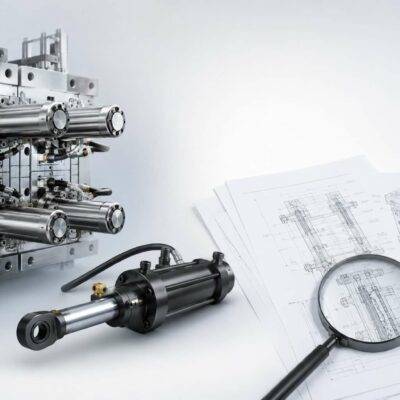

Why Replacing a Hydraulic Cylinder Is Not Always the Best Solution
When a hydraulic cylinder is damaged, the first question maintenance engineers usually ask is simple:
Should we repair it or replace it?
Many people assume that repairing a cylinder is always the most economical solution.
Others believe that purchasing a new cylinder is always the safest option.
In reality, professional engineering rarely follows such simple rules.
Every damaged hydraulic cylinder should first be evaluated from three different perspectives:
- the technical feasibility of the repair;
- the total repair cost;
- the impact of machine downtime.
A real engineering case handled by the Vega Technical Department demonstrates how these factors must all be considered before deciding whether to repair or replace a damaged hydraulic cylinder.
The Customer’s Emergency
A distributor informed the Vega Technical Department that one of its customers had accidentally damaged a V450CM hydraulic cylinder.
The situation was particularly critical because the mold was required to produce customer samples within the following two days.
For this reason, the distributor requested the fastest possible repair and asked whether the cylinder could be repaired immediately and shipped directly to the customer’s factory by express delivery.
This situation is common in the injection molding industry.
When production stops, every hour of downtime can have significant financial consequences.
Looking Beyond the Visible Damage
Rather than immediately approving the repair, the Vega Technical Department first evaluated the photographs of the damaged hydraulic cylinder.
After reviewing the available information, the engineers reached an important conclusion.
Although they understood the nature of the damage, they explained that the cylinder appeared to be in very poor condition and that repairing it could be very expensive and might not be economically worthwhile.
This demonstrates an important engineering principle.
The objective is not simply to repair damaged components.
The objective is to identify the solution that provides the best balance between cost, reliability and delivery time.
Repair Cost Is Only One Part of the Decision
Many maintenance departments compare only two numbers:
- repair cost;
- purchase price of a new cylinder.
Professional engineering considers many additional factors.
These include:
- machining operations required;
- availability of replacement parts;
- inspection time;
- assembly and testing;
- production downtime;
- shipping time;
- future reliability after repair.
A repair that initially appears less expensive may ultimately cost much more if it significantly delays production.
Sometimes Manufacturing a New Cylinder Is Faster
After checking the warehouse, the Vega Technical Department discovered that no finished cylinder body was immediately available.
Manufacturing a fully finished replacement cylinder would require approximately two additional days because machining and surface treatment still had to be completed.
However, the engineers proposed an alternative.
To reduce delivery time, they could manufacture and ship a new cylinder without the phosphating treatment, allowing shipment one day earlier.
This illustrates another important engineering concept.
The fastest solution is not always the repair.
Sometimes manufacturing a simplified replacement component provides the shortest overall lead time.
Delivery Time Can Be More Important Than Repair Cost
The customer’s highest priority was not minimising costs.
The priority was restarting production as quickly as possible.
Missing the customer’s sample deadline could have created far greater losses than the cost difference between repairing and replacing the cylinder.
For this reason, delivery time became one of the most important engineering parameters in the decision-making process.
The best technical solution is often the one that minimises total production losses rather than the one with the lowest purchase cost.
Engineering Means Evaluating Alternatives
One of the strongest aspects of this case is the methodology used by the Vega Technical Department.
Instead of automatically recommending either repair or replacement, the engineers evaluated multiple alternatives.
They considered:
- repairing the damaged cylinder;
- manufacturing a completely new cylinder;
- reducing manufacturing time by omitting the phosphating treatment;
- express shipment directly to the customer’s factory.
Each option was analysed according to technical feasibility, production lead time and customer urgency.
This structured approach enables engineers to select the solution that creates the greatest overall value.
Good Engineering Balances Cost, Time and Reliability
This engineering case demonstrates that successful maintenance decisions require balancing several competing factors.
An inexpensive repair may create unacceptable production delays.
A more expensive replacement may significantly reduce downtime.
A simplified manufacturing process may allow immediate shipment without compromising the cylinder’s functionality for the customer’s urgent application.
Professional engineering therefore evaluates the complete business impact rather than focusing only on the damaged component.
Balancing Cost, Downtime and Reliability
In Part 1, we saw that deciding whether to repair or replace a damaged hydraulic cylinder is not simply a maintenance decision.
It is an engineering decision that must consider technical feasibility, repair cost, production downtime and delivery time.
The real case handled by the Vega Technical Department demonstrates how these factors must be evaluated together before recommending the most appropriate solution.
A Repair Is Not Always the Most Economical Option
Many companies automatically assume that repairing a damaged hydraulic cylinder is less expensive than purchasing a new one.
However, experienced engineers know that this is not always true.
A repair may require:
- complete disassembly;
- inspection of all components;
- machining of damaged parts;
- replacement of seals and wear components;
- reassembly;
- pressure testing;
- shipping back to the customer.
When the damage is extensive, the total repair cost may approach—or even exceed—the cost of manufacturing a new hydraulic cylinder.
After reviewing the photographs, the Vega Technical Department concluded that the cylinder was in poor condition and warned that the repair could be very expensive and might not be economically worthwhile.
Downtime Often Costs More Than the Cylinder
One of the most important lessons from this engineering case is that the cost of the hydraulic cylinder is often only a small part of the total economic impact.
When an injection mold stops producing, the customer may experience:
- missed production deadlines;
- delayed sample approval;
- idle operators;
- reduced machine utilisation;
- contractual penalties;
- dissatisfied customers.
In this case, the distributor explained that the customer needed to deliver molded samples within two days, making production continuity the highest priority.
For this reason, reducing downtime became more important than minimising the purchase price of the cylinder.
Manufacturing a New Cylinder Can Be the Fastest Solution
After checking the warehouse, the Vega Technical Department found that no finished cylinder body was immediately available.
Producing a standard replacement would normally require approximately two additional days because machining and phosphating still had to be completed.
Instead of accepting this delay, the engineers proposed manufacturing and shipping a new hydraulic cylinder without the phosphating treatment, allowing the customer to receive the replacement much sooner.
This demonstrates an important engineering principle.
Sometimes modifying the manufacturing process—not the product design—is the fastest way to restore production.
Engineering Means Evaluating Every Available Option
One of the strengths of the Vega Technical Department is the structured way in which alternatives were evaluated.
Rather than recommending a single solution immediately, the engineers considered several possibilities:
- repairing the damaged cylinder if economically justified;
- manufacturing a completely new cylinder;
- reducing production time by temporarily omitting the phosphating treatment;
- shipping directly to the customer’s factory by express service.
Each option was analysed according to:
- technical feasibility;
- manufacturing time;
- customer urgency;
- overall economic impact.
This systematic approach enables better engineering decisions than simply comparing product prices.
Fast Decisions Require Good Communication
Another valuable lesson from this case is the importance of communication between the distributor, the customer and the manufacturer.
Throughout the correspondence, the urgency of the situation was clearly communicated.
The distributor immediately informed Vega that production was stopped and that rapid delivery was essential.
The Vega Technical Department responded quickly, evaluated the available alternatives and kept the customer informed about manufacturing possibilities and expected delivery times.
Efficient technical communication often reduces downtime as much as technical expertise itself.
Surface Treatments Can Sometimes Be Deferred
An interesting engineering decision in this case involved the phosphating treatment.
Normally, phosphating is part of the standard manufacturing process.
However, because delivery speed had become the customer’s highest priority, the Vega Technical Department proposed shipping the cylinder without phosphating to save valuable production time.
This does not mean that surface treatments are unimportant.
Rather, it illustrates that engineering decisions should always reflect the customer’s operational priorities.
When production is stopped, restoring machine operation may temporarily take precedence over cosmetic or secondary manufacturing processes.
Engineering Is About Creating Value, Not Simply Selling Products
One of the strongest messages contained in this correspondence is that the Vega Technical Department did not automatically recommend either repair or replacement.
Instead, the engineers analysed which solution would provide the greatest overall benefit for the customer.
The objective was not to sell another cylinder.
The objective was to restore production as quickly, reliably and economically as possible.
This customer-oriented engineering approach strengthens long-term technical partnerships and helps reduce the total cost of ownership.
Conclusion
This real engineering case demonstrates that deciding whether to repair or replace a hydraulic cylinder requires much more than comparing repair costs with the price of a new component.
The Vega Technical Department evaluated the extent of the damage, manufacturing lead times, warehouse availability, customer urgency and production deadlines before recommending the most appropriate solution. When necessary, the engineers even proposed manufacturing a new cylinder without phosphating treatment to reduce delivery time and minimise production downtime.
This case reinforces one of the most important principles of industrial maintenance:
The best engineering decision is not always the least expensive repair or the fastest replacement. It is the solution that provides the optimal balance between technical reliability, production continuity, delivery time and overall cost.
Related Articles (Verified URLs on icvega.com)
- Hydraulic Cylinder Maintenance
https://www.icvega.com/maintenance/hydraulic-cylinder-maintenance - How to Find the Right Vega Cylinder or Accessory
https://www.icvega.com/choosing/find-right-vega-cylinder-accessory - Choosing the Right Cylinder: Stroke Selection
https://www.icvega.com/choosing/choosing-the-right-cylinder-for-your-mold-stroke - Choosing the Right Cylinder: Pushing Force
https://www.icvega.com/choosing/choosing-the-right-cylinder-for-your-mold-pushing-force