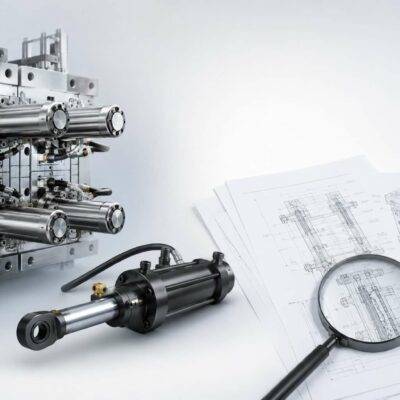

Why Even a Small Internal Leak Should Never Be Ignored
Hydraulic cylinders are designed to operate with extremely high levels of sealing integrity.
Most engineers immediately think about external seals such as piston seals, rod seals or static O-rings when discussing leakage.
However, hydraulic reliability also depends on components that are often overlooked.
One of these is the threaded connection between the piston and the piston rod.
If this connection is not perfectly sealed, hydraulic oil may bypass the intended sealing surfaces, producing internal leakage that is often invisible from the outside.
Although such leakage may initially appear insignificant, it can gradually reduce the performance, accuracy and reliability of the entire hydraulic cylinder.
A real engineering case handled by the Vega Technical Department demonstrates how a seemingly minor leak through a threaded connection caused unexpected cylinder behaviour and why following the manufacturer’s assembly procedure was essential to solving the problem.
The Customer’s Question
A customer returned a V250CE hydraulic cylinder for inspection after experiencing unexpected behaviour during operation.
The main question was straightforward:
Why had the hydraulic cylinder changed position by itself?
Rather than making assumptions, the cylinder was returned to the Vega Technical Department for a complete engineering investigation.
The objective was not simply to repair the cylinder but to identify the true cause of the malfunction.
The Investigation
After analysing the returned cylinder, the Vega Technical Department identified the source of the problem.
The investigation revealed oil leakage through the threaded connection between the piston rod and the piston.
Although the leakage occurred internally, its effect was significant.
The threaded joint was no longer providing the hydraulic sealing required for stable cylinder operation.
This finding immediately shifted the investigation away from other possible causes such as damaged seals or manufacturing defects.
Internal Leakage Is Different from External Leakage
When hydraulic oil leaks outside a cylinder, the problem is usually easy to identify.
Oil appears on the machine, maintenance personnel notice the leak and corrective action is taken.
Internal leakage is much more difficult to detect.
The hydraulic oil remains inside the cylinder, making the fault almost invisible during normal operation.
Yet its consequences may be equally serious.
Depending on the application, internal leakage can lead to:
- gradual loss of hydraulic pressure;
- reduced positioning accuracy;
- unstable cylinder movement;
- unexpected piston displacement;
- lower available output force.
Because these symptoms develop progressively, the real cause may easily be overlooked.
Threaded Connections Also Require Sealing
Many engineers naturally associate threaded joints with mechanical strength.
In hydraulic cylinders, however, some threaded connections have a second function.
They must also maintain hydraulic sealing.
If sealing at the threaded interface is compromised, hydraulic oil may migrate along the threads even when the mechanical connection itself remains secure.
This illustrates an important engineering principle.
A threaded connection may be mechanically tight while still allowing hydraulic leakage if the correct sealing procedure has not been achieved.
Small Leaks Can Produce Large Consequences
One of the most important lessons from this case is that the size of a leak does not necessarily correspond to the size of its consequences.
Even a relatively small internal leak may gradually affect:
- cylinder repeatability;
- positioning precision;
- hydraulic efficiency;
- operating stability;
- overall machine performance.
For applications such as injection molds, where accurate positioning is essential, even minor hydraulic instability may influence production quality.
For this reason, experienced engineers investigate the source of every unexpected cylinder movement rather than assuming that a small leak can be ignored.
Engineering Begins with Root Cause Analysis
The Vega Technical Department did not immediately replace components or recommend a new cylinder.
Instead, the engineers performed a systematic investigation to determine exactly where hydraulic oil was escaping.
Only after identifying the threaded connection between the piston rod and the piston as the source of the leakage could the appropriate corrective action be selected.
This approach reflects one of the fundamental principles of professional hydraulic engineering.
Reliable repairs begin by identifying the real cause of the problem rather than simply addressing its symptoms.
Small Details Protect Long-Term Reliability
This engineering case reminds us that hydraulic cylinder reliability often depends on details that receive little attention during assembly.
Large components such as the cylinder tube, piston and piston rod naturally attract most of the attention.
Yet relatively small features—such as correctly sealed threaded connections—may determine whether a hydraulic cylinder operates reliably for years or develops performance problems after only a short period of service.
Understanding the importance of these details is an essential part of professional hydraulic engineering.
Proper Assembly Procedures Prevent Hydraulic Failures
In Part 1, we saw that the unexpected movement of the hydraulic cylinder was not caused by damaged seals or a defective cylinder.
The investigation carried out by the Vega Technical Department identified a much more specific cause: oil leakage through the threaded connection between the piston rod and the piston.
Once the source of the leakage had been identified, the engineering objective was not to replace the hydraulic cylinder.
It was to restore the integrity of the threaded connection using the correct assembly procedure.
The Correct Solution Was Not a New Cylinder
Many hydraulic failures immediately lead to the replacement of expensive components.
In this case, however, the investigation demonstrated that the cylinder itself remained mechanically serviceable.
The Vega Technical Department restored the cylinder by applying the specified thread sealant in accordance with the company’s standard assembly procedure.
This is an important engineering lesson.
A correct diagnosis often avoids unnecessary component replacement while restoring the original performance of the hydraulic cylinder.
Assembly Procedures Are Part of the Engineering Design
Many people consider assembly procedures to be simple production instructions.
In reality, they are an integral part of the hydraulic cylinder design.
A properly engineered cylinder depends not only on:
- correctly machined components;
- high-quality materials;
- precision manufacturing;
but also on:
- correct tightening procedures;
- appropriate sealing materials;
- proper assembly methods;
- final inspection.
Ignoring any one of these steps may compromise the hydraulic integrity of the entire cylinder.
Why Thread Sealants Are So Important
Thread sealants perform functions that go far beyond preventing external oil leakage.
When correctly specified and applied, they help to:
- prevent hydraulic oil from migrating through threaded interfaces;
- maintain hydraulic pressure;
- improve positioning stability;
- increase long-term reliability;
- protect the threaded joint from gradual loss of sealing performance.
For this reason, selecting the correct sealant is only part of the solution.
Applying it according to the manufacturer’s assembly procedure is equally important.
Unexpected Cylinder Movement Is Often Only a Symptom
The customer’s original concern was not the threaded connection itself.
The reported problem was that the hydraulic cylinder had changed position unexpectedly.
This illustrates another important engineering principle.
Customers usually observe symptoms.
Engineers must identify causes.
The visible symptom was the unexpected movement of the cylinder.
The real cause was the loss of hydraulic sealing through the threaded connection.
Understanding this distinction is essential for effective Root Cause Analysis.
Standard Procedures Ensure Repeatable Quality
One interesting aspect of this case is that the repair did not require a special solution developed specifically for one customer.
The Vega Technical Department solved the problem by following the standard assembly procedure already established for this type of threaded connection.
This demonstrates the value of standardized engineering procedures.
When assembly methods are validated, documented and consistently applied, they provide:
- repeatable manufacturing quality;
- consistent hydraulic performance;
- reduced maintenance costs;
- greater long-term reliability.
Standardization is one of the foundations of modern industrial engineering.
Root Cause Analysis Prevents Repeated Failures
Replacing a cylinder without identifying the actual cause of failure often results in the same problem returning.
In this case, the Vega Technical Department first identified:
- the location of the leakage;
- the reason for the unexpected cylinder movement;
- the appropriate corrective action.
Only after understanding the complete sequence of events was the repair carried out.
This systematic approach is what distinguishes professional engineering from simple troubleshooting.
Small Details Create Reliable Hydraulic Systems
This engineering case demonstrates that the reliability of a hydraulic cylinder is often determined by details that receive little attention during normal operation.
A threaded connection may appear insignificant compared with the piston, cylinder tube or piston rod.
Yet its sealing performance directly influences:
- hydraulic efficiency;
- positioning accuracy;
- operating stability;
- long-term reliability.
Professional hydraulic engineering recognises that every component, regardless of its size, contributes to the overall performance of the hydraulic cylinder.
Conclusion
This real engineering case demonstrates that even a small internal leak through a threaded connection should never be underestimated.
The investigation carried out by the Vega Technical Department identified oil leakage between the piston rod and the piston as the cause of the customer’s problem. Rather than replacing the hydraulic cylinder, the engineering team restored the correct hydraulic sealing by applying the specified thread sealant according to the standard assembly procedure.
The case also illustrates an essential engineering principle: assembly procedures are not merely manufacturing instructions—they are part of the product design itself. Correct sealing methods, appropriate materials and standardized assembly practices are all fundamental to achieving reliable hydraulic performance.
Ultimately, this case reinforces one of the most important principles of hydraulic engineering:
The long-term reliability of a hydraulic cylinder depends not only on the quality of its components, but also on the precision of its assembly. Even a small threaded connection can determine whether a hydraulic cylinder operates reliably or develops unexpected performance problems.
Related Articles (Verified on icvega.com)
- Hydraulic Cylinder Maintenance
https://www.icvega.com/maintenance/hydraulic-cylinder-maintenance - How to Find the Right Vega Cylinder or Accessory
https://www.icvega.com/choosing/find-right-vega-cylinder-accessory - Choosing the Right Cylinder: Stroke Selection
https://www.icvega.com/choosing/choosing-the-right-cylinder-for-your-mold-stroke