Artificial Intelligence and industrial robotics are rapidly reshaping the packaging industry. What was once considered futuristic technology is now becoming a standard feature of modern production lines.
At Interpack 2026, AI-powered automation, collaborative robots and intelligent manufacturing systems are expected to be among the most discussed technologies. As manufacturers strive to improve efficiency, reduce waste and overcome labor shortages, automation is becoming one of the industry’s most important competitive advantages.
Whether producing food, beverages, pharmaceuticals or consumer goods, companies are increasingly investing in intelligent packaging solutions capable of operating faster, more accurately and with greater flexibility than ever before.
Why AI Is Revolutionizing Packaging
Packaging manufacturers face growing pressure to:
- reduce operating costs
- improve product quality
- increase production speed
- minimize downtime
- optimize energy consumption
- respond to labor shortages
- achieve sustainability targets
Artificial Intelligence addresses many of these challenges by continuously analyzing production data and automatically optimizing machine performance.
Unlike traditional automation, AI systems learn from production data, allowing them to continuously improve manufacturing efficiency.
AI Applications Expected at Interpack 2026
Visitors are likely to discover solutions for:
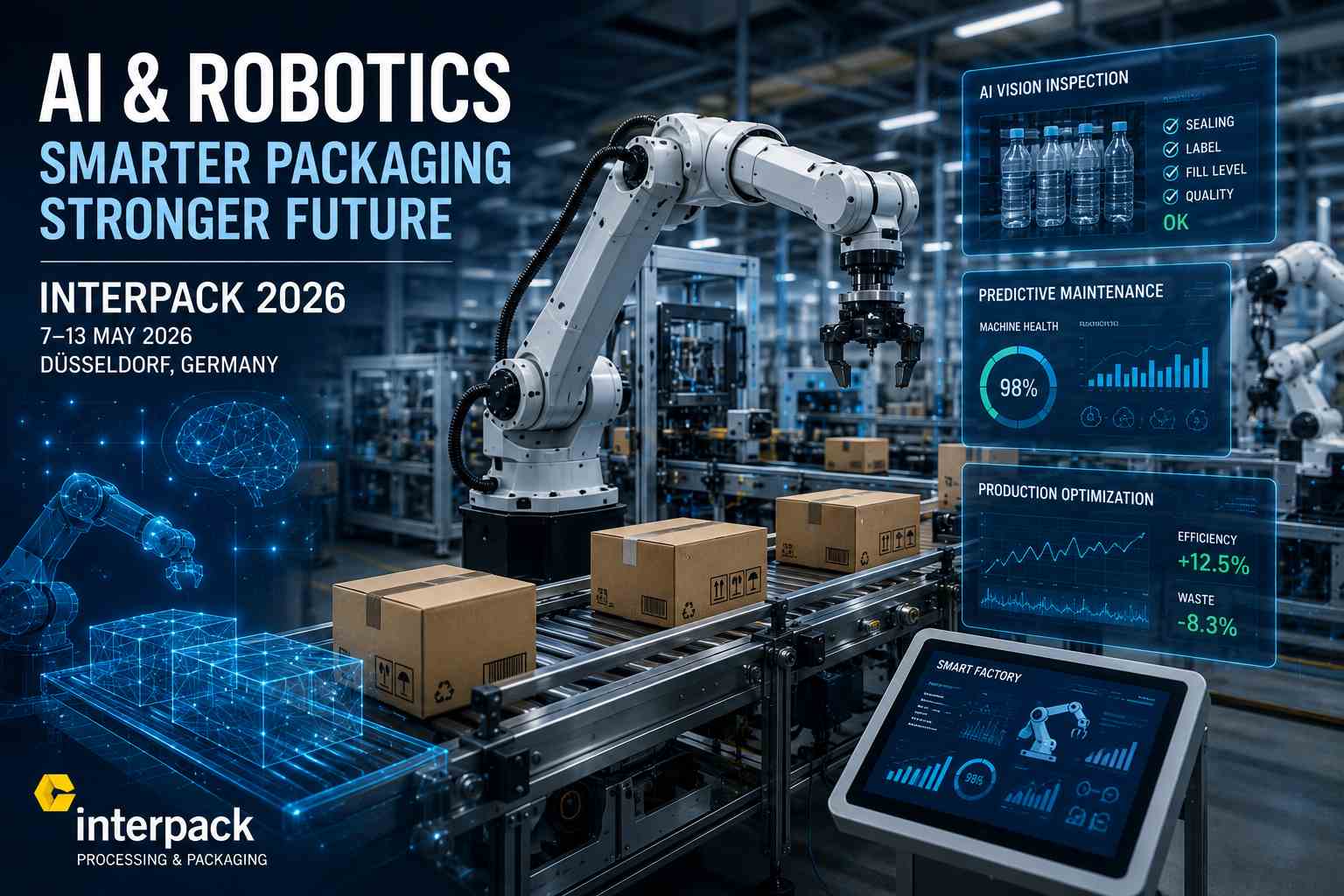
AI Vision Inspection
Modern camera systems use artificial intelligence to detect:
- damaged packaging
- incorrect labels
- filling errors
- sealing defects
- color inconsistencies
- printing mistakes
Inspection takes place in real time without slowing production.
Predictive Maintenance
AI continuously monitors:
- motors
- bearings
- hydraulic systems
- pneumatic systems
- conveyors
- packaging machinery
Instead of repairing equipment after failures occur, manufacturers can schedule maintenance before breakdowns happen.
Benefits include:
- lower maintenance costs
- reduced downtime
- higher equipment availability
Machine Learning for Process Optimization
Machine learning algorithms automatically adjust:
- machine speed
- pressure
- temperature
- sealing parameters
- filling accuracy
The result is more stable production with fewer defects.
Robotics Is Becoming More Flexible
Industrial robotics has evolved dramatically.
Modern robots are no longer limited to repetitive movements.
Interpack 2026 is expected to showcase:
- collaborative robots (Cobots)
- Delta robots
- SCARA robots
- palletizing robots
- autonomous mobile robots (AMRs)
- robotic quality inspection
These systems allow manufacturers to increase productivity while maintaining high flexibility.
Collaborative Robots
Cobots are becoming increasingly popular because they safely work alongside human operators.
Applications include:
- product handling
- packaging
- labeling
- palletizing
- machine tending
- quality inspection
Unlike traditional industrial robots, Cobots require less floor space and are easier to program.
Smart Factories Powered by AI
Artificial Intelligence forms the foundation of Industry 5.0.
Expected technologies include:
- Industrial IoT
- Digital Twins
- Cloud Manufacturing
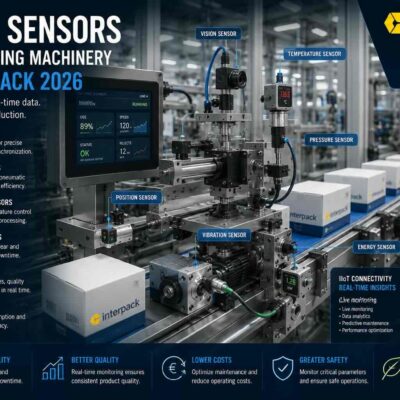
- Smart Sensors
- Real-Time Analytics
- Autonomous Production
Connected machines continuously exchange data to improve manufacturing performance.
Motion Control Remains Essential
Even the most advanced AI systems depend on precise mechanical movements.
Packaging equipment still requires:
- linear motion systems
- synchronized movements
- servo technology
- precision positioning
- high-speed automation
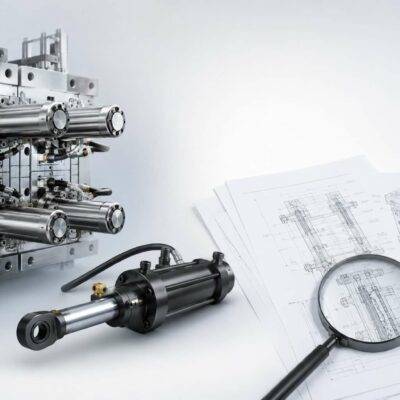
- reliable hydraulic motion
The combination of intelligent software and precise mechanical engineering creates highly efficient production lines.
Sustainability Through Automation
AI also supports sustainability by helping manufacturers:
- reduce material waste
- lower energy consumption
- improve production efficiency
- optimize packaging dimensions
- reduce defective products
Smart automation contributes directly to lower environmental impact.
Industries Benefiting from AI Packaging
AI-powered automation is transforming:
- food packaging
- beverage production
- pharmaceutical manufacturing
- cosmetics
- consumer goods
- logistics
- industrial products
Every sector benefits from greater efficiency and improved quality.
Frequently Asked Questions
Will AI dominate Interpack 2026?
Artificial Intelligence is expected to be one of the exhibition’s most important technology themes.
Which robots will be presented?
Collaborative robots, Delta robots, palletizing systems, autonomous mobile robots and AI-powered inspection systems are expected to receive significant attention.
Is AI replacing human workers?
Rather than replacing workers, AI is increasingly assisting operators by automating repetitive tasks and improving productivity.
Why should packaging companies invest in robotics?
Robotics improves speed, consistency, quality, safety and manufacturing flexibility while reducing long-term operating costs.
Looking Ahead
Artificial Intelligence and robotics are no longer emerging technologies—they are becoming essential components of modern packaging manufacturing.
Interpack 2026 is expected to demonstrate how intelligent automation can improve productivity, quality and sustainability across every stage of the packaging process.
For manufacturers planning future investments, understanding these technologies will be essential to remaining competitive in an increasingly automated global market.