As the automotive industry accelerates toward circular manufacturing, discussions often focus on recycled polymers, electric vehicles, and end-of-life recycling strategies. However, one critical aspect remains largely overlooked: sustainability decisions are already being made long before a vehicle reaches the production line.
According to the upcoming European End-of-Life Vehicles (ELV) Regulation, vehicle manufacturers will face increasing pressure to demonstrate not only the recyclability of materials but also the sustainability of the entire manufacturing process. While much attention has been given to the composition of plastics and composite materials, the tools and systems used to manufacture these components will play an equally important role.
The Hidden Sustainability Factor: Injection Molds
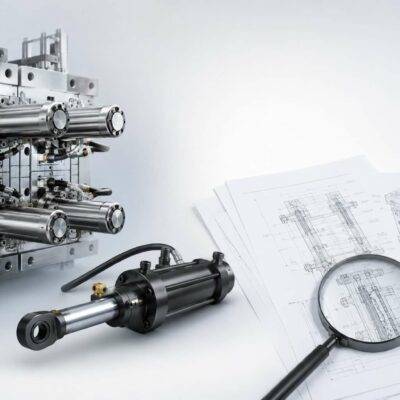
Modern vehicles contain between 150 and 200 kilograms of plastic components. These parts are produced through highly sophisticated injection molds equipped with complex hydraulic systems responsible for core pulling, unscrewing operations, slide movements, valve gate control, and sequential injection processes.
The efficiency, durability, and maintenance requirements of these hydraulic systems directly influence:
- Energy consumption during production
- Mold lifetime and maintenance cycles
- Material waste generation
- Production scrap rates
- Overall carbon footprint of manufacturing operations
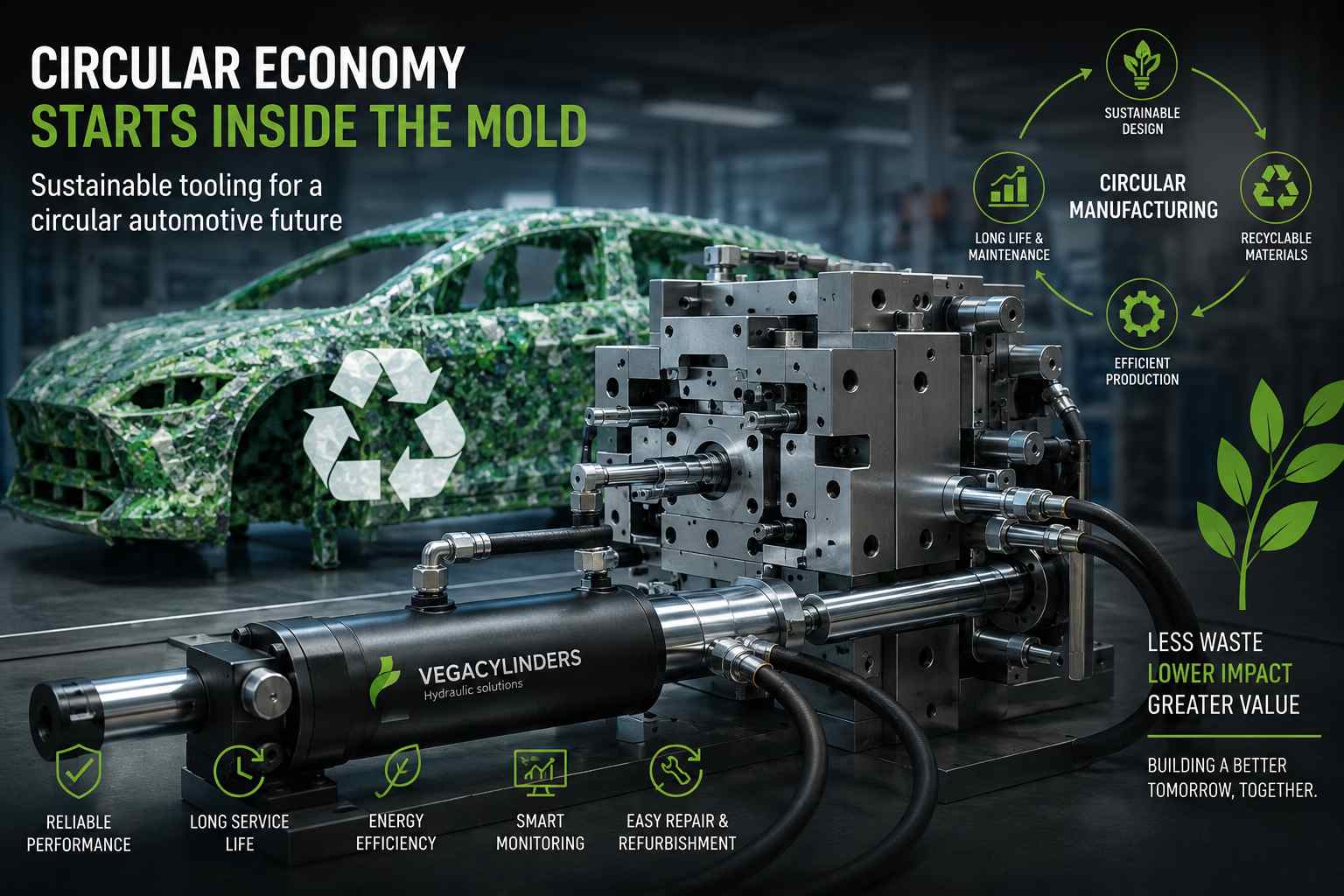
In other words, circularity does not begin at the recycling plant; it begins inside the mold itself.
Designing for Long-Term Manufacturing Sustainability
Traditional manufacturing strategies have often prioritized initial investment costs over long-term operational efficiency. However, new sustainability regulations are changing this approach.
Today, mold manufacturers and OEM suppliers increasingly evaluate:
- Service life of hydraulic components
- Energy efficiency of hydraulic movements
- Leakage prevention systems
- Predictive maintenance capabilities
- Repairability and refurbishment options
Hydraulic cylinders designed for long operational lifetimes can remain in service for decades, significantly reducing the environmental impact associated with replacement parts and machine downtime.
Smart Hydraulics and Predictive Manufacturing
The next phase of circular manufacturing will be driven by data.
Modern hydraulic cylinders equipped with position sensing technologies and digital monitoring systems can provide valuable information regarding:
- Cycle counts
- Operating temperatures
- Pressure profiles
- Seal wear prediction
- Preventive maintenance scheduling
This digitalization allows manufacturers to extend component life, minimize waste, and optimize maintenance intervals, contributing directly to sustainability objectives.
Closed-Loop Manufacturing Requires Closed-Loop Thinking
Achieving a true circular economy in automotive manufacturing requires considering the entire production ecosystem.
A recyclable polymer alone does not guarantee sustainable production if the manufacturing process itself generates excessive waste, consumes unnecessary energy, or requires frequent component replacement.
Instead, manufacturers must adopt a closed-loop approach that integrates:
- Sustainable material selection
- Efficient mold design
- Durable hydraulic technologies
- Digital monitoring systems
- Refurbishment and repair strategies
Only by combining these elements can the plastics industry achieve the ambitious sustainability targets set by future regulations.
Looking Ahead to K 2028
As the world’s leading trade fair for plastics and rubber technologies, K continues to demonstrate that sustainability and innovation are no longer separate discussions.
The future of automotive plastics will not be determined solely by the materials we choose, but also by the technologies we use to manufacture them.
Because in the circular economy of tomorrow, sustainability starts long before the vehicle reaches the scrapyard — it starts inside the mold.