Why material waste is an important problem
In traditional cold runner molds, part of the plastic solidifies inside the runner channels.
This material often becomes waste.
Material waste increases:
- production costs
- energy consumption
- processing time
Reducing unused material has become essential.
How hot runners work
Hot runner systems keep molten plastic inside the runner channels.
This almost completely eliminates:
- solidified runners
- material waste
- secondary reprocessing
Material is used much more efficiently.
Reduction of production costs
Reducing waste means:
- lower material consumption
- lower energy usage
- fewer secondary operations
This improves:
- efficiency
- productivity
- industrial sustainability
Hot runner systems become especially advantageous in high-volume production.
Quality improvement
Hot runner systems also improve:
- flow control
- filling uniformity
- cosmetic quality
Reduced thermal variations improve stability and repeatability.
Importance of engineering
Hot runner systems require:
- precise thermal management
- advanced engineering
- accurate simulation
Small mistakes may create:
- material degradation
- viscosity variations
- process instability
Integration with modern systems
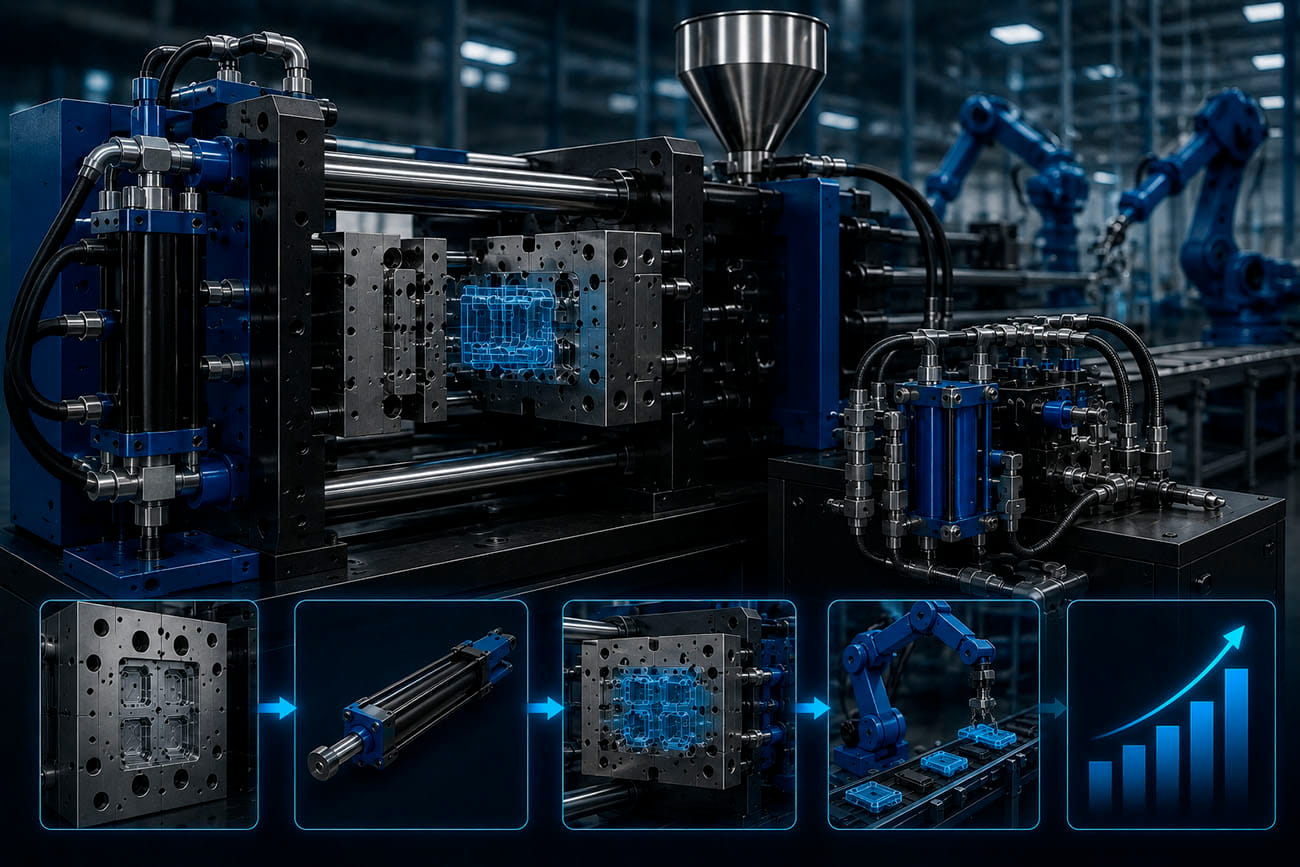
Modern molds integrate:
- hot runner systems
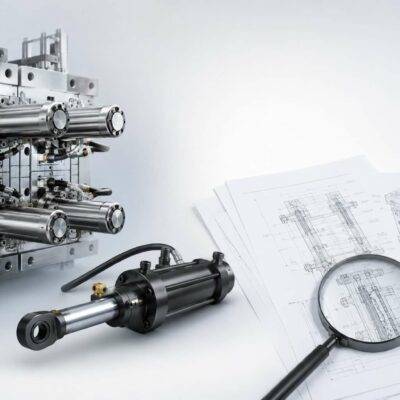
- hydraulic components
- core pulling systems
- automated movements
For this reason, parametric engineering and 3D CAD integration are becoming essential.
Platforms such as Vega Cylinders allow engineers to:
- configure hydraulic cylinders online
- download 3D CAD models
- verify compatibility
- accelerate engineering workflow
This improves integration and development speed.
The future of industrial sustainability
In the future of injection molding:
- waste reduction
- automation
- industrial AI
- real-time manufacturing
will become increasingly interconnected.
Companies capable of improving efficiency and sustainability will achieve higher competitiveness.