Packaging Automation Trends at Interpack 2026: The Technologies Transforming the Future of Manufacturing
Automation has become the driving force behind the evolution of the global packaging industry. Manufacturers are facing increasing pressure to improve productivity, reduce costs, overcome labor shortages and meet ambitious sustainability targets.
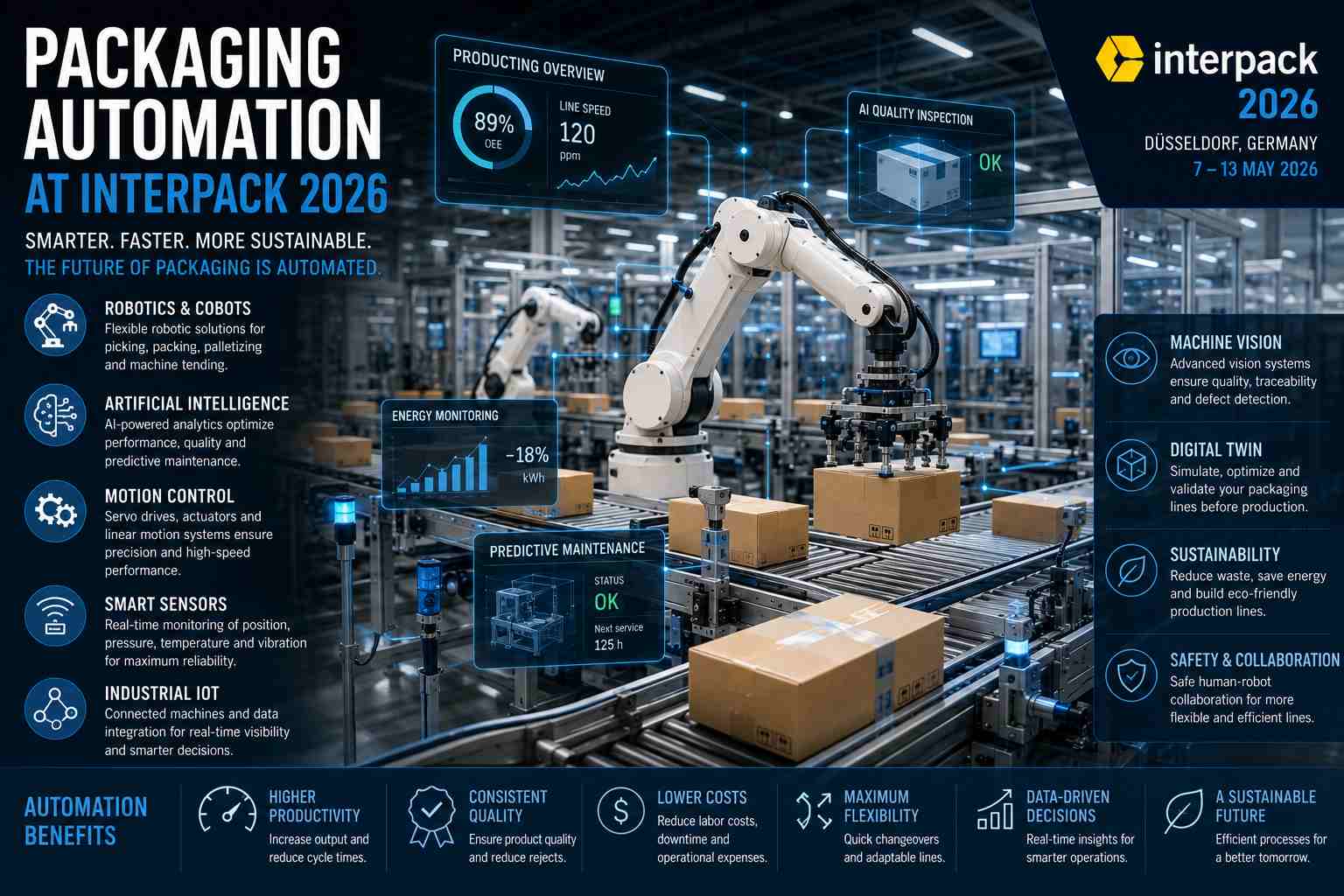
At Interpack 2026, packaging automation is expected to be the central theme connecting virtually every exhibition hall. From intelligent robotics and Artificial Intelligence to advanced motion control and smart sensors, automation technologies are enabling packaging manufacturers to build faster, more flexible and more efficient production lines.
As the industry moves toward fully connected smart factories, automation is no longer a competitive advantage—it has become a business necessity.
What Is Packaging Automation?
Packaging automation refers to the use of intelligent machinery, robotics, software and control systems to perform packaging processes with minimal human intervention.
Modern automated packaging lines combine:
- industrial robots
- servo systems
- motion control
- smart sensors
- machine vision
- PLCs
- Industrial IoT
- Artificial Intelligence
These technologies work together to optimize production while improving consistency and reliability.
Why Automation Is Growing
Several market trends are accelerating automation investments.
Manufacturers are responding to:
- labor shortages
- increasing production demand
- higher quality requirements
- sustainability regulations
- rising energy costs
- mass customization
- shorter product life cycles
Automation allows companies to remain competitive despite these challenges.
Artificial Intelligence
Artificial Intelligence is becoming one of the most valuable automation technologies.
AI helps manufacturers:
- optimize production
- predict failures
- reduce waste
- improve quality
- automate inspections
- optimize energy consumption
Machine learning continuously improves production performance.
Robotics
Robotic systems continue expanding across packaging applications.
Typical robotic operations include:
- pick-and-place
- palletizing
- depalletizing
- case packing
- product sorting
- machine tending
Collaborative robots further increase production flexibility.
Motion Control
Motion control remains the mechanical foundation of automation.
Modern systems combine:
- servo drives
- electric actuators
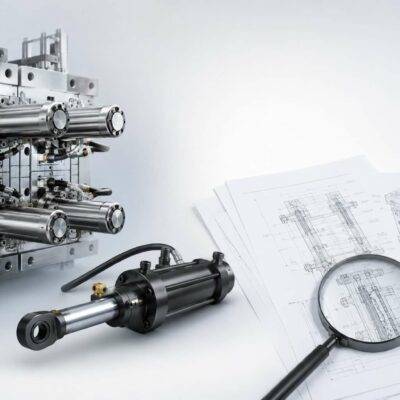
- hydraulic cylinders
- linear guides
- synchronized axes
Precise movement ensures repeatable production quality.
Smart Sensors
Smart sensors continuously monitor:
- position
- pressure
- temperature
- vibration
- energy consumption
- machine health
These devices provide the real-time data required by intelligent factories.
Machine Vision
Machine vision automatically inspects:
- labels
- packaging integrity
- fill levels
- print quality
- barcodes
- product orientation
AI-powered inspection significantly reduces production defects.
Industrial IoT
Industrial IoT connects every machine within the production line.
Manufacturers can monitor:
- production efficiency
- machine performance
- maintenance status
- quality indicators
- energy usage
Real-time connectivity supports faster operational decisions.
Digital Twins
Virtual factory models allow engineers to:
- simulate production
- optimize layouts
- test process improvements
- reduce commissioning time
- improve maintenance planning
Digital engineering shortens development cycles while reducing risk.
Sustainability
Automation supports sustainability through:
- lower energy consumption
- reduced material waste
- improved production efficiency
- optimized machine utilization
- predictive maintenance
Efficient automation reduces both operating costs and environmental impact.
Frequently Asked Questions
What is packaging automation?
Packaging automation combines machinery, robotics, software and intelligent controls to automate packaging production.
Why is automation important?
Automation improves productivity, quality, flexibility and sustainability while reducing operating costs.
Will packaging automation dominate Interpack 2026?
Yes. Automation is expected to be the leading technology theme across the exhibition.
How does AI improve packaging automation?
AI optimizes production, predicts failures, improves inspections and continuously increases efficiency.
Which industries use packaging automation?
Food, beverage, pharmaceutical, cosmetics, medical devices, logistics and consumer goods manufacturing.
Looking Ahead
Packaging automation continues to redefine industrial manufacturing.
By integrating Artificial Intelligence, robotics, Industrial IoT, Digital Twins, motion control and intelligent sensors, manufacturers are creating highly connected production systems capable of meeting tomorrow’s challenges.
Interpack 2026 will demonstrate how automation is shaping the future of packaging manufacturing worldwide.