
Company Snapshot
| Country | Japan |
| Industry | Precision Tooling & Mold Manufacturing |
| Main Markets | Medical, Electronics, Automotive, Packaging |
| Core Expertise | EDM, High-Speed Machining, Precision Tooling |
| Applications | Injection Molds, Connectors, Medical Components, Optical Parts |
Why Precision Matters More Than Ever
Modern injection molds must produce increasingly complex components while maintaining micron-level repeatability.
Today’s mold manufacturers face demanding requirements including:
- tighter tolerances;
- shorter production cycles;
- higher surface quality;
- improved dimensional stability;
- longer tool life.
Precision manufacturing has therefore become one of the most important competitive advantages in the tooling industry.
Japanese Engineering Philosophy
Japanese manufacturers have long emphasized continuous improvement, precision and process discipline.
Rather than focusing solely on production capacity, companies invest heavily in:
- advanced machining;
- quality systems;
- employee training;
- process optimization;
- long-term reliability.
This philosophy has made Japan one of the world’s leading centers for high-precision mold manufacturing.
The Evolution of EDM Technology
Electrical Discharge Machining (EDM) has transformed mold manufacturing.
Unlike conventional cutting methods, EDM allows manufacturers to create intricate geometries and extremely fine details that would otherwise be difficult to machine.
Modern EDM systems are widely used for:
- precision cavities;
- micro features;
- sharp internal corners;
- hardened tool steels;
- medical molds;
- electronic connectors.
This technology has become indispensable for many high-value mold applications.
High-Speed Machining and Digital Manufacturing
Modern precision mold manufacturers combine EDM with advanced CNC machining.
Typical technologies include:
- five-axis machining;
- high-speed milling;
- automatic tool changers;
- digital process monitoring;
- CAD/CAM integration;
- intelligent quality control.
Together these technologies reduce lead times while improving dimensional accuracy.
Hydraulic Systems Still Play an Essential Role
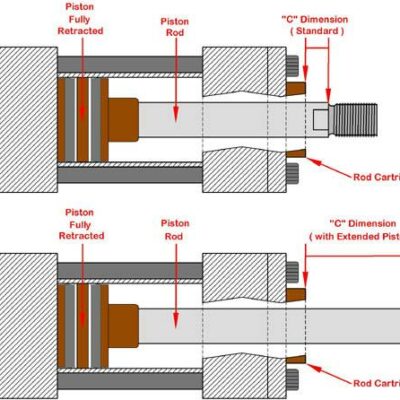
Although mold manufacturing continues to embrace digital technologies, hydraulic systems remain indispensable for many complex mold functions.
Typical applications include:
- core pulling systems;
- side actions;
- collapsible cores;
- unscrewing mechanisms;
- sequential mold movements.
As molds become increasingly compact, hydraulic cylinders must provide maximum force within minimal installation space while maintaining repeatability over millions of cycles.
Engineering Lessons
Precision Requires Process Control
Accurate machining alone is insufficient.
Every manufacturing process must remain stable and repeatable.
Technology Supports Skilled Engineers
Modern machines increase capability, but engineering expertise remains essential.
Continuous Improvement Creates Long-Term Success
Small improvements accumulated over many years often produce the greatest competitive advantage.
Looking Ahead
Artificial intelligence, digital twins, predictive maintenance and smart machining are reshaping precision mold manufacturing.
Companies investing in both engineering talent and advanced manufacturing technologies will continue to define the future of the global tooling industry.
About this series
Mold Makers of the World is an independent editorial series created by Vega Cylinders to celebrate engineering excellence across the global mold manufacturing industry.
If you represent Sodick and would like to contribute additional technical information or official images, we would be pleased to update this article.
Disclaimer
This article is an independent editorial publication created for educational and industrial information purposes. Company names and trademarks remain the property of their respective owners.