What are weld lines
Weld lines appear when two molten plastic flow fronts meet inside the mold.
This phenomenon may create:
- cosmetic defects
- reduced mechanical strength
- visible surface lines
- quality instability
Weld lines are very common in complex molds.
Why weld lines form
Weld lines often appear near:
- holes
- inserts
- ribs
- geometry transitions
When plastic flow separates and later reconnects, bonding between the two fronts may become weak.
Low temperature and insufficient speed make the problem worse.
Influence of gate position
Gate position directly affects weld line formation.
Poor gate design may increase:
- flow separation
- material cooling
- pressure variations
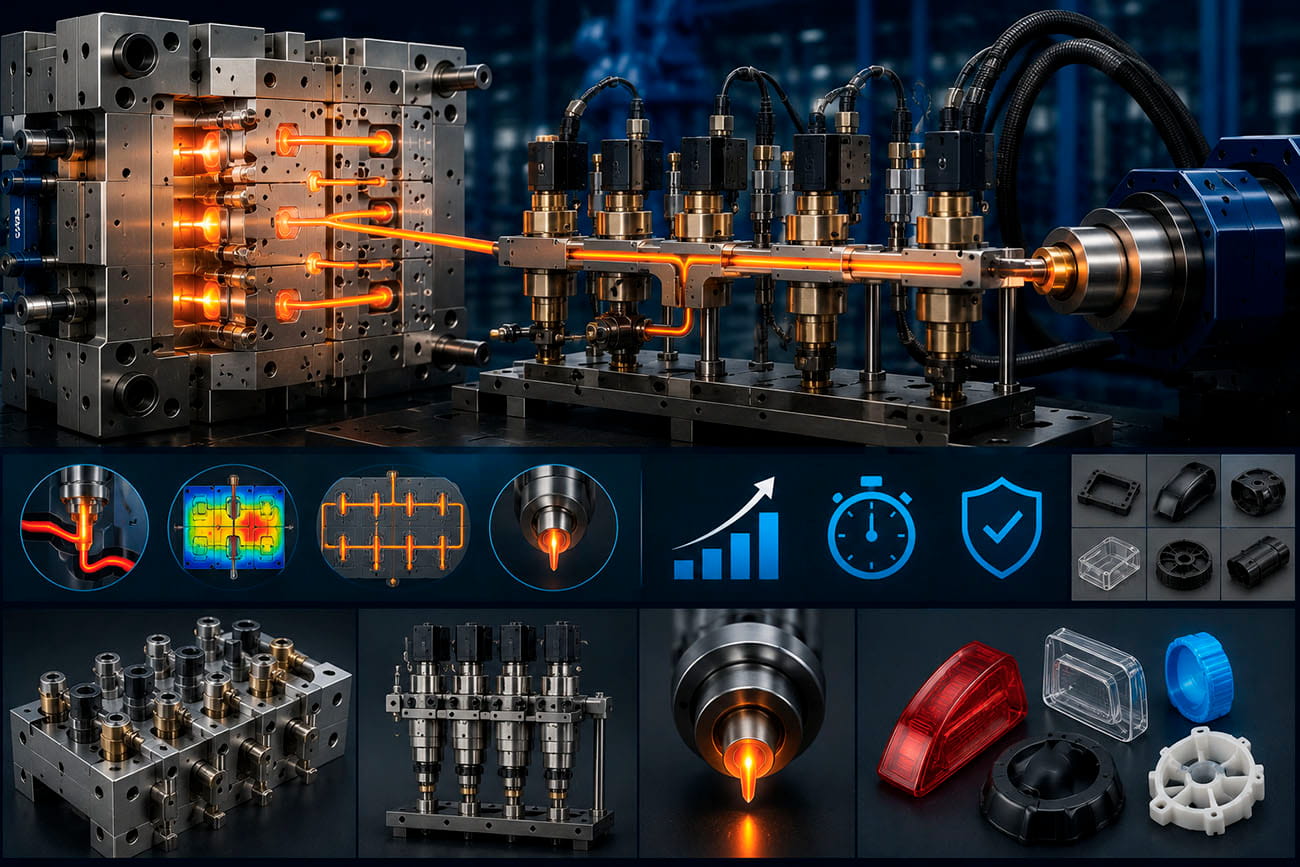
Mold flow simulation helps optimize gate location.
Importance of material temperature
Polymer temperature is critical.
If material becomes too cold:
- bonding quality decreases
- surface defects increase
- mechanical strength decreases
Correct thermal management improves quality and stability.
Injection speed and pressure
Injection speed and pressure also influence weld lines.
If speed becomes too low, material may cool before the flow fronts meet.
Correct injection speed improves:
- material bonding
- cosmetic quality
- production stability
Simulation and modern engineering
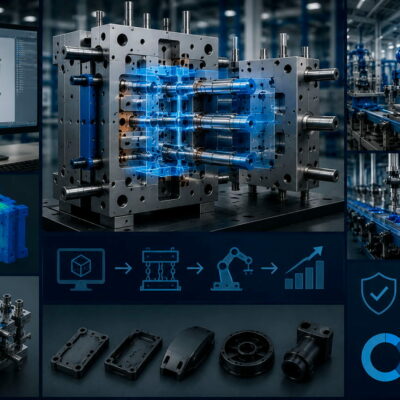
Mold flow software allows engineers to predict weld line formation before mold manufacturing begins.
This reduces:
- mold modifications
- costs
- development time
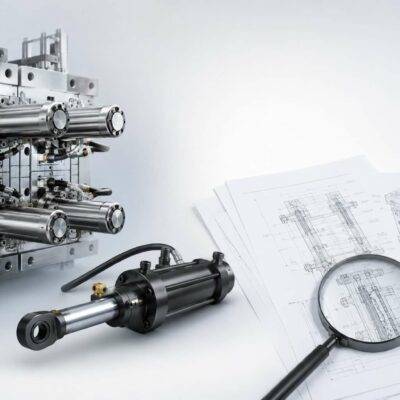
In modern molds, hydraulic systems and mechanical components must also integrate perfectly.
Platforms such as Vega Cylinders allow engineers to:
- configure hydraulic cylinders online
- download 3D CAD models
- verify compatibility
- accelerate engineering workflow
This improves engineering precision and development speed.
The future of mold quality control
In the future of injection molding:
- industrial AI
- advanced simulation
- parametric CAD
- automation
will become increasingly interconnected.
Companies capable of preventing flow defects will achieve higher quality and competitiveness.