
Introduction
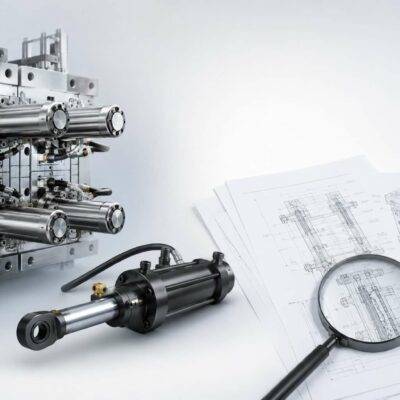
Hydraulic cylinder oil leakage is one of the most common maintenance issues in injection molds and industrial automation. In many cases, the immediate reaction is to replace the rod seals, assuming that worn seals are the root cause of the problem.
Unfortunately, this approach often solves only the symptom—not the actual cause.
A real engineering case analyzed by the Vega Technical Department demonstrates that premature seal failure may result from several interacting factors, including insufficient working pressure, contamination, rod misalignment, and unsuitable operating conditions. Simply installing a new seal package without investigating these factors can lead to repeated failures, increased maintenance costs, and unexpected machine downtime.
This case study shows why successful troubleshooting requires a systematic engineering approach rather than simply replacing components.
The Problem
A customer reported that the rod seals of a hydraulic cylinder had been replaced using the official maintenance kit, but after a short period the cylinder started leaking oil again.
The customer also requested an additional seal on the rod to prevent dirt from entering the cylinder because the machine operated close to an aluminum sawing process that generated fine chips. Some of these chips appeared to stick to the piston rod during operation.
At first glance, replacing the seals again seemed like the obvious solution.
However, the Vega Technical Department followed a different approach.
Step One: Verify the Working Pressure
The first question raised by Stefano Rogora was not about the seals themselves, but about the actual hydraulic working pressure.
He pointed out that if the cylinder operates below 60 bar, the standard seals may not be sufficiently energized to maintain an effective seal. Standard sealing systems are designed to perform correctly from approximately 80 bar upwards.
This is an important engineering concept. Seal performance depends not only on the seal design but also on the pressure acting against it. When the pressure is too low, sealing lips may not generate sufficient contact force, allowing oil to bypass the seal.
Step Two: Investigate Contamination
The second possible cause was contamination.
Because aluminum profiles were cut close to the machine, fine aluminum chips could adhere to the lubricated piston rod. As the rod re-entered the cylinder, these particles could damage the scraper and eventually reach the rod seals, causing rapid wear.
Instead of recommending a different seal material, Vega proposed a design improvement:
install a front flange equipped with a special scraper capable of removing metallic particles before they reach the sealing system.
This solution addresses the source of the problem rather than its consequences.
Step Three: Check Rod Alignment
Another potential cause identified by the Vega Technical Department was rod misalignment.
Even a high-quality hydraulic cylinder can experience premature seal failure if the piston rod is subjected to side loads or if the moving component is not perfectly aligned.
The Vega Technical Manual emphasizes that side forces and incorrect alignment significantly reduce seal life by creating uneven contact pressure and accelerated wear.
Before replacing components, alignment should always be verified.
Engineering Instead of Guesswork
Rather than recommending immediate replacement parts, Stefano Rogora requested additional information:
- the actual operating pressure;
- photographs and videos of the cylinder during production;
- images showing aluminum chips on the piston rod.
This approach reflects a fundamental engineering principle:
Reliable solutions are based on evidence, not assumptions.
Understanding the operating environment is often more important than replacing mechanical components.
Lessons Learned
This case highlights several important engineering principles:
- Oil leakage is not always caused by defective seals.
- Working pressure directly affects seal performance.
- Metallic contamination can rapidly damage both scrapers and rod seals.
- Rod alignment should always be verified before replacing seals.
- Preventing contaminants from entering the cylinder is more effective than repeatedly replacing damaged seals.
- A proper root cause analysis reduces maintenance costs and increases equipment reliability.
Conclusion
Hydraulic cylinders are designed to operate reliably for millions of cycles, but even the best sealing system cannot compensate for unsuitable operating conditions.
This real case demonstrates that successful troubleshooting begins with understanding why the seals failed rather than simply replacing them.
By evaluating working pressure, contamination, rod alignment, and environmental conditions, the Vega Technical Department identified the real causes of the leakage and proposed engineering improvements capable of preventing future failures.
Ultimately, effective maintenance is not about replacing parts—it is about eliminating the conditions that caused those parts to fail.