What is material shrinkage
During cooling, plastic material contracts.
This phenomenon is called material shrinkage.
Shrinkage affects:
- final dimensions
- tolerances
- geometrical stability
- part quality
Every material behaves differently.
Why shrinkage creates problems
Non-uniform shrinkage may create:
- warpage
- internal stress
- dimensional variations
- cosmetic defects
Thermal differences modify polymer behavior.
For this reason, cooling control is critical.
Influence of pressure and temperature
Pressure and temperature directly affect shrinkage.
High temperatures may increase:
- warpage
- cooling time
- production instability
Packing pressure also changes final part behavior.
Different materials behave differently
Every polymer reacts differently.
Fiber-filled materials present:
- anisotropy
- different shrinkage behavior
- higher engineering complexity
Material selection therefore becomes extremely important.
Mold flow simulation and shrinkage analysis
Mold flow software allows engineers to simulate:
- material shrinkage
- warpage
- temperature distribution
- internal stress
This helps optimize:
- part geometry
- cooling systems
- process parameters
Simulation reduces mistakes and costs.
Integration with modern engineering
Modern molds integrate:
- hot runner systems
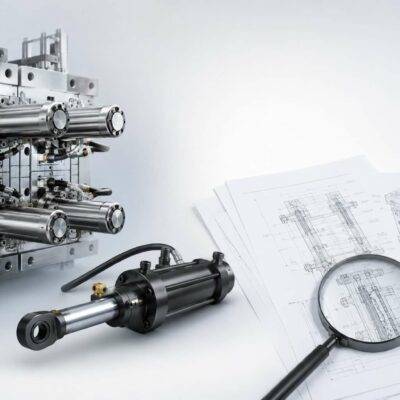
- hydraulic components
- core pulling systems
- automated movements
Platforms such as Vega Cylinders allow engineers to:
- configure hydraulic cylinders online
- download 3D CAD models
- verify compatibility
- accelerate engineering workflow
This improves integration and development speed.
The future of dimensional control
In the future of injection molding:
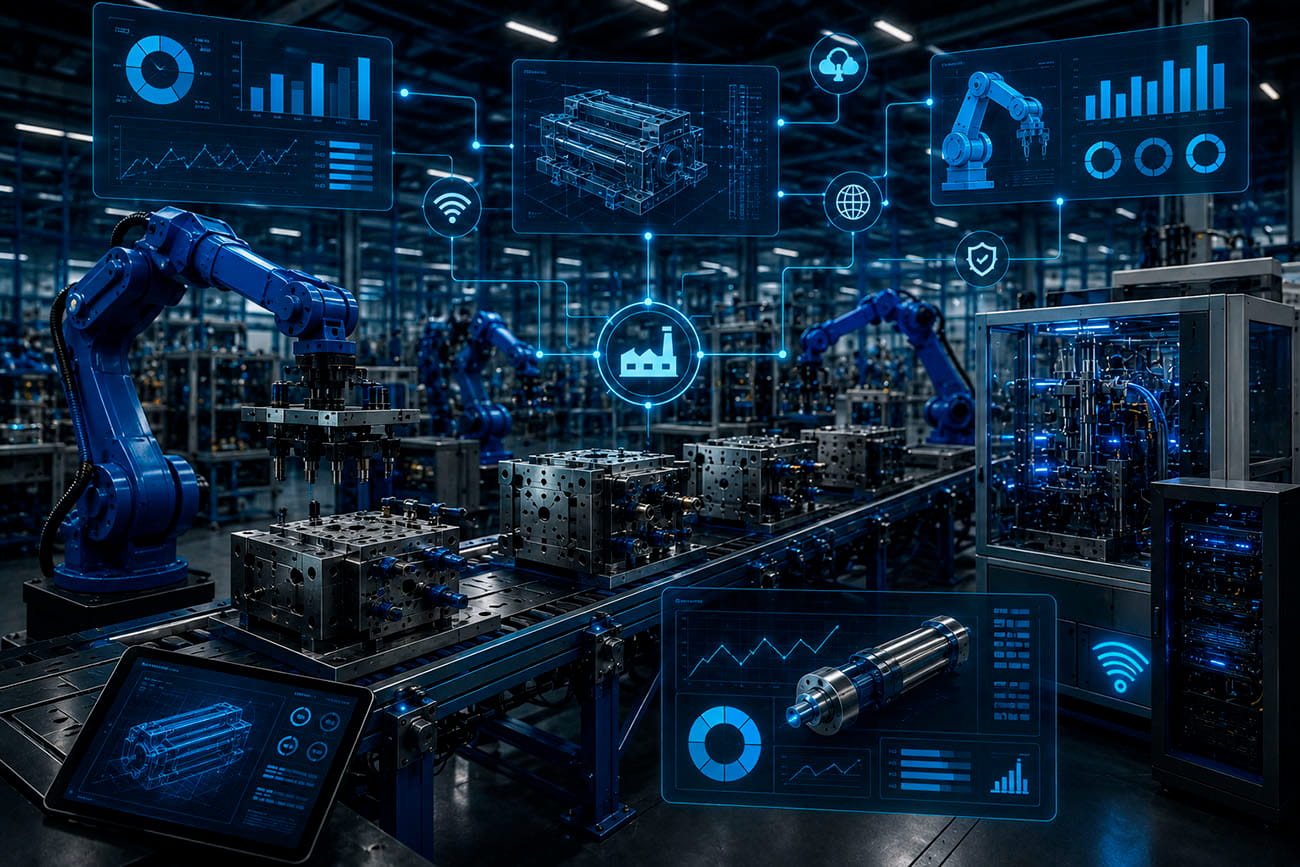
- advanced simulation
- industrial AI
- automation
- real-time manufacturing
will become increasingly interconnected.
Companies capable of controlling shrinkage and warpage will achieve higher quality and precision.