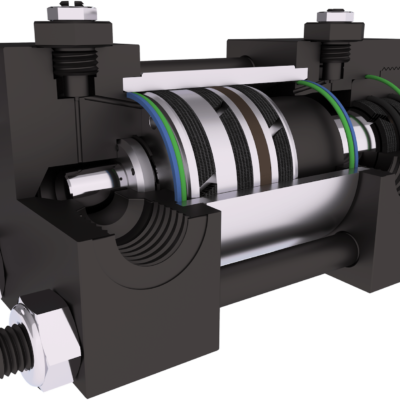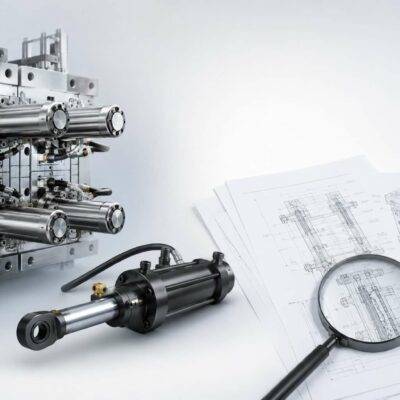

When a hydraulic cylinder starts leaking oil, the conclusion often seems obvious:
The seals need to be replaced.
It’s a natural assumption.
Oil is escaping from the cylinder, so the problem must be inside the cylinder.
But in mold engineering and industrial automation, things are rarely that simple.
Recently, Vega Technical Dep. was asked to investigate an application where oil leaks continued to reappear despite repeated seal replacements.
Each maintenance intervention seemed to solve the problem temporarily.
Then, after a short period of operation, the leakage returned.
Most people were asking:
“Which seal should we replace?”
The question Vega Technical Dep. asked was different:
“Why do the seals keep failing?”
That difference in approach ultimately led to the real solution.
When the Symptom Hides the Cause
In industrial environments, it is common to confuse symptoms with causes.
An oil leak is a symptom.
A damaged seal is often a consequence.
The real cause may be located somewhere else entirely.
For this reason, Vega Technical Dep. decided not to focus exclusively on the cylinder itself. Instead, the team examined the complete operating environment, including:
- Working conditions
- Hydraulic pressure
- Potential contamination sources
- Installation conditions
- Machine operation
This approach reflects a fundamental engineering principle:
A component should never be evaluated in isolation. It must be understood within the system in which it operates.
The First Suspect: Aluminum Chips
During the investigation, an important detail emerged.
Near the hydraulic cylinder, aluminum profiles were being cut as part of the manufacturing process.
This operation generated a significant quantity of fine aluminum chips and metallic particles that could settle on the cylinder rod.
At first glance, this might appear to be a minor issue.
In reality, the rod is one of the most critical surfaces in a hydraulic cylinder.
Every time the rod retracts, it passes through the scraper ring and the sealing system.
If metallic particles bypass the scraper, they can act as abrasives, accelerating seal wear and reducing sealing performance.
This is why the scraper ring should never be viewed as a secondary component.
It is the cylinder’s first line of defense against contamination.
Cleanliness Is Not Optional
Field experience and hydraulic engineering literature consistently point to the same conclusion:
Contamination is one of the leading causes of hydraulic component failure.
Solid particles, metallic debris, and external contaminants can progressively damage:
- Seals
- Scraper rings
- Rod surfaces
- Pistons
- Valves
- Pumps
In mold applications, the problem can become even more severe.
Because hydraulic oil volumes are often relatively small, the fluid may circulate repeatedly between the cylinder and nearby hydraulic components without passing frequently through the main filtration system.
As a result, contaminants can remain in circulation much longer than expected.
This is why hydraulic cleanliness should always be considered a critical factor when investigating recurring seal failures.
Another Possible Cause: Misalignment
The investigation also considered another common but frequently overlooked issue:
Mechanical misalignment.
The cylinder itself was correctly sized.
The seals were appropriate for the application.
Yet the failures continued.
In situations like these, engineers must evaluate whether the cylinder is operating under unintended side loads.
Hydraulic cylinders are designed primarily to work along their own axis.
Even small misalignments can create:
- Increased friction
- Uneven seal wear
- Additional stress on guide elements
- Side loads on the rod
- Reduced service life
For this reason, Vega Technical Dep. requested additional information regarding the installation and operating conditions to verify whether alignment issues could be contributing to the problem.
Why Replacing the Seal Is Not Always the Solution
Many maintenance interventions focus on replacing the damaged component.
It is quick.
It is familiar.
And it often appears to solve the problem.
But if the root cause is:
- External contamination
- Insufficient rod protection
- Misalignment
- Unfavorable operating conditions
Then even the best seal on the market will eventually fail under the same circumstances.
In other words:
The symptom is removed, but the cause remains.
Protect Before You Repair
The investigation led to an important conclusion.
The priority was not finding a different seal.
The priority was improving protection.
To reduce the risk of contamination reaching the sealing system, Vega Technical Dep. proposed a solution incorporating additional rod protection through a dedicated scraper arrangement.
The objective was simple:
Prevent contaminants from reaching the seals in the first place.
This is the difference between repair and engineering.
Repair removes the damage.
Engineering removes the condition that causes the damage.
The Difference Between Technical Support and Engineering
This project perfectly illustrates the difference between replacing components and solving problems.
The initial request concerned an oil leak.
The final analysis involved:
- Environmental contamination
- Seal behavior
- Rod protection
- Hydraulic cleanliness
- Mechanical alignment
- Real operating conditions
In other words, the issue was not treated as a cylinder failure.
It was treated as a system-level engineering challenge.
And that made all the difference.
Lessons Learned
1. An Oil Leak Is a Symptom, Not a Diagnosis
The visible problem is not always the root cause.
2. Contamination Is the Number One Enemy of Hydraulic Systems
Protecting the hydraulic fluid and sealing surfaces improves the reliability of the entire system.
3. Scraper Rings Play a Critical Role
They are the first barrier between the operating environment and the sealing system.
4. Misalignment Significantly Reduces Seal Life
Even small side loads can accelerate wear and shorten service life.
5. Replacing Components Does Not Automatically Solve Problems
Long-term reliability comes from identifying and eliminating root causes.
Conclusion
When an oil leak repeatedly returns, the solution is rarely found by replacing the same seal over and over again.
In this case, Vega Technical Dep. looked beyond the leak itself and examined the complete operating environment.
The investigation highlighted how contamination, rod protection, hydraulic cleanliness, and installation conditions can have a major impact on seal life and cylinder reliability.
Because in hydraulic engineering, the most important question is not:
“Which component failed?”
It is:
“What condition caused it to fail?”