
A Real Engineering Investigation into a Broken Rod in an Injection Mold
A broken hydraulic cylinder rod is one of the most serious failures that can occur in an injection mold.
When the rod fractures, production stops immediately.
The first reaction is almost always the same:
“The rod was defective.”
However, experienced hydraulic engineers know that a broken rod is very often the consequence of excessive mechanical stresses rather than a manufacturing defect.
Determining the real root cause is not always straightforward.
Sometimes the evidence clearly identifies the failure mechanism.
In many other situations, several plausible causes exist, making additional technical investigation essential before reaching any conclusion.
This real engineering case handled by the Vega Technical Department demonstrates how a systematic engineering investigation, combined with a professional commercial approach, can resolve a complex technical dispute while continuing to search for the actual root cause of the failure.
The Customer’s Complaint
A customer reported the fracture of a hydraulic cylinder rod installed in an injection mold.
From the customer’s perspective, the explanation seemed obvious.
An identical mold had already been operating successfully since 2007 without experiencing the same problem.
Because the two molds were considered identical, the customer concluded that the broken rod must have been defective.
This reasoning is understandable and frequently encountered during industrial troubleshooting.
If one machine operates correctly while another apparently identical machine fails, the immediate tendency is to suspect the failed component.
Instead of accepting this conclusion or rejecting it without evidence, the Vega Technical Department decided to investigate every possible cause.
The First Technical Inspection
The returned hydraulic cylinder was carefully inspected.
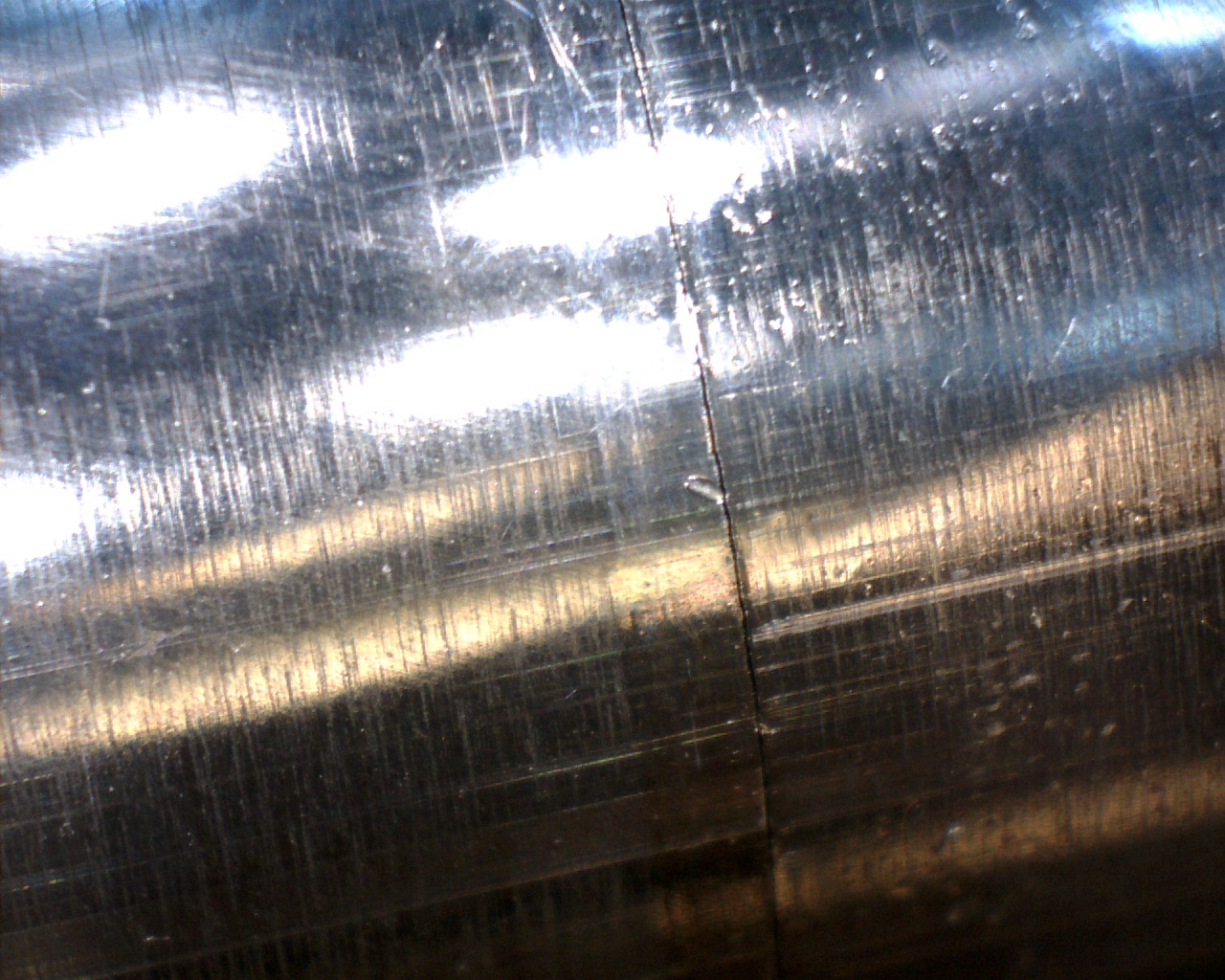
One detail immediately attracted the attention of the engineering team.
The internal marks inside the cylinder body were distributed uniformly around the entire circumference rather than being concentrated in one localized area.
This observation suggested that the piston had not simply rubbed against one side of the cylinder because of a permanent misalignment.
Instead, another failure mechanism appeared to be involved.
The Vega Technical Manager also considered the possibility that metallic particles generated during machining of the mold feed holes had entered the hydraulic circuit.
According to the inspection, this type of contamination is relatively common in hydraulic cylinders equipped with EOE, COF and COR oil port configurations.
The investigation therefore extended beyond the broken rod itself and focused on the complete hydraulic and mechanical environment in which the cylinder operated.
Two Possible Causes of the Failure
After completing the first inspection, the Vega Technical Department identified two technically plausible explanations.
The first possibility was the presence of radial loads acting on the piston rod.
Hydraulic cylinders are designed primarily to withstand axial loads.
When radial forces are introduced, bending stresses increase significantly and may eventually lead to fatigue or sudden fracture.
The second possible cause was the combination of high operating speed, moving mass and a very short return stroke.
Under these conditions, dynamic impact loads can become considerably higher than those predicted by static engineering calculations.
Based on the available evidence, both hypotheses were considered technically possible.
The Customer Was Not Convinced
The customer remained unconvinced by the initial explanation.
According to the mold manufacturer, the hydraulic cylinder pushed a central connecting bar that simultaneously operated two slides.
The mechanism was additionally guided by leader pins, creating a three-point guiding system.
Because of this arrangement, the customer considered significant radial loading practically impossible.
Another observation also generated doubts.
The fracture surface did not appear to resemble a conventional mechanical break.
Instead, it seemed almost as if two different metallic materials had been joined together.
For these reasons, the customer questioned whether the fracture could really have been caused by the loading conditions proposed by Vega.
At this point, both parties had reasonable technical arguments.
Neither side, however, possessed sufficient evidence to definitively prove its position.
When Engineering Evidence Is Not Enough
Engineering decisions should never be based on assumptions.
When the available evidence is insufficient, additional information becomes essential.
Rather than entering into a technical dispute, the Vega Technical Manager requested the complete 3D model of the mold in order to analyze every aspect of the application, including the slide mechanism, guiding system and the actual loads acting on the hydraulic cylinder.
This reflects one of the fundamental principles of engineering.
A hydraulic cylinder cannot be evaluated independently of the machine in which it operates.
The complete mechanical system must always be considered.
A Commercial Warranty Instead of a Technical Dispute
At this stage, the discussion could easily have turned into a disagreement over responsibility.
Instead, the Vega Technical Manager proposed a practical solution.
Although the exact cause of the failure had not yet been established, Vega offered to replace the broken rod under a commercial warranty, while the customer would only pay for the cylinder body and the seal kit.
This proposal allowed production to resume while the engineering investigation continued.
Rather than focusing on assigning blame, the priority became restoring the customer’s production as quickly as possible while continuing to collect technical evidence.
This approach strengthened customer confidence and maintained a constructive working relationship.
One Engineering Statement Changed the Entire Investigation
One sentence from the Vega Technical Manager completely changed the perspective of the investigation.
After proposing the commercial warranty, he added:
“If I am right, the new rod will break again within the next months.”
This statement was not intended to predict failure with certainty.
Instead, it represented an engineering hypothesis based on experience.
If the replacement rod operated successfully for years, the original failure might indeed have resulted from an isolated defect.
However, if the replacement rod fractured again under identical operating conditions, the evidence would strongly indicate that the true cause originated elsewhere in the mold or in the application itself.
Professional engineering is built on verifying hypotheses with objective evidence rather than drawing premature conclusions.
Why Apparently Identical Molds May Behave Differently
One of the customer’s strongest arguments was that another identical mold had been operating successfully since 2007.
Although this appears convincing, experienced mold designers know that two apparently identical molds rarely behave exactly the same.
Small differences may exist in:
- machining tolerances;
- assembly accuracy;
- slide friction;
- hydraulic pressure settings;
- operating speeds;
- production parameters.
Even very small variations can significantly modify the dynamic loads acting on a hydraulic cylinder.
For this reason, the successful operation of one mold does not automatically guarantee identical performance in another seemingly identical mold.
Lessons Learned from This Real Engineering Case
Several valuable engineering principles emerge from this investigation.
A broken hydraulic cylinder rod should never automatically be considered evidence of a manufacturing defect.
Likewise, previous successful operation does not automatically eliminate the possibility of application-related problems.
When technical evidence is incomplete, requesting additional information is often the only responsible engineering decision.
Finally, combining technical investigation with commercial flexibility helps preserve customer confidence while allowing the engineering team to continue searching for the true root cause.
Engineering Conclusions
This real technical support case demonstrates that identifying the cause of a broken hydraulic cylinder rod often requires much more than inspecting the fractured component.
The Vega Technical Department evaluated possible contamination, radial loading, dynamic stresses and mold design before reaching any conclusions.
When the available evidence proved insufficient, the engineering team requested the complete 3D mold model and proposed a commercial warranty solution instead of entering into a technical dispute.
The most important lesson from this case is simple:
Replacing a broken hydraulic cylinder rod may restore production, but only identifying the real root cause can prevent the next failure.