Motion Control Technologies at Interpack 2026: Precision, Speed and Reliability for Next-Generation Packaging Machines
Modern packaging machinery is evolving rapidly. As production speeds increase and product formats become more diverse, manufacturers require motion systems capable of delivering exceptional precision, reliability and efficiency.
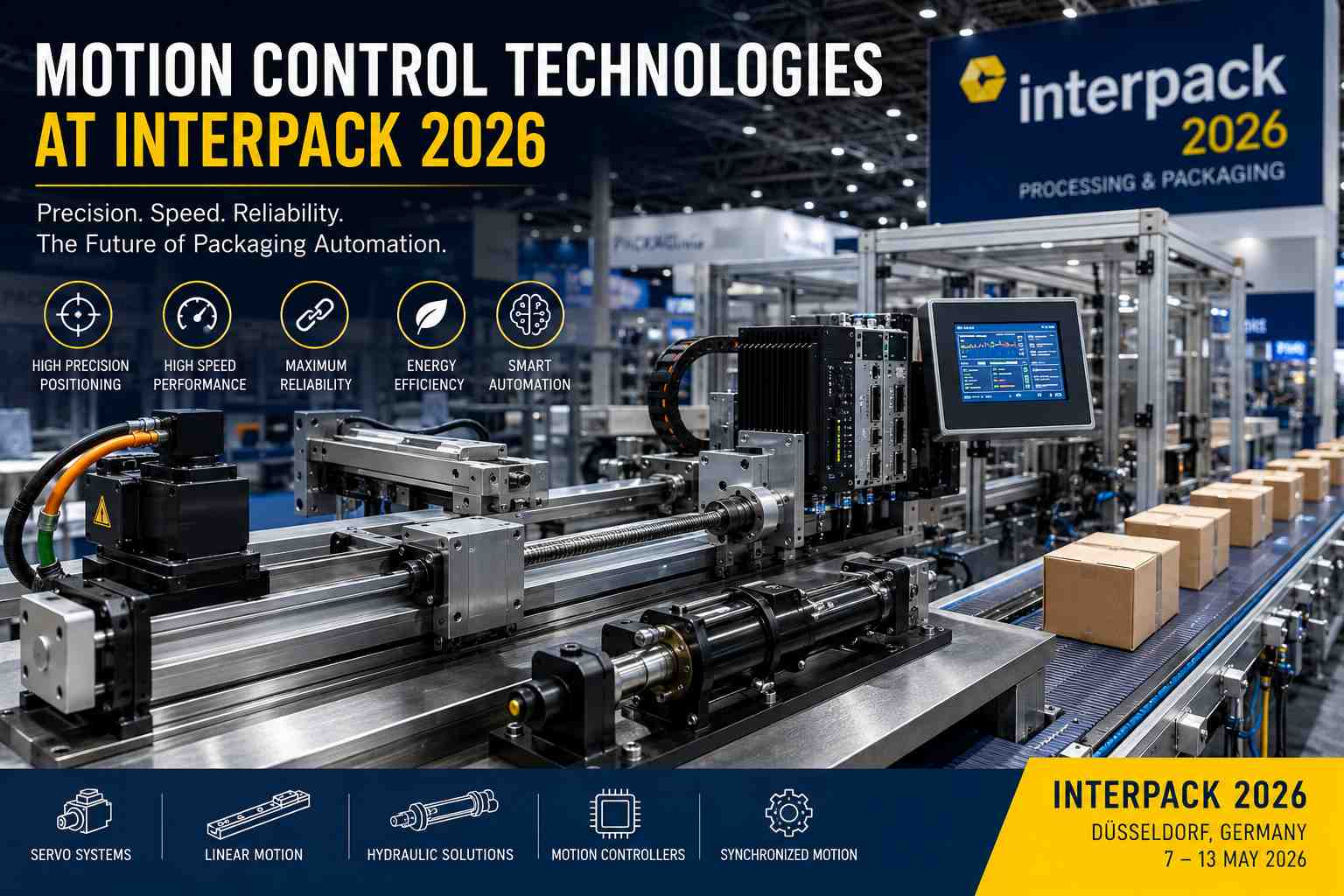
At Interpack 2026, motion control technologies are expected to be among the key innovations driving the next generation of packaging automation. From servo-driven systems and linear actuators to intelligent hydraulic solutions and synchronized machine movements, precision motion has become one of the foundations of high-performance packaging production.
Whether manufacturing food, pharmaceuticals, beverages or consumer goods, packaging companies increasingly rely on advanced motion technologies to improve productivity while reducing downtime and maintenance costs.
Why Motion Control Is Critical in Modern Packaging
Every packaging machine depends on accurate movement.
Packaging operations require:
- synchronized machine movements
- high positioning accuracy
- repeatable cycles
- smooth acceleration and deceleration
- reliable force transmission
- continuous operation
Even minor positioning errors can reduce production quality, increase waste and slow overall throughput.
Servo Motion Systems
Servo technology has transformed packaging automation.
Modern servo systems provide:
- micron-level positioning
- high-speed acceleration
- programmable motion profiles
- rapid product changeovers
- synchronized multi-axis control
Servo drives are widely used in:
- cartoning machines
- filling equipment
- labeling systems
- sealing machines
- palletizing systems
Linear Motion Technologies
Linear motion systems continue to evolve.
Applications include:
- product transfer
- lifting units
- indexing systems
- conveyor positioning
- carton handling
- machine setup
Modern linear systems improve:
- positioning accuracy
- operating speed
- production flexibility
- machine reliability
Hydraulic Motion Systems
Although electric technologies continue to expand, hydraulic motion remains essential for many demanding packaging applications.
Hydraulic systems provide:
- high force density
- compact installation
- reliable operation
- excellent load capacity
- long service life
Typical applications include:
- heavy lifting systems
- mold movements
- clamping mechanisms
- industrial presses
- high-force linear motion
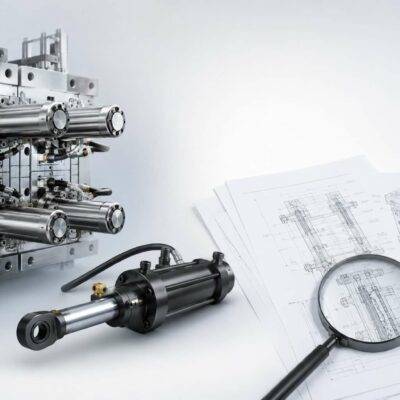
For applications requiring powerful and reliable linear movement, hydraulic cylinders continue to offer significant advantages.
Electronic Camming and Synchronized Motion
Packaging machinery increasingly uses electronic camming to synchronize multiple machine axes.
Benefits include:
- improved repeatability
- reduced mechanical wear
- simplified machine setup
- faster production
- flexible product formats
Electronic synchronization enables multiple stations to operate as a single coordinated system.
Intelligent Motion Controllers
Motion controllers have become increasingly sophisticated.
Modern systems integrate:
- real-time feedback
- adaptive control
- machine diagnostics
- predictive maintenance
- Industrial Ethernet communication
- cloud connectivity
These technologies allow packaging machines to achieve greater productivity while simplifying maintenance.
Motion Control and Artificial Intelligence
Artificial Intelligence is beginning to influence motion control.
AI algorithms help optimize:
- acceleration profiles
- positioning accuracy
- cycle times
- vibration reduction
- energy consumption
- predictive maintenance
Smart motion systems continuously improve machine performance based on production data.
Energy-Efficient Motion Systems
Reducing energy consumption is a priority for packaging manufacturers.
Modern motion systems improve efficiency through:
- regenerative servo drives
- optimized motion profiles
- intelligent power management
- variable-speed operation
- lightweight mechanical design
Lower energy use reduces both operating costs and environmental impact.
Motion Control for Industry 5.0
The future of packaging combines:
- Artificial Intelligence
- collaborative robotics
- Digital Twins
- Industrial IoT
- autonomous production
- intelligent motion systems
Motion control provides the mechanical precision required for these digital technologies to operate effectively.
Applications Across the Packaging Industry
Advanced motion technologies support:
- food packaging
- beverage production
- pharmaceutical manufacturing
- cosmetics
- medical devices
- industrial products
- logistics automation
Every industry benefits from faster, more reliable and more flexible production systems.
Frequently Asked Questions
What is motion control in packaging machinery?
Motion control refers to the technologies that precisely coordinate the movement of machine components, ensuring accurate positioning, synchronization and repeatable production cycles.
Why is precise motion important?
Accurate motion improves product quality, increases productivity, reduces waste and minimizes machine downtime.
Are hydraulic systems still used?
Yes. Hydraulic motion remains essential for applications requiring high force, durability and reliable linear movement.
Will AI improve motion control?
Artificial Intelligence is expected to optimize positioning accuracy, predictive maintenance and energy efficiency in future packaging machinery.
Why visit Interpack 2026?
Interpack provides an opportunity to discover the latest innovations in motion control, automation and intelligent manufacturing technologies.
Looking Ahead
Motion control continues to be one of the most important technologies behind modern packaging machinery.
As automation, robotics and Artificial Intelligence become increasingly integrated, the need for precise, reliable and energy-efficient motion systems will continue to grow.
Interpack 2026 is expected to showcase many of the innovations that will define the future of motion control in packaging manufacturing.