
In the world of injection molding, a failed sensor often appears to be a straightforward problem.
A sensor stops sending a signal, a machine alarm is triggered, production comes to a halt, and the obvious solution seems to be replacing the faulty component.
However, experienced engineers know that electronic components rarely fail repeatedly without a reason.
Sometimes the sensor is not the problem at all.
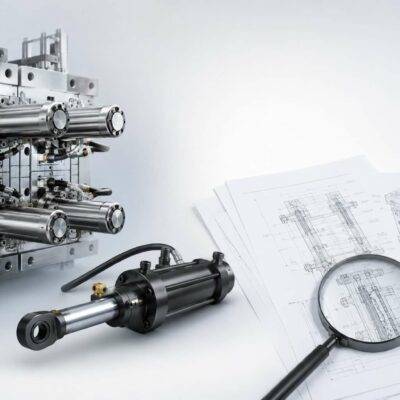
Recently, Vega Technical Dep. was asked to support a customer identified here only as D.T.I., a company using a self-locking hydraulic cylinder in a high-volume injection molding application.
What initially appeared to be a simple sensor failure quickly evolved into a more complex engineering investigation.
The Initial Issue
The application used a Vega self-locking hydraulic cylinder equipped with two position sensors.
After several months of operation, one of the sensors stopped functioning correctly.
The customer reported that the machine could no longer reliably detect the cylinder position, creating production interruptions and preventing normal operation of the mold.
At first glance, the situation seemed simple.
Replace the sensor and resume production.
Because minimizing downtime is always a priority, Vega Technical Dep. decided to provide a replacement sensor under commercial warranty, even though all sensors are tested before shipment.
The expectation was that production would quickly return to normal.
An Unexpected Development
The replacement sensor was installed and immediately worked correctly.
The original problem appeared solved.
However, shortly afterward, the second sensor mounted on the same cylinder also began to malfunction.
At this point, the situation became far more interesting from an engineering perspective.
Two independent sensors on the same cylinder had now failed.
The probability of two separate manufacturing defects occurring on the same assembly was extremely low.
Instead of simply sending another replacement part, the Vega engineering team began asking a different question:
What is causing these sensors to fail?
This shift in perspective is often the difference between temporary troubleshooting and true root cause analysis.
Looking Beyond the Obvious
Many maintenance interventions focus on replacing the failed component.
Engineering begins by understanding why the component failed.
The Vega Technical Department reviewed all available information and considered several possible causes:
- Damaged or crushed sensor cables
- Defective M8 connectors
- Electrical wiring issues
- Excessive tightening torque during installation
- Mechanical impact during mold assembly
- Environmental factors affecting the electrical system
- Improper handling during maintenance operations
Any of these factors could potentially damage a sensor while leaving the hydraulic cylinder itself completely unaffected.
This is why component replacement alone rarely provides a complete answer.
Quality Control Before Shipment
One important aspect of the investigation involved reviewing Vega’s internal quality procedures.
Every sensor supplied with the cylinder undergoes multiple verification stages:
Supplier Testing
Sensors are tested by the manufacturer before delivery.
Assembly Inspection
Components are checked before installation on the cylinder.
Final Functional Test
The complete cylinder assembly is tested before shipment to the customer.
These verification steps significantly reduce the likelihood of a defective component reaching the field.
When multiple sensors fail on the same installation, engineers must therefore investigate conditions outside the product itself.
Reviewing the Original Design
The investigation also included a review of the original application.
Several months earlier, before the cylinder was supplied, the customer had requested technical assistance selecting the correct hydraulic actuator.
Rather than simply quoting a product, Vega Technical Dep. analyzed the mold design and performed force calculations based on the available 3D data.
The engineering review considered:
- Projected surface area
- Plastic pressure acting on the component
- Draft angles
- Expected stripping forces
- Mechanical loads on the locking system
The calculations demonstrated that the selected self-locking cylinder was actually oversized for the application and operating with a comfortable safety margin.
This finding was particularly important.
It confirmed that:
- The cylinder had been correctly selected.
- The mechanical loads were within design limits.
- The locking system was properly dimensioned.
- There was no evidence of overload conditions that could explain repeated sensor failures.
The root cause therefore had to be investigated elsewhere.
Why Repeated Failures Require Deeper Analysis
One of the most common mistakes in industrial troubleshooting is treating each failure as an isolated event.
A failed sensor is replaced.
A damaged cable is repaired.
A machine alarm is reset.
Production resumes.
But when the same issue reappears, the focus must shift from symptoms to causes.
Repeated failures often indicate:
- Installation problems
- Environmental influences
- Mechanical interference
- Electrical disturbances
- Maintenance procedures that need improvement
Without identifying the root cause, replacement components may continue to fail regardless of their quality.
The Engineering Approach
At Vega, technical support is not limited to supplying spare parts.
Our objective is to understand the complete operating environment.
This means evaluating:
- Mechanical design
- Hydraulic performance
- Electrical integration
- Installation procedures
- Maintenance practices
Only after considering the entire system can a reliable conclusion be reached.
In this case, the evidence suggested that the cylinder itself was performing correctly and that further investigation should focus on the surrounding installation and control system.
Lessons Learned
This case highlights several important engineering principles.
1. A failed component is not always the root cause
The visible failure may simply be the symptom of a different problem elsewhere in the system.
2. Repeated failures deserve investigation
When multiple components fail in the same location, engineers should look beyond the component itself.
3. Proper application review matters
The original force calculations confirmed that the cylinder was correctly sized, eliminating one possible source of failure.
4. Technical support creates long-term value
Replacing parts solves immediate problems.
Understanding why they fail prevents future ones.
Conclusion
Successful troubleshooting requires more than replacing damaged components.
It requires curiosity, analysis, and a willingness to challenge assumptions.
In this case, what appeared to be a simple sensor failure became an opportunity to investigate the complete system and search for the true root cause.
At Vega, this approach is part of our engineering philosophy.
Because when a sensor fails twice, the real question is not how quickly it can be replaced.
The real question is why it failed in the first place.