Company Snapshot
| Country | Germany |
| Founded | 1865 |
| Industry | Injection Mold Manufacturing |
| Main Markets | Packaging, Consumer Products, Technical Plastics |
| Core Expertise | High-performance packaging molds, automation, precision engineering |
| Applications | Caps & Closures, Packaging, Consumer Goods |
Introduction
Few companies in the mold-making industry can trace their origins back more than 150 years. Founded in 1865, Otto Männer has established itself as one of Germany’s most respected manufacturers of high-performance injection molds and automation systems, particularly for the packaging industry.
Over the decades, the company has developed a reputation for precision engineering, productivity optimization, and continuous technological innovation. Today, Otto Männer represents an excellent example of how specialization, engineering expertise, and long-term investment can create sustainable competitive advantages in global manufacturing.
The History of Otto Männer: More Than 160 Years of Engineering Excellence
The history of Otto Männer reflects the broader evolution of German industry itself.
Throughout multiple industrial revolutions, the company has continuously adapted its technologies, manufacturing methods, and engineering capabilities to meet changing customer requirements.
Rather than competing primarily on manufacturing volume, Otto Männer focused on developing expertise in high-performance tooling systems where precision, reliability, and productivity are critical.
This strategic approach allowed the company to establish strong positions in highly competitive international markets.
The ability to continuously innovate while maintaining traditional engineering values remains one of the defining characteristics of successful German industrial companies.
Why Otto Männer Became a Leader in Packaging Mold Manufacturing
The packaging industry presents unique challenges for mold manufacturers.
Unlike many technical applications, packaging molds frequently operate at extremely high production rates while maintaining strict dimensional tolerances and long service life requirements.
Manufacturers serving this sector must optimize numerous factors simultaneously:
- Production cycle times
- Cooling performance
- Material flow characteristics
- Mold durability
- Automation integration
- Ease of maintenance
Even small improvements in productivity can generate significant economic advantages for manufacturers producing millions of components annually.
This environment rewards companies capable of combining engineering expertise with practical manufacturing experience.
Engineering for Maximum Productivity
One of the most interesting characteristics of companies like Otto Männer is their focus on productivity rather than simply mold construction.
A modern injection mold represents far more than a machined steel assembly.
It is a highly engineered production system designed to maximize output, minimize downtime, and ensure consistent product quality over millions of production cycles.
To achieve these objectives, engineers must carefully balance:
- Mechanical performance
- Thermal management
- Material behavior
- Process stability
- Automation requirements
- Serviceability
This systems-oriented engineering philosophy has become increasingly important as manufacturing environments continue to evolve.
Automation and Digital Manufacturing
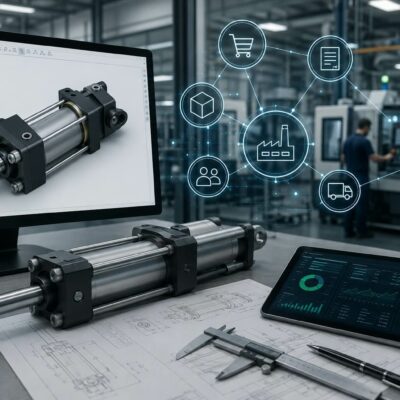
Modern mold manufacturing increasingly depends on advanced digital technologies.
Today’s manufacturers utilize:
- CAD/CAM systems
- Mold flow simulation
- CNC automation
- Coordinate measuring systems
- Digital quality control
- Production monitoring software
These technologies enable engineers to identify potential problems earlier, improve consistency, and reduce development times.
However, technology itself is not the competitive advantage.
The real advantage comes from combining advanced tools with engineering expertise and manufacturing experience.
This combination remains one of the strongest competitive factors within the global mold industry.
Reliability Under High Production Conditions
Packaging molds often operate under some of the most demanding conditions in manufacturing.
Millions of production cycles may occur every year.
Even short production interruptions can generate substantial economic losses.
For this reason, manufacturers place enormous emphasis on:
- Wear resistance
- Thermal stability
- Dimensional accuracy
- Serviceability
- Component reliability
The ability to maintain performance over extended production periods remains one of the defining characteristics of high-quality mold manufacturing.
The Role of Hydraulic Systems in Modern Tooling
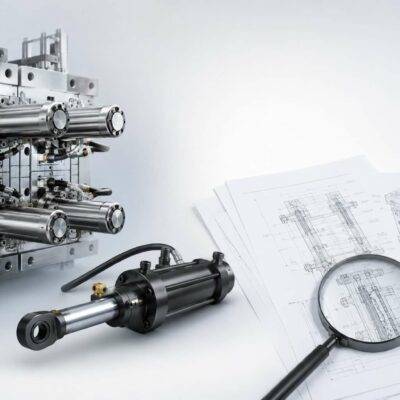
Although packaging molds are primarily associated with speed and automation, hydraulic systems continue to perform critical functions in many advanced applications.
Hydraulic cylinders are commonly used for:
- Core pulling systems
- Special mold movements
- Locking functions
- Complex mechanical actions
- Automated tooling operations
These components frequently operate under demanding conditions while occupying extremely limited installation spaces.
As molds become more compact and sophisticated, component reliability becomes increasingly important because even minor failures can interrupt entire production lines.
For manufacturers of high-performance tooling systems, every component contributes to the overall productivity and profitability of the final mold.
Why Companies Like Otto Männer Matter
Companies such as Otto Männer demonstrate that successful mold manufacturing requires much more than machining capability.
Their success reflects the ability to integrate:
- Engineering expertise
- Manufacturing excellence
- Automation technologies
- Process optimization
- Customer collaboration
- Continuous innovation
These capabilities create competitive advantages that remain difficult to replicate.
What Mold Manufacturers Can Learn
Specialization Builds Expertise
Deep knowledge of specific markets often creates stronger competitive advantages than broad manufacturing capabilities.
Productivity Creates Value
Customers increasingly evaluate tooling based on production performance rather than purchase price alone.
Innovation Requires Investment
Long-term industrial success depends on continuous technological development.
Reliability Remains Essential
The ability to deliver consistent performance over millions of cycles remains one of the industry’s greatest challenges.
Looking Ahead
The future of mold manufacturing will continue to be shaped by automation, digital engineering, artificial intelligence, and sustainability requirements.
Companies such as Otto Männer demonstrate how engineering expertise, continuous innovation, and strategic specialization can support long-term industrial success.
Their history also highlights an important lesson for the entire mold-making industry: technologies evolve, markets change, and customer expectations increase, but engineering excellence remains one of the most valuable assets any manufacturer can possess.
About this series
Mold Makers of the World is an independent editorial project created by Vega Cylinders to document and celebrate excellence in the global mold manufacturing industry. If you represent this company and wish to provide corrections, additional information, or official images, we would be pleased to update this article.
Disclaimer: This article is an independent editorial publication created for educational and industrial information purposes. All trademarks and company names belong to their respective owners.