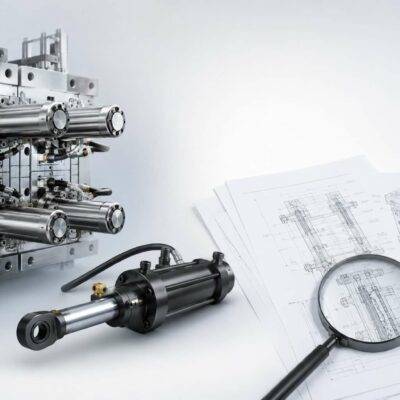

In hydraulic-cylinder applications for injection molds, pressure monitoring can be just as important as cylinder sizing and mechanical installation.
A pressure switch can provide the machine with a reliable signal when a predefined hydraulic pressure is reached. However, selecting the correct pressure switch is only part of the solution.
The switch must also be correctly configured, tested and protected against unintended adjustments by production operators.
A historical Vega technical case involving an injection-mold application provides an interesting example of how these aspects can be managed. The Customer required a pressure switch solution that could be supplied with the requested pressure value already configured, while avoiding the possibility of unauthorized changes during production.
The case also highlights the importance of providing the correct testing and setting equipment when commissioning hydraulic-cylinder sensors and switches.
Why Pressure Switch Configuration Matters
A pressure switch is not simply an electrical component installed on a hydraulic circuit.
Its switching point must correspond to the pressure condition required by the application.
If the switching pressure is incorrect, the machine may:
- receive a signal too early;
- receive a signal too late;
- fail to recognize the required hydraulic condition;
- interrupt the molding cycle;
- allow the next operation to start at the wrong moment.
For this reason, the pressure value should be defined according to the actual hydraulic application before the switch is supplied.
In the case analyzed by the Vega Team, the proposed electronic pressure switch was to be programmed before shipment according to the pressure value requested by the Customer.
This approach can significantly simplify installation and commissioning.
When Production Operators Should Not Be Able to Change the Pressure Setting
One of the Customer’s requirements was particularly interesting.
The application required a pressure switch without the possibility of accidental or unauthorized adjustment by production personnel.
This is an important consideration in industrial environments.
During production, the pressure setting should normally remain consistent with the machine’s validated operating conditions.
If an operator can freely change the switching pressure, the machine could behave differently from the parameters established during commissioning.
This can create:
- inconsistent machine behavior;
- incorrect pressure confirmation;
- unexpected alarms;
- unnecessary production stops;
- difficulty diagnosing intermittent problems.
Therefore, when selecting an electronic pressure switch, it is useful to consider not only what pressure it can measure, but also how the setting is protected.
Two Different Approaches to Pressure-Setting Protection
In the technical discussion, two different types of electronic pressure switches were considered.
The first type could be manually adjusted before shipment and supplied with a protective cover that prevented the operator from changing the setting during normal operation.
The second type did not require manual adjustment and could instead be configured through a specific PC interface.
Both approaches can be useful, depending on the application.
Pre-programmed switch
A pre-programmed switch is particularly convenient when:
- the required pressure value is already known;
- the Customer wants a simple installation;
- production personnel should not modify the setting;
- the switch can be supplied already configured.
PC-configured switch
A switch configured through an interface can provide greater control during commissioning and maintenance.
It can be particularly useful when several parameters need to be managed or when the application requires more sophisticated configuration.
The important point is that the correct solution depends on the requirements of the machine and the Customer.
The Importance of the Pressure-Setting Tester
The technical correspondence also discussed the equipment required to set the pressure switch.
In this case, the Link Starter Kit used for pressure setting was to be absorbed by Vega, rather than being treated as an additional cost to the Customer.
This is significant because correct pressure-switch commissioning requires an appropriate method of verifying the actual switching point.
A homemade electrical test may show that a switch changes state, but that does not necessarily prove that it changes state at the correct hydraulic pressure.
The commissioning process should therefore distinguish between two separate questions:
Does the switch operate electrically?
and:
Does the switch operate at the required hydraulic pressure?
The second question requires a suitable pressure-setting and testing procedure.
Why Electrical Testing Alone Is Not Enough
Imagine that an electronic pressure switch is connected to a battery and an indicator lamp.
When the switch changes state, the lamp turns on.
This proves that the electrical output is functioning.
However, it does not establish whether the switch changes state at:
- 50 bar;
- 80 bar;
- 100 bar;
- 150 bar;
or any other required value.
For a hydraulic application, the switching pressure is the critical parameter.
The pressure must therefore be verified against a known hydraulic pressure during setting or calibration.
This is one reason why Vega’s historical technical procedure included dedicated equipment for pressure setting.
The Pressure Switch Was Supplied Already Programmed
Another useful aspect of the solution was that the pressure switch could be supplied already programmed to the pressure requested by the Customer.
This has several practical advantages.
Faster installation
The technician does not necessarily need to determine the setting from scratch at the machine.
Reduced risk of incorrect adjustment
The switch arrives with the intended pressure value already configured.
Better control of production parameters
Operators are less likely to change a validated setting accidentally.
Easier commissioning
The installation technician can concentrate on verifying the hydraulic and electrical connections rather than performing the complete pressure-setting procedure.
The Pressure Value Must Still Be Confirmed on the Machine
Pre-programming does not eliminate the need for commissioning.
The actual hydraulic system should still be checked because the pressure measured by the switch depends on where the switch is installed and on the operating conditions of the machine.
The following should be considered:
- pressure at the switch connection point;
- hydraulic circuit configuration;
- pressure fluctuations;
- machine operating cycle;
- pressure peaks;
- required switching threshold;
- electrical signal received by the machine controller.
The switch should therefore be considered part of the complete hydraulic control system rather than an isolated component.
A Pressure Switch Is Different from a Cylinder Position Sensor
This distinction is important in hydraulic-cylinder applications.
A position sensor tells the machine where the hydraulic cylinder is.
A pressure switch tells the machine that a particular pressure condition has been reached.
These two signals provide different information.
For example:
Position sensor
Cylinder reaches the required position → sensor changes state → machine receives position confirmation.
Pressure switch
Hydraulic pressure reaches the programmed threshold → pressure switch changes state → machine receives pressure confirmation.
Depending on the application, either signal—or both—may be required.
Vega’s current technical documentation also covers the use of different sensor technologies for hydraulic-cylinder position monitoring and their integration with machine control systems.
Pressure Confirmation Can Be Critical in Injection Molding
Injection molding machines often operate according to carefully defined sequences.
A hydraulic cylinder may:
- move a core;
- lock a slide;
- hold a component in position;
- complete a movement;
- maintain a hydraulic condition.
In some applications, knowing that the cylinder has reached a particular position may not be sufficient.
The machine may also need confirmation that the hydraulic system has reached the required pressure.
This is where pressure monitoring can add an additional layer of control.
Protecting the Setting Is Part of the Design
The Customer’s request for a pressure switch that could not easily be adjusted by production personnel illustrates a broader engineering principle:
A component should be selected not only according to its technical performance, but also according to how it will be used and maintained in the real production environment.
A pressure switch that is technically capable of the required pressure but can be easily adjusted by unauthorized personnel may not be the best solution.
The correct configuration should consider:
- commissioning;
- production;
- maintenance;
- operator access;
- adjustment protection;
- future troubleshooting.
The Difference Between Commissioning and Production
During commissioning, technicians may need to adjust the switching pressure.
During normal production, however, the setting may need to remain fixed.
These are two different requirements.
A good solution should therefore allow:
Technician → access to configuration
while providing:
Operator → protection against unintended changes
This was precisely one of the requirements considered in the historical Vega case.
The Testing Procedure Should Be Defined Before Installation
Another lesson from the case is that the pressure-switch testing method should be considered before the component reaches the machine.
The technical discussion included the operative instructions and the equipment required for setting the pressure switch.
A well-defined commissioning procedure should establish:
- the required pressure value;
- the correct connection;
- the method of applying hydraulic pressure;
- the switching point to be verified;
- the electrical output to be checked;
- the protection of the final setting.
This makes troubleshooting considerably easier.
Pressure Switches and Hydraulic Cylinder Reliability
Pressure monitoring can also contribute to preventive maintenance.
If a hydraulic cylinder normally reaches a particular pressure during a defined operation but suddenly behaves differently, the pressure signal may provide useful diagnostic information.
A change in pressure behavior could indicate:
- hydraulic leakage;
- incorrect valve operation;
- changes in load;
- mechanical resistance;
- incorrect adjustment;
- deterioration of a component.
However, the pressure switch itself should not automatically be blamed when the signal changes.
As with position sensors, the complete hydraulic system must be considered.
Vega’s technical support documentation repeatedly emphasizes this approach: a sensor or switch problem can sometimes be a symptom of a wider mechanical or hydraulic issue.
Choosing the Right Pressure Switch for the Application
Before selecting a pressure switch for a hydraulic-cylinder application, it is useful to define:
1. Required switching pressure
What exact pressure should trigger the electrical signal?
2. Maximum operating pressure
The switch must be suitable for the maximum pressure of the hydraulic circuit.
3. Connection
The hydraulic connection must be compatible with the installation.
4. Electrical output
The output must be compatible with the machine controller.
5. Adjustment method
Will the switch be manually adjusted, pre-programmed or configured through an interface?
6. Protection against adjustment
Can production personnel change the setting?
7. Testing procedure
How will the switching pressure be verified during commissioning?
These questions should be answered before selecting the component.
A Practical Commissioning Checklist
When installing an electronic pressure switch on a hydraulic cylinder system, the following checklist can be useful.
Before installation
- Confirm the required switching pressure.
- Confirm the maximum hydraulic pressure.
- Check the hydraulic connection.
- Verify the electrical interface.
- Define who is authorized to modify the setting.
During installation
- Install the switch correctly.
- Check the hydraulic connection for leakage.
- Connect the electrical signal correctly.
- Verify the machine input configuration.
During commissioning
- Apply the required hydraulic pressure.
- Verify the switching point.
- Confirm the electrical signal.
- Compare the actual pressure with the programmed value.
- Record the final configuration.
During production
- Prevent unauthorized changes.
- Monitor abnormal pressure behavior.
- Include the pressure switch in troubleshooting procedures.
The Main Lesson from This Vega Technical Case
This case demonstrates that selecting a pressure switch is not simply a matter of choosing a component with the correct pressure range.
The complete solution includes:
Pressure requirement
↓
Correct pressure switch
↓
Correct configuration
↓
Appropriate testing equipment
↓
Correct electrical integration
↓
Protection against unauthorized adjustment
The historical Vega technical discussion specifically addressed the need for a pressure switch that could be supplied already programmed, as well as the equipment used for pressure setting.
This approach can make installation easier, reduce the possibility of incorrect settings and provide better control over the hydraulic parameters used by the machine.
Conclusion
Electronic pressure switches can provide valuable information in hydraulic-cylinder applications, particularly when the machine needs confirmation that a defined hydraulic pressure has been reached.
However, reliable operation depends on more than the switch itself.
The pressure value must be correctly defined, the switch must be configured appropriately, and the final setting should be verified using a suitable testing procedure.
The Vega technical case discussed here shows the value of supplying the pressure switch already programmed to the Customer’s requested pressure, while considering how the setting can be protected from unwanted changes during production.
It also highlights an important distinction between simply checking whether an electrical switch works and verifying that it switches at the correct hydraulic pressure.
For demanding injection-molding applications, the best result comes from treating the pressure switch as part of the complete hydraulic and machine-control system.
A correctly selected pressure switch is only the beginning. Correct configuration, testing and protection of the setting are equally important for reliable operation.
Useful and Verified Vega URLs
- Vega Cylinders Support – Technical Articles — Official Vega support area containing technical articles about hydraulic cylinders, switches and spare parts.
- How to Connect Multiple Hydraulic Cylinder Position Sensors to a PLC — Official Vega article explaining sensor signals, PLC compatibility and the integration of multiple cylinder sensors.
- When the Sensor Isn’t the Problem — Official Vega technical case showing why a sensor-related problem should sometimes be investigated as part of the complete hydraulic and mechanical system.
- Mechanical Switch Operating Range in Hydraulic Cylinders — Official Vega article explaining the relationship between cylinder movement, switch activation and mechanical installation.
- Vega Hydraulic Cylinder End-Stroke Switches — Official Vega Cylinders product area for hydraulic-cylinder end-stroke switches, including magnetic and mechanical configurations.