Why pressure loss is an important problem
Pressure loss directly affects mold filling performance.
If pressure becomes too high, several defects may appear:
- short shots
- warpage
- cosmetic defects
- unstable production
When molten plastic flows through runners and gates, it encounters resistance.
This resistance changes:
- flow speed
- viscosity
- temperature
- polymer behavior
Runners that are too small
One of the most common mistakes is using runners that are too small.
This reduces material volume but increases:
- pressure loss
- shear stress
- material temperature
Excessive shear may degrade the polymer.
Mechanical properties may become worse.
Why runner geometry matters
Runner geometry is critical.
Circular or optimized cross-sections provide:
- smoother flow
- lower turbulence
- higher efficiency
Sharp corners and sudden diameter changes increase:
- energy loss
- turbulence
- flow instability
Flow balancing in multi-cavity molds
In multi-cavity molds, balancing is essential.
If some cavities receive material earlier than others, problems may appear:
- dimensional variations
- surface defects
- quality instability
Mold flow simulation software helps engineers identify these issues before mold manufacturing begins.
Thermal management and hot runners
In hot runner systems, temperature must be carefully controlled.
Thermal variations modify:
- viscosity
- pressure
- filling behavior
Correct thermal management improves:
- quality
- repeatability
- production stability
Modern engineering workflows
Today engineers work with increasingly integrated systems.
Parametric configurators and 3D CAD systems are becoming essential engineering tools.
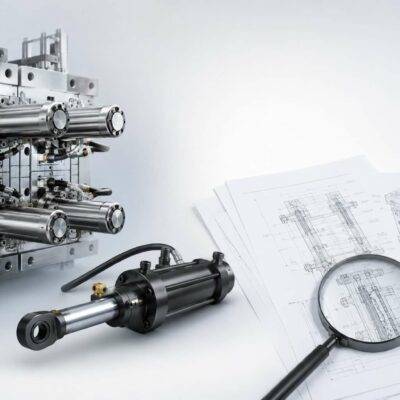
Platforms such as Vega Cylinders allow engineers to:
- configure hydraulic cylinders online
- download 3D CAD
- verify compatibility
- accelerate engineering workflow
This reduces design errors and improves mold development speed.
The future of mold engineering
In the future of injection molding:
- simulation
- automation
- parametric CAD
- real-time manufacturing
will become increasingly interconnected.
Companies capable of integrating engineering and manufacturing will gain major competitive advantages.