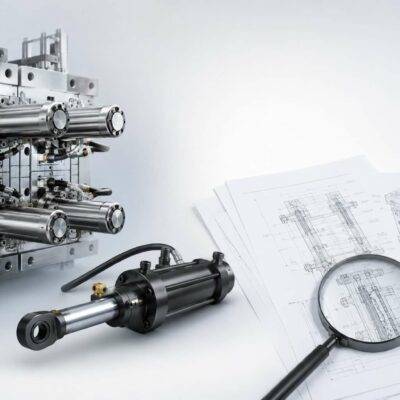

When engineers design an injection mold, most attention is focused on major decisions.
The number of cavities.
The cooling system.
The slides.
The hydraulic cylinders.
But sometimes the success of an entire project depends on something much smaller.
Sometimes it depends on just a few millimeters.
Recently, Vega Technical Dep. was asked to support a mold maker during the development of a complex injection mold equipped with multiple self-locking hydraulic cylinders.
At first glance, the project seemed straightforward.
The customer needed recommendations for suitable cylinder sizes and wanted to verify the operating forces acting on the slides.
However, the technical review soon revealed that selecting the correct cylinder was only part of the challenge.
Engineering Before Manufacturing
Rather than simply requesting a quotation, the customer shared the complete mold design and asked Vega Technical Dep. to perform a full technical review before construction began.
The objective was clear:
Ensure that the selected cylinders would not only generate sufficient force but would also function correctly once installed inside the mold.
To achieve this, the engineering team reviewed:
- The 3D mold model
- Slide geometry
- Operating forces
- Cylinder stroke requirements
- Locking conditions
- Hydraulic pressure requirements
This approach transformed a standard product selection into a complete engineering validation process.
Calculating More Than Cylinder Force
The initial analysis involved four separate side-core movements.
For each slide, the engineering team evaluated:
- Frontal area exposed to cavity pressure
- Plastic adhesion forces
- Required thrust force
- Required pulling force
- Recommended cylinder size
Based on these calculations, different self-locking cylinder sizes were proposed depending on the load generated by each slide.
The calculations confirmed that the selected cylinders were capable of handling both injection and extraction forces.
From a purely force-based perspective, the project appeared correct.
But the review did not stop there.
The Hidden Requirement of Self-Locking Cylinders
Unlike conventional hydraulic cylinders, self-locking cylinders include a mechanical locking system.
This mechanism provides additional safety by preventing movement even if hydraulic pressure is lost.
However, there is one critical requirement:
The cylinder must reach its complete locking position.
If the rod does not fully extend, the locking system cannot engage correctly.
A cylinder may therefore be perfectly sized from a force perspective while still failing to perform its locking function.
This is a detail that can easily be overlooked during mold design.
The Discovery
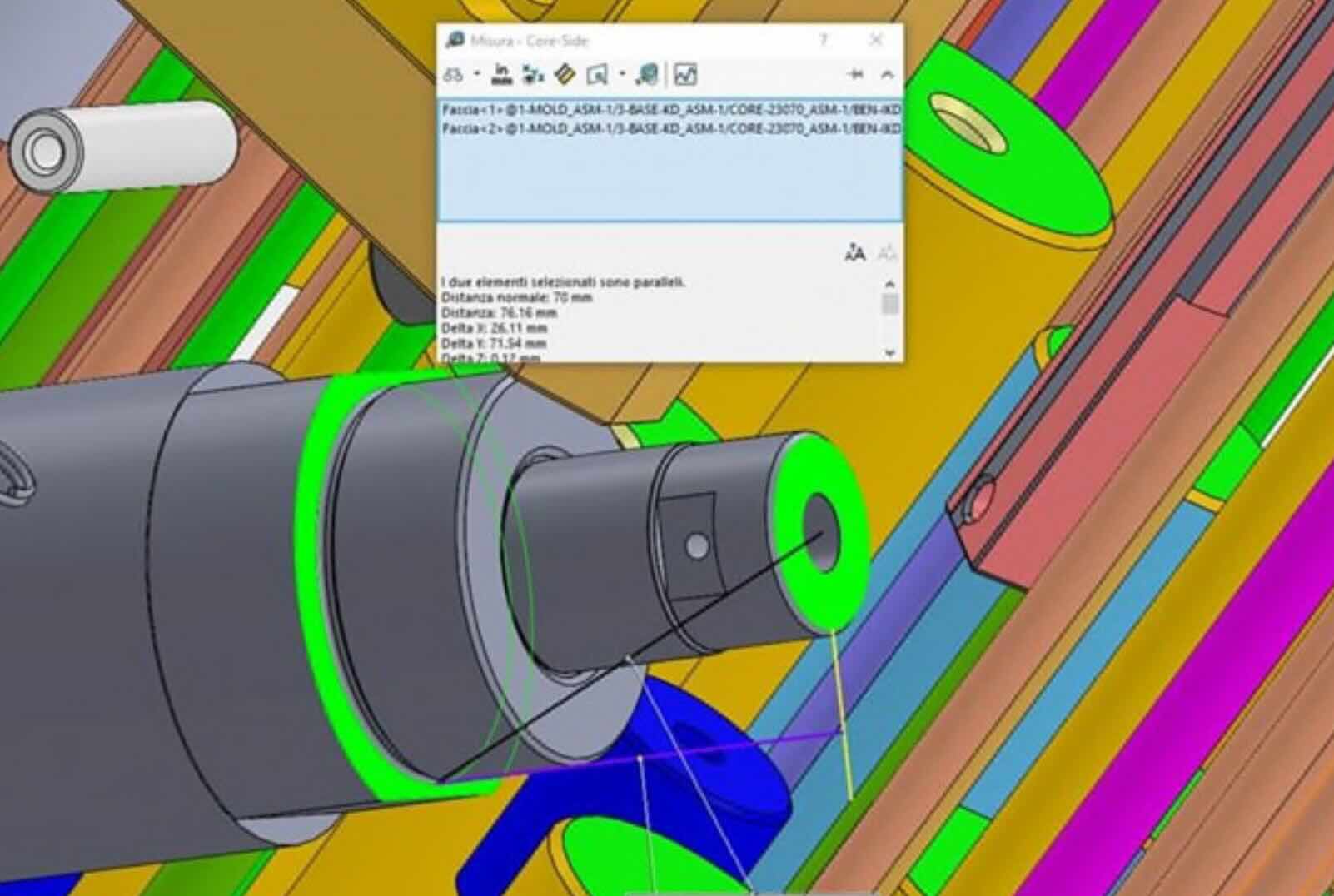
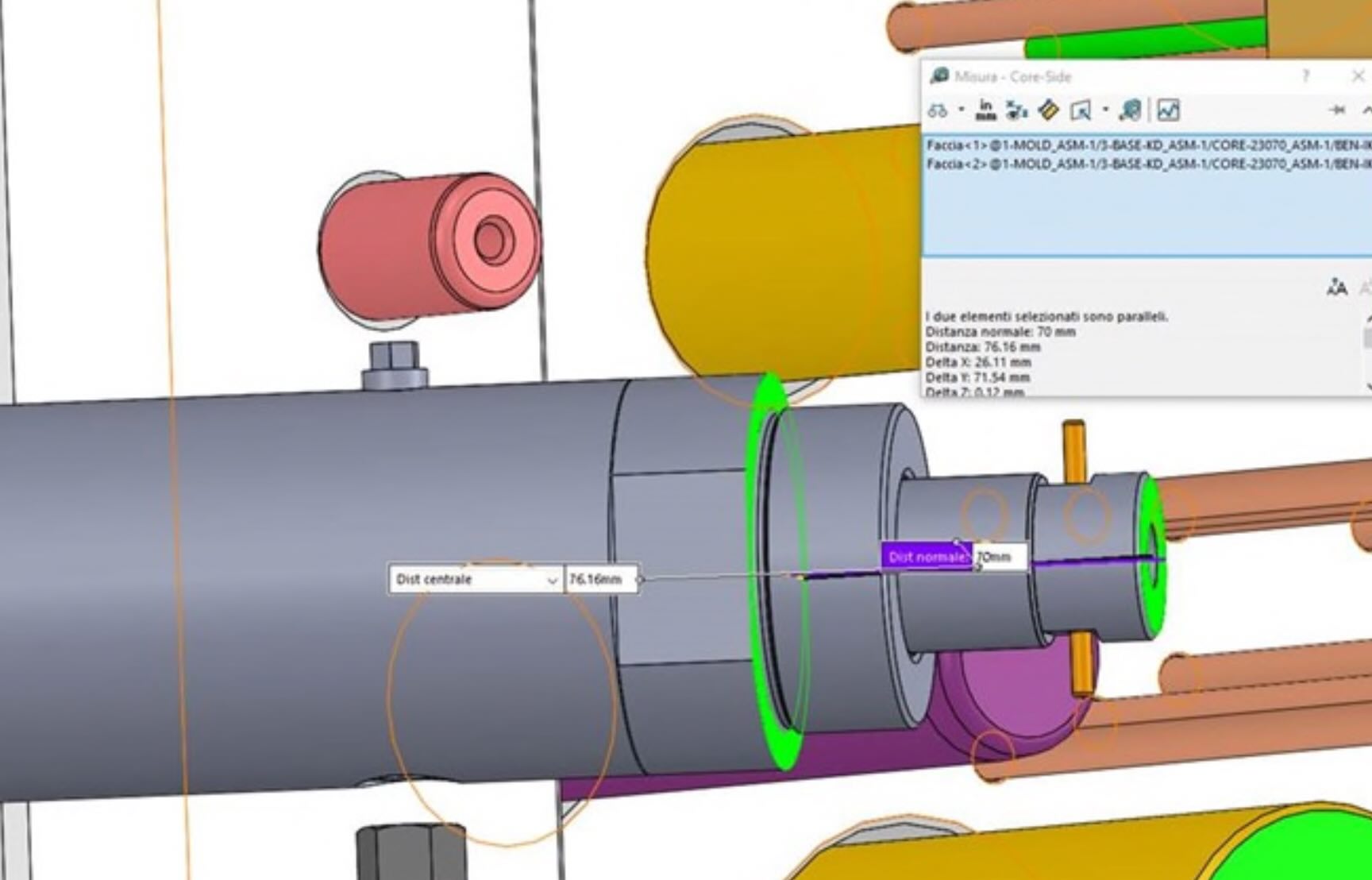
While reviewing the 3D model, Vega Technical Dep. identified a small but important issue.
The position of the slide prevented the cylinder rod from reaching its complete extension.
The interference was only a few millimeters.
Approximately:
2 mm.
At first glance this dimension seemed insignificant.
In reality, it could have prevented the self-locking mechanism from engaging correctly.
The cylinder would have moved.
The slide would have operated.
But the locking system would not have been fully activated.
And that could have compromised the reliability of the entire mold.
Why Small Dimensions Matter
Injection molds are highly precise mechanical systems.
Small dimensional deviations can have consequences that are completely disproportionate to their size.
In this case, the issue was not:
- Cylinder strength
- Hydraulic pressure
- Component quality
- Mechanical durability
The issue was geometry.
A difference of only 2 mm could have prevented the safety function of the cylinder from operating as intended.
Without the technical review, this problem might only have been discovered after mold construction, during commissioning or production trials.
At that point, corrective actions would have been significantly more expensive.
Correcting the Problem Before It Existed
One of the most valuable aspects of engineering support is identifying potential failures before they occur.
Following Vega’s review, the customer modified the design and corrected the interference condition before manufacturing began.
No emergency modifications.
No machine downtime.
No costly mold rework.
Simply a better design before production started.
The Difference Between Product Supply and Engineering Support
Many suppliers can provide a hydraulic cylinder.
Fewer suppliers will review a complete mold design.
Even fewer will identify a dimensional issue that has nothing to do with the cylinder itself.
This project highlights the difference between selling a component and supporting an engineering application.
The value was not limited to the cylinders eventually supplied.
The value came from helping the customer avoid a problem before it became a cost.
Lessons Learned
1. Correct cylinder sizing is only the first step
A cylinder may be correctly sized and still fail if installation conditions are not verified.
2. Self-locking cylinders require complete engagement
Full stroke completion is essential for proper locking.
3. Small dimensional errors can create large problems
A few millimeters may determine whether a safety mechanism works or not.
4. 3D model reviews create real value
Engineering analysis often identifies issues that calculations alone cannot reveal.
5. The best problem is the one discovered before production
Preventive engineering is always less expensive than corrective engineering.
Conclusion
The most expensive problems are not always caused by major design errors.
Sometimes they are caused by details so small that they are easy to overlook.
In this project, a difference of approximately 2 millimeters could have prevented a self-locking cylinder from performing its most important function.
Thanks to a complete review of the mold design, the issue was identified and corrected before manufacturing began.
Because in engineering, success is often determined not by the biggest dimensions, but by the smallest ones.