
When discussing the world’s leading mold-making countries, Germany, Japan, China and the United States are often the first names that come to mind. Yet over the last few decades, Portugal has quietly built one of the most respected mold industries in the world.
At the center of this success story stands Iberomoldes, a company that has become a symbol of Portuguese engineering, precision manufacturing, and long-term industrial vision.
While many companies compete primarily on price, the most successful mold makers compete on knowledge, engineering capability, reliability, and the ability to solve complex manufacturing challenges. Iberomoldes is an excellent example of this approach.
For anyone involved in the tooling industry, the company’s journey offers valuable lessons about growth, innovation, and competitiveness in a global market.
The Origins of a Mold-Making Region
To understand Iberomoldes, it is important to understand Marinha Grande.
Located on Portugal’s Atlantic coast, Marinha Grande has been associated with manufacturing for centuries. Originally known for its glass industry, the region gradually developed a strong technical culture centered around precision machining, toolmaking, and industrial production.
Over time, this industrial ecosystem evolved into one of Europe’s most important mold-making clusters.
Today, companies in the region design and manufacture molds that are exported worldwide and used to produce millions of plastic components every day.
Automotive parts, packaging products, household appliances, electronic components, medical devices, and technical engineering plastics often begin their journey inside molds produced in Portugal.
Iberomoldes grew together with this industrial ecosystem and became one of its most recognized ambassadors.
More Than a Mold Manufacturer
Many people think of a mold manufacturer simply as a company that machines steel blocks into complex tooling.
The reality is much more sophisticated.
Modern mold making combines engineering, materials science, thermal management, manufacturing technology, quality control, automation, and production optimization.
Companies such as Iberomoldes are involved long before the first chip of steel is machined.
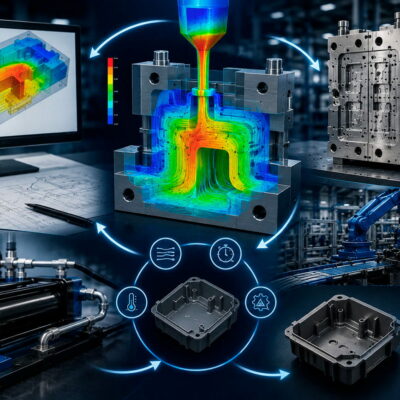
The process typically begins with product analysis and engineering studies. Designers evaluate how a plastic component will be manufactured, identify potential risks, optimize wall thicknesses, analyze material flow, and consider cooling strategies.
Only after extensive engineering work does the actual mold design begin.
The quality of this early work often determines the success or failure of an entire production program.
A well-designed mold can reduce cycle times, improve product quality, decrease maintenance requirements, and lower manufacturing costs for years.
Serving Demanding Industries
One reason why leading mold manufacturers earn international recognition is their ability to meet the requirements of demanding industries.
Automotive manufacturers require exceptional consistency and long production life.
Medical applications demand precision and traceability.
Packaging producers often focus on cycle time reduction and productivity.
Consumer products require flexibility and fast development cycles.
Each market presents different technical challenges.
As a result, mold manufacturers must continuously develop new skills, adopt new technologies, and refine their processes.
The companies that succeed are those that view every project as a learning opportunity rather than simply another production order.
The Technology Behind Modern Molds
The complexity of modern molds is often underestimated.
A high-performance injection mold may contain dozens or even hundreds of precision components working together under demanding operating conditions.
Cooling circuits regulate temperature.
Guide systems ensure accurate movement.
Ejection mechanisms remove finished parts.
Sensors monitor critical parameters.
Slides and core-pulling systems create complex geometries that would otherwise be impossible to manufacture.
Every component must function reliably through thousands or even millions of production cycles.
A small design error can result in increased downtime, reduced product quality, or expensive maintenance.
This is why engineering excellence remains one of the most important competitive advantages in the tooling industry.
The Importance of Precision
Precision is not only about achieving tight tolerances.
It is also about repeatability.
Customers expect the first component produced today to match the millionth component produced years later.
Achieving this level of consistency requires disciplined manufacturing processes, careful quality control, and a deep understanding of materials and production conditions.
The most respected mold manufacturers understand that precision begins long before machining starts.
It begins with planning, engineering, process control, and continuous improvement.
This mindset has helped companies such as Iberomoldes maintain their reputation in a highly competitive international market.
The Hidden Role of Hydraulic Systems
Although molds are primarily associated with steel and machining, hydraulic technology continues to play an important role in many tooling applications.
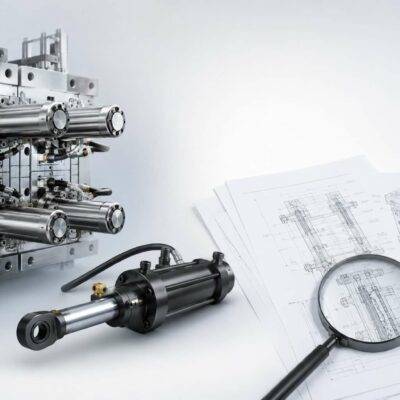
Numerous molds use hydraulic cylinders to actuate slides, pull cores, move locking mechanisms, or operate special functions.
In many cases, these components must fit into extremely compact spaces while maintaining reliability over millions of cycles.
For mold manufacturers, component reliability is critical.
Unexpected failures can stop production, delay deliveries, and increase maintenance costs.
As molds become more complex and production requirements become more demanding, the importance of robust mechanical and hydraulic systems continues to grow.
The best mold makers understand that every component inside a mold contributes to the overall performance of the finished tool.
Lessons for Mold Manufacturers
1. Engineering Creates Value
Machining capacity alone is rarely enough to create a competitive advantage.
The companies that thrive invest heavily in engineering knowledge, simulation tools, and problem-solving capabilities.
Customers are increasingly looking for partners who can improve manufacturability, reduce cycle times, and optimize product performance.
2. Continuous Improvement Never Stops
The tooling industry evolves constantly.
New materials, new manufacturing technologies, and new customer expectations require companies to adapt continuously.
The most successful mold manufacturers treat learning as an ongoing process rather than a one-time investment.
3. Quality Builds Reputation
Reputation is one of the most valuable assets in mold making.
A company may spend years earning the trust of customers and only a short time losing it.
Consistent quality remains one of the strongest foundations for long-term success.
4. Strong Industrial Ecosystems Matter
One of Portugal’s greatest strengths is the concentration of specialized suppliers, engineers, machine shops, technology providers, and tooling experts.
Successful mold makers rarely operate in isolation.
They thrive as part of a larger industrial network.
Looking Ahead
The future of mold manufacturing will be shaped by automation, digital engineering, advanced materials, simulation technologies, and increasing demands for productivity.
Customers will continue to seek shorter lead times, higher precision, and lower production costs.
Meeting these expectations will require not only advanced machinery but also highly skilled engineers and a culture of continuous innovation.
Companies such as Iberomoldes demonstrate how technical expertise, long-term thinking, and commitment to quality can transform a regional manufacturer into an internationally respected industrial organization.
For mold makers around the world, the story is not simply about one company.
It is a reminder that excellence is built over decades, through thousands of projects, continuous learning, and a relentless focus on solving customer problems.
And that may be the most valuable lesson of all.