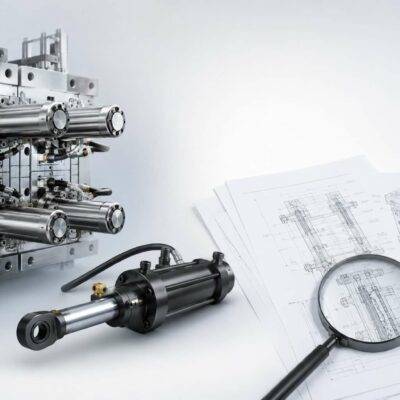

In engineering, customers often expect technical support to provide answers.
Sometimes those answers are straightforward.
Sometimes they confirm that a design is correct.
And sometimes the most valuable answer an engineer can give is simply:
“No.”
Recently, Vega Technical Dep. was asked to review the sizing of a self-locking hydraulic cylinder for a challenging injection molding application.
At first glance, the calculations appeared correct.
The proposed cylinder seemed capable of performing the task.
Many suppliers would probably have approved the design and moved on.
Instead, Vega chose a different approach.
The Request
A mold maker, identified here only as C.H., was developing a mold for a component produced in:
PC + 30% Glass Fiber
The application involved a large side-action mechanism actuated by a self-locking hydraulic cylinder.
The customer supplied the force calculations, the 3D model, and the operating conditions, requesting a simple confirmation:
“Is the selected CG084 cylinder suitable for this application?”
The question appeared straightforward.
The answer was not.
The Numbers Looked Correct
The engineering calculations provided by the customer were detailed and well prepared.
The analysis included:
- Projected frontal area of approximately 230 cm²
- Estimated cavity pressure between 650 and 800 bar
- Side-core draft angle between 20° and 25.84°
- Side surface area of approximately 180 cm²
Using these values, the estimated forces acting on the slide were calculated and converted into the corresponding loads acting on the hydraulic cylinder.
From a purely mathematical perspective, the calculations were correct.
The proposed cylinder appeared capable of handling the expected loads.
At this point many technical reviews would have ended.
But engineering is not only about calculations.
It is also about risk.
Looking Beyond the Formula
The material used in this project was not a standard polypropylene.
It was a highly reinforced engineering polymer:
Polycarbonate with 30% glass fiber.
Materials of this type often require significantly higher injection pressures than standard plastics.
While the customer’s calculations were based on realistic assumptions, Vega Technical Dep. considered a critical factor:
What happens if the actual cavity pressure reaches or exceeds 800 bar?
This question completely changed the evaluation.
The Hidden Risk
After reviewing the application, Vega engineers concluded that the calculated thrust force generated by the cavity pressure could approach the maximum static locking capacity of the proposed self-locking cylinder.
Technically, the cylinder might still operate.
But operating close to the maximum static locking force is rarely considered good engineering practice.
Why?
Because real production environments are never perfectly predictable.
Injection pressure can vary.
Material batches can vary.
Temperature can vary.
Machine settings can change.
And safety margins can disappear surprisingly quickly.
Designing a system that works only under ideal conditions creates unnecessary risk.
Engineering Is About Reliability
One of the most common misconceptions in mechanical design is believing that a component is acceptable simply because it survives the calculated load.
Experienced engineers know that reliability requires more than survival.
A successful design must tolerate:
- Process variations
- Pressure fluctuations
- Wear over time
- Unexpected operating conditions
- Human error
This is why safety margins exist.
And this is why engineering decisions should never be based solely on minimum acceptable values.
The Decision
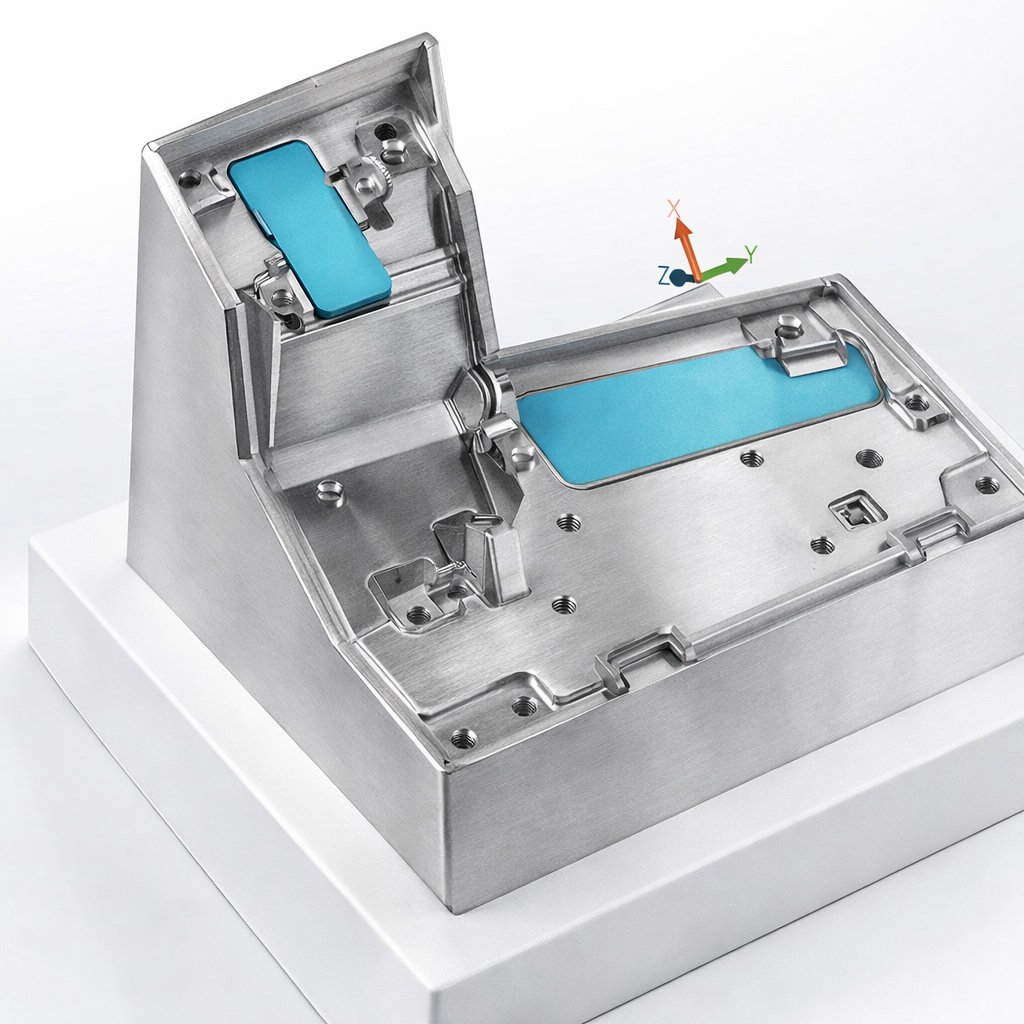
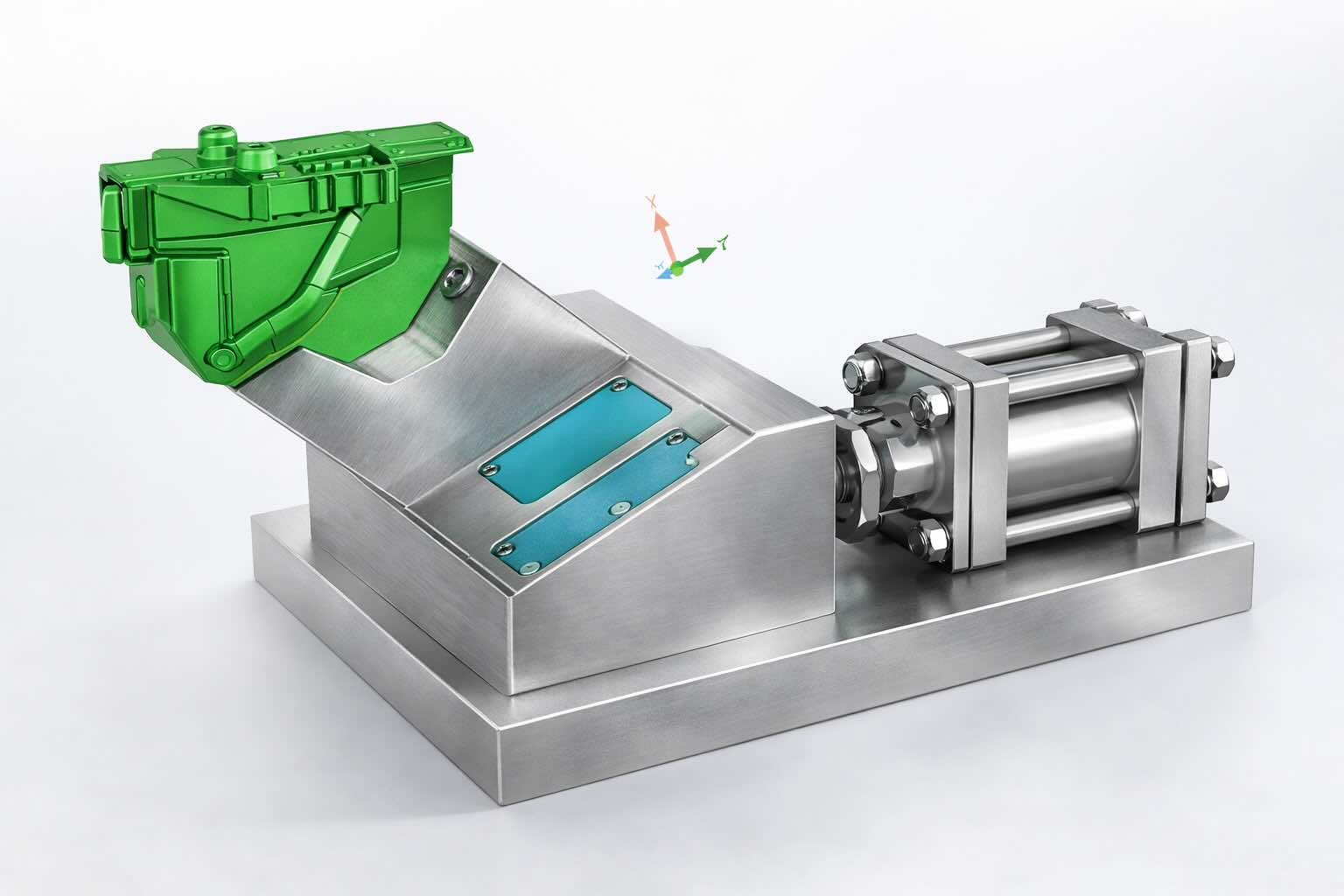
After reviewing the calculations and the mold design, Vega Technical Dep. made a decision that some suppliers might hesitate to make.
The answer was:
No.
The proposed cylinder could not be approved.
Not because the calculations were wrong.
Not because the cylinder was defective.
Not because the application was impossible.
But because the design left insufficient margin between the expected operating load and the cylinder’s maximum static locking capability.
The risk was simply too high.
A Different Solution
Rather than approving a borderline design, Vega recommended that the customer evaluate a modification of the mold concept.
The proposed direction was the introduction of a dedicated locking system capable of reducing the load carried directly by the hydraulic cylinder.
In this configuration:
- The locking system absorbs the injection forces.
- The hydraulic cylinder performs only the movement.
- Mechanical stresses are reduced.
- Reliability is significantly improved.
This approach is frequently used in demanding molding applications where injection pressures become exceptionally high.
Why Saying “No” Creates Value
At first glance, refusing to approve a design may appear unhelpful.
In reality, it is often the most valuable service an engineering department can provide.
Approving a risky design may create short-term satisfaction.
Preventing a future failure creates long-term trust.
In this case, Vega did not solve a failure.
Vega prevented one.
The customer was able to review the mold design before manufacturing began and evaluate alternative solutions before investing time and money into a potentially unreliable configuration.
Lessons Learned
This project highlights several important engineering principles.
1. Correct calculations do not automatically guarantee a reliable design
A design can be mathematically correct while still carrying excessive risk.
2. Safety margins matter
Operating near a component’s maximum capacity leaves little room for real-world variations.
3. Material selection changes everything
High-performance materials often require much higher injection pressures than standard plastics.
4. Reliability should always take priority over minimum sizing
The objective is not simply to make a system work.
The objective is to make it work consistently.
5. The best failure is the one that never happens
Engineering creates the greatest value when problems are eliminated before production starts.
Conclusion
At Vega, technical support is not limited to validating calculations.
It means understanding the application, evaluating the risks, and protecting the customer’s investment.
Sometimes this means confirming a design.
Sometimes it means proposing a better solution.
And sometimes it means refusing to approve a component that appears acceptable on paper.
Because in engineering, the easiest answer is not always the right one.
And occasionally, the most important engineering decision is simply:
“No.”