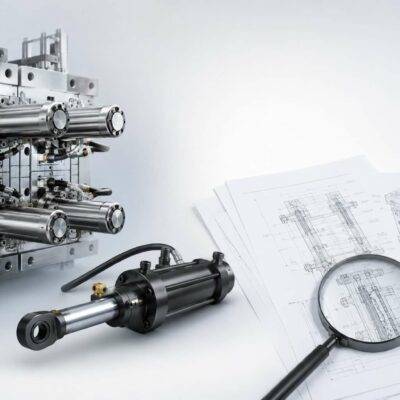
When selecting a hydraulic cylinder for a plastic injection mold, many designers focus mainly on:
- force
- pressure
- stroke
In reality, cylinder dimensions directly affect:
- mold compactness
- structural rigidity
- total mold weight
- cooling channel space
- guide life
- movement speed
- maintenance accessibility
- long-term reliability
Two cylinders with the same force and stroke may have completely different dimensions.
This article compares the dimensional philosophies of:
- Vega
- AHP Merkle
- HPS
to help mold designers and customers understand which solution may fit their application best.
- Main Difference: ISO vs Compact Cylinders
The first major difference is the cylinder architecture itself.
Traditional ISO Cylinders
ISO cylinders:
- use standardized dimensions
- are generally longer
- often use tie-rod construction
- require more installation space
Advantages:
- easy replacement
- international standardization
- high availability
Disadvantages:
- larger footprint
- higher oil volume
- increased weight
- lower mold compactness
The HPS H160Co series is a typical ISO 6020/2 example.
Compact Block Cylinders
Compact cylinders:
- reduce overall dimensions
- increase rigidity
- minimize dead space
- improve mold integration
Advantages:
- shorter body
- lower weight
- better rigidity
- improved mold integration
Disadvantages:
- lower standardization
- more application-specific engineering
Vega and AHP Merkle strongly use this philosophy for mold applications.
- Overall Cylinder Length
Overall length is one of the most important parameters in mold design.
A more compact mold allows:
- smaller mold plates
- improved cooling efficiency
- lower mold weight
- reduced machining costs
Vega
Vega strongly focuses on:
- short body architecture
- integrated oil passages
- reduced external protrusions
- integrated sensors
This allows:
- highly compact installations
- lower moving mass
- faster hydraulic response
Vega is especially effective in:
- compact ejector systems
- side actions
- multi-cavity molds
- high-speed applications
AHP Merkle
AHP often uses:
- longer guide sections
- larger support areas
- more rigid architectures
This may slightly increase:
- overall length
- installation space
However, it improves:
- mechanical stability
- side-load resistance
- movement precision
This makes AHP very suitable for:
- heavy movements
- long strokes
- large side cores
- high-precision systems
HPS
HPS follows two different approaches:
- traditional ISO cylinders
- industrial compact cylinders
ISO series such as H160Co are generally:
- longer
- heavier
- less compact
Compact series like V72 are much closer to mold-cylinder philosophy.
- Stroke-to-Size Ratio
One of the most critical factors is the relationship between:
- usable stroke
- overall cylinder length
Extremely Compact Cylinders
Very short cylinders with long strokes may create:
- increased rod deflection
- higher sensitivity to misalignment
- greater guide wear
For this reason:
- smaller is not always better
Vega
Vega generally aims for the best balance between:
- compactness
- rigidity
- mold integration
Very effective for:
- fast movements
- ejector systems
- compact molds
AHP Merkle
AHP prioritizes:
- geometric stability
- precision
- guide length
This makes the cylinder very stable even under:
- side loads
- heavy masses
- long strokes
HPS
HPS mainly follows:
- standard industrial dimensions
- simple construction logic
- ISO compatibility
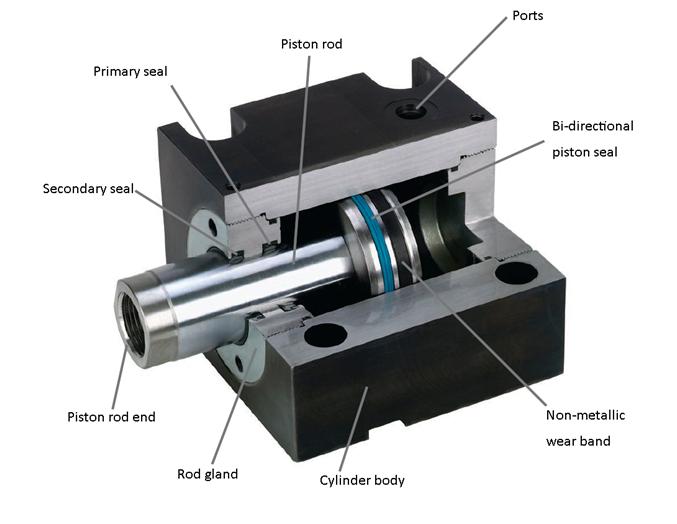
- Rod Guide Dimensions
Guide length directly affects:
- stability
- seal life
- rod durability
- side-load resistance
Short Guides
Advantages:
- more compact cylinder
- lower weight
Disadvantages:
- increased rod stress
- faster wear
Long Guides
Advantages:
- better stability
- improved alignment
- longer service life
Disadvantages:
- larger cylinder
- greater installation space
AHP generally favors stronger and longer guidance systems.
Vega seeks a balance between:
- compactness
- rigidity
- mold dynamics
- Oil Port Dimensions and Positioning
Oil ports strongly influence:
- hose routing
- dead volume
- assembly simplicity
- hydraulic response speed
Vega
Many Vega series use:
- integrated manifold systems
- compact oil routing
- reduced external connections
Major advantages:
- compact molds
- fewer external hoses
- cleaner mold layouts
AHP Merkle
AHP focuses more on:
- flow stability
- pressure control
- hydraulic precision
HPS
HPS generally uses:
- standard BSP connections
- traditional industrial layouts
- universal compatibility
- Cylinder Weight and Mold Dynamics
Cylinder dimensions directly affect:
- inertia
- speed
- mechanical stress
- energy consumption
Compact Cylinders
Advantages:
- lower moving mass
- higher speed
- reduced dynamic stress
ISO Cylinders
Advantages:
- industrial robustness
- standardized architecture
Disadvantages:
- higher weight
- larger footprint
- Which Brand Fits Best?
The correct choice strongly depends on the real application.
Choose Vega When You Need:
- maximum compactness
- mold integration
- high speed
- integrated manifolds
- reduced moving mass
Recommended series:
- V220CC
- V450CM
- V500CZ
Choose AHP Merkle When You Need:
- maximum rigidity
- geometric precision
- strong side-load resistance
- stable movement control
Recommended series:
- BZ
- BZN
- BZR
Choose HPS When You Need:
- ISO standardization
- easy replacement
- global availability
- simplified maintenance
Recommended series:
- H160Co
- V72
Final Considerations
Cylinder dimensions influence much more than installation space.
A more compact cylinder may:
- improve mold dynamics
- reduce mold weight
- improve cooling efficiency
- increase movement speed
A longer and more guided cylinder may:
- improve precision
- increase stability
- better resist side loads
The best solution always comes from balancing:
- compactness
- rigidity
- stroke
- stability
- weight
- mold integration
The ideal cylinder is not simply the smallest or the strongest.
It is the one that integrates best with the real geometry and dynamics of the mold.