
Why Hydraulic Cylinder Tie Rods Fail: Torque, Preload and Assembly Mistakes Explained

Introduction

Hydraulic cylinders are among the most reliable mechanical actuators used in plastic injection molds, die casting molds and industrial automation systems. When properly designed, correctly installed and operated within their rated limits, they can withstand millions of operating cycles with minimal maintenance.

Despite this remarkable reliability, service departments occasionally receive cylinders that have suffered severe mechanical damage. Surprisingly, these failures are often blamed on poor manufacturing quality, defective materials or inadequate design.

In reality, the root cause is usually very different.

One of the most misunderstood failure mechanisms involves tie rod hydraulic cylinders. Unlike block cylinders, tie rod cylinders are assemblies composed of several structural components held together by high-strength threaded rods. Their integrity depends not only on the quality of the materials but also on the correct tightening procedure adopted during assembly.

A tie rod cylinder does not rely on the threaded rods simply to “hold the parts together.” Instead, the rods generate a precisely controlled preload, creating a clamping force that transforms the entire cylinder into a single structural unit capable of safely containing hydraulic pressure.

If this preload is altered, reduced or incorrectly restored after maintenance, the consequences may include:

  • progressive loosening of the tie rods;
  • fatigue cracking;
  • damaged threads;
  • oil leakage;
  • piston misalignment;
  • premature seal wear;
  • catastrophic structural failure.

Many of these failures are mistakenly attributed to defective components, while the real cause is an incorrect assembly procedure.

This article analyzes a real technical support case involving a Vega V215 CR tie rod hydraulic cylinder. Starting from this practical example, we will explore the engineering principles governing preload, tightening torque, bolt mechanics and structural integrity, providing practical recommendations for designers, maintenance technicians and mold manufacturers.


A Real Service Case

The hydraulic cylinder examined in this article had been operating successfully in an industrial application before suddenly developing an unusual mechanical problem.

The customer reported that all four tie rods had loosened, making it impossible to maintain the structural integrity of the cylinder. Further inspection revealed damage to the threaded holes in the piston, while the customer requested replacement tie rods and intended to repair the damaged threads.

During the technical investigation another important detail emerged.

The rear head of the cylinder had previously been rotated by 180 degrees during maintenance.

Although rotating a cylinder head is normally possible on many tie rod cylinders, it requires complete disassembly followed by correct reassembly using the specified tightening procedure.

The investigation concluded that the cylinder had almost certainly been reassembled without restoring the correct tightening torque, allowing the preload to decrease until the tie rods gradually loosened during operation. Vega’s technical department confirmed that the cylinders leave the factory tightened according to the specified torque, indicating that the issue most likely originated during subsequent maintenance.

This case perfectly illustrates an important engineering principle:

Hydraulic cylinders rarely fail because of manufacturing defects. They usually fail because the operating or assembly conditions exceed the assumptions made during the original design.

Understanding why this happens requires first understanding how a tie rod cylinder actually works.


Anatomy of a Tie Rod Hydraulic Cylinder

Unlike compact block cylinders, tie rod cylinders are assembled from several individual components.

A typical cylinder consists of:

  • cylinder tube;
  • front head;
  • rear cap;
  • piston;
  • piston rod;
  • seals;
  • wear rings;
  • four threaded tie rods;
  • retaining nuts.

The Vega Technical Manual describes the V215 CR series as a tie rod cylinder designed according to ISO 6020/1, providing excellent interchangeability, multiple mounting options and a highly versatile design for industrial applications.

At first glance, the tie rods appear to perform only a simple fastening function.

In reality, they are among the most critical structural components of the entire cylinder.

Without them, hydraulic pressure would immediately separate the front head from the cylinder tube.

The tie rods permanently compress the entire assembly, generating a controlled clamping force capable of resisting hydraulic pressure throughout the cylinder’s life.


Hydraulic Pressure Tries to Separate the Cylinder

Whenever hydraulic pressure enters the cylinder, the piston generates a pushing force.

At exactly the same time, the hydraulic pressure also acts on the cylinder heads.

The result is a separating force that constantly attempts to pull the cylinder apart.

This force is calculated using the well-known hydraulic equation.

Equation 1

F = P × A

Where:

  • F = hydraulic force (N)
  • P = hydraulic pressure (Pa)
  • A = effective piston area (m²)

For medium-sized industrial cylinders operating at 160–210 bar, this separating force can easily reach several tens of kilonewtons.

If the cylinder heads were connected only by ordinary screws without preload, every pressure cycle would alternately load and unload the fasteners.

Fatigue failure would occur very quickly.

The solution adopted in mechanical engineering is preload.


What Is Bolt Preload?

Preload is the tensile force intentionally generated inside a bolt or tie rod during tightening.

Contrary to popular belief, tightening does not simply “lock” two components together.

Instead, tightening stretches the tie rod slightly.

Although the elongation is extremely small—typically only a few hundredths of a millimeter—it is enough to produce a very large tensile force inside the rod.

Because steel behaves elastically within its design limits, the stretched tie rod continuously attempts to return to its original length.

This elastic recovery compresses the cylinder heads against the tube.

The resulting clamping force is what actually keeps the cylinder assembled.

Without preload, there would be no reliable connection between the components.


The Tie Rod Works Like a Spring

An excellent way to visualize preload is to imagine the tie rod as a very stiff spring.

During tightening:

  • the nut rotates;
  • the threaded rod elongates elastically;
  • the cylinder heads move slightly toward each other;
  • compression develops inside the cylinder structure.

Once tightening is completed, the tie rod continuously pulls the heads together.

Hydraulic pressure must first overcome this preload before any separation can occur.

As long as the preload remains higher than the separating hydraulic force, the joint remains completely stable.

This principle is fundamental in virtually every high-strength bolted joint used in mechanical engineering.


Why Elastic Stretch Is Essential

Many technicians instinctively believe that a bolt should remain perfectly rigid.

In reality, elasticity is exactly what makes the joint reliable.

If the tie rod were perfectly rigid, any small deformation caused by pressure, thermal expansion or vibration would immediately reduce the clamping force.

Instead, the elastic elongation acts as an energy reserve.

Small structural movements are absorbed without significant preload loss.

This explains why high-strength steel bolts are specifically designed to operate within their elastic range.

The bolt is intentionally stretched—but never beyond its yield point.


Tightening Torque Does Not Hold the Cylinder Together

One of the most widespread misconceptions is that tightening torque itself keeps the cylinder assembled.

This is incorrect.

Torque is only a method used to generate preload.

Once tightening is completed, the torque no longer performs any mechanical function.

The structural integrity of the cylinder depends exclusively on the tensile force stored inside the tie rods.

For this reason, two cylinders tightened with the same torque may have different preload values if:

  • lubrication differs;
  • thread condition changes;
  • dirt is present;
  • damaged threads increase friction;
  • different coatings are used.

Torque is therefore only an indirect method for obtaining the required clamping force.


Torque and Preload

The relationship between tightening torque and preload can be approximated by the classical engineering equation:

Equation 2

T = K × F × d

Where:

  • T = tightening torque (N·m)
  • K = torque coefficient
  • F = preload force (N)
  • d = nominal thread diameter (m)

The torque coefficient depends on numerous factors including:

  • thread lubrication;
  • surface finish;
  • plating;
  • friction coefficient;
  • thread geometry.

This explains why identical tightening torque values do not always generate identical preload.

For critical applications, preload measurement methods are considerably more accurate than torque control alone.


What Happens During Unauthorized Disassembly?

The service case analyzed in this article highlights a situation frequently encountered in industrial maintenance.

A cylinder is disassembled for what appears to be a simple modification—such as rotating the rear head by 180°—and then reassembled manually.

Unfortunately, many maintenance technicians assume that tightening the nuts “firmly” is sufficient.

From an engineering perspective, this assumption is incorrect.

When the original preload is not restored:

  • clamp force decreases;
  • joint stiffness is reduced;
  • micro-movements begin between components;
  • vibration increases;
  • preload gradually drops further;
  • nuts begin to loosen;
  • threads become overloaded;
  • fatigue damage accelerates.

Eventually, visible mechanical damage appears.

By that stage, however, the deterioration process has usually been progressing for thousands—or even millions—of operating cycles.

The visible failure is simply the final stage of a much longer mechanical process.
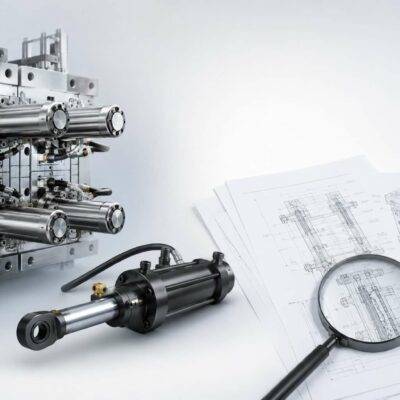
Preload Loss Does Not Occur Instantly

One of the most dangerous misconceptions in hydraulic cylinder maintenance is believing that a tie rod either works correctly or fails immediately.

Mechanical joints rarely behave this way.

Instead, preload is often lost gradually through a combination of microscopic movements, vibration, thermal expansion, surface embedding and repeated pressure cycles.

Initially, the cylinder may appear to operate normally.

Oil leakage is absent.

Rod movement is smooth.

No abnormal noises are detected.

However, every hydraulic cycle produces tiny relative movements between the cylinder tube, the front head and the rear cap.

If the initial preload is insufficient, these microscopic displacements slowly reduce the clamping force.

Eventually the joint begins to “breathe.”

At this stage, every pressure cycle slightly separates and reclamps the components.

Once this phenomenon starts, preload decreases even faster.


Fatigue Begins Long Before Failure

Many engineers associate fatigue with cracked components.

In reality, fatigue starts much earlier.

Whenever a properly preloaded tie rod is subjected to hydraulic pressure, the load variation experienced by the rod remains relatively small because most of the external force is absorbed by the compressed joint.

However, if preload decreases, the situation changes dramatically.

The hydraulic load is no longer absorbed by the clamped structure.

Instead, the tie rods themselves experience much larger stress variations during every operating cycle.

These repeated stress fluctuations gradually initiate microscopic fatigue cracks.

Initially these cracks are invisible.

After thousands or millions of cycles they propagate through the material until final failure occurs.

For this reason fatigue failures often appear “unexpected.”

In reality, the damage has been developing for a very long time.


Why the Threads Usually Fail First

In the service case analyzed, the customer reported damaged threads inside the piston after the tie rods had loosened.

This is not surprising.

Contrary to intuition, the load is not equally distributed among all engaged threads.

The first engaged thread generally carries the highest percentage of the load.

Each subsequent thread carries progressively less.

As preload decreases and the joint begins to move microscopically, these first threads experience increasing stress concentrations.

Eventually:

  • thread flanks deform;
  • localized yielding occurs;
  • wear accelerates;
  • backlash increases;
  • load distribution becomes even worse.

The deterioration therefore becomes self-accelerating.

Once thread damage starts, restoring the original preload becomes almost impossible without replacing or repairing the affected components.


The Effects of Overtightening

Many maintenance technicians believe that “tighter is safer.”

From an engineering perspective, this is incorrect.

Every tie rod is designed to operate within its elastic range.

If excessive torque is applied, the rod may exceed its yield strength.

At this point permanent plastic deformation begins.

Unlike elastic elongation, plastic deformation cannot recover.

The tie rod becomes permanently longer.

Although the nuts may still appear tight, the stored elastic preload has actually decreased.

Ironically, an overtightened tie rod often provides less long-term clamping force than one tightened correctly.

This explains why using an impact wrench without torque control can be more dangerous than tightening slightly below specification.


The Effects of Undertightening

Insufficient tightening creates a different but equally dangerous situation.

When preload is too low:

  • hydraulic pressure partially separates the cylinder heads;
  • vibration increases;
  • cyclic loading rises dramatically;
  • the nuts gradually rotate loose;
  • thread wear accelerates;
  • seal compression becomes inconsistent;
  • oil leakage may eventually occur.

Unlike overtightening, undertightening usually causes progressive rather than immediate damage.

The cylinder may continue operating for weeks or months before symptoms become evident.


Why Tie Rod Cylinders Must Be Tightened Uniformly

A tie rod cylinder is a symmetrical structure.

Ideally, each tie rod should carry approximately the same preload.

If one rod is significantly tighter than the others, the cylinder body no longer deforms uniformly.

Possible consequences include:

  • uneven compression of the seals;
  • distortion of the cylinder tube;
  • localized stress concentrations;
  • uneven load sharing;
  • premature fatigue.

For this reason industrial assembly procedures generally recommend tightening the nuts using a cross-pattern sequence.

This approach progressively equalizes the preload around the cylinder.


The Importance of a Torque Wrench

The real service case strongly suggests that the cylinder was reassembled without restoring the original tightening conditions.

One of the simplest ways to avoid this type of failure is the use of a calibrated torque wrench.

Unlike manual tightening by feel, a torque wrench provides:

  • repeatability;
  • controlled preload generation;
  • reduced operator variability;
  • improved maintenance quality;
  • greater long-term reliability.

Even though torque is only an indirect indicator of preload, it remains the most practical method for maintenance operations.

For critical applications, hydraulic bolt tensioners or ultrasonic bolt measurement systems may provide even greater accuracy.


Installation Quality Is as Important as Manufacturing Quality

The Vega Technical Manual repeatedly emphasizes that correct installation is essential for cylinder reliability.

Misalignment, inadequate support structures and side forces are identified as some of the most serious threats to hydraulic cylinders because they generate abnormal stresses on rods, seals and wear components.

Although the service case focused on tie rod loosening rather than side loading, the underlying engineering principle is identical.

A perfectly manufactured cylinder cannot compensate for incorrect installation.

Good engineering practice always considers the cylinder as one component within a complete mechanical system.


Maintenance Should Never Alter the Original Assembly Conditions

Whenever maintenance requires cylinder disassembly, every effort should be made to restore the original assembly conditions.

Good practice includes:

  • cleaning all threaded components;
  • inspecting threads for wear or damage;
  • replacing damaged nuts or tie rods;
  • checking sealing surfaces;
  • lubricating threads where specified;
  • tightening in several progressive stages;
  • using the prescribed tightening sequence;
  • verifying final torque.

Skipping any of these steps increases the probability of future failures.


Lessons Learned from the Service Case

This technical support case demonstrates that the visible damage was only the final consequence of a much longer mechanical process.
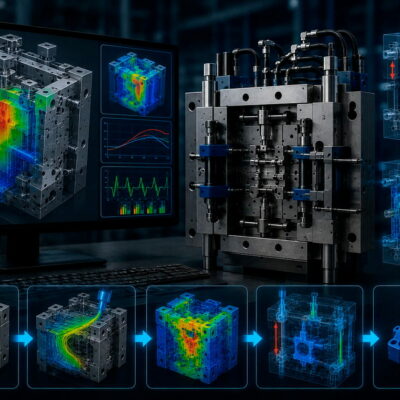
The initial event was probably not the damaged thread itself.

Instead, the failure sequence was most likely:

  1. Cylinder disassembled.
  2. Rear head rotated.
  3. Tie rods reassembled without restoring correct preload.
  4. Progressive preload loss.
  5. Joint micro-movements.
  6. Increased cyclic loading.
  7. Thread wear.
  8. Tie rod loosening.
  9. Visible mechanical damage.

This sequence is remarkably common in industrial maintenance and illustrates why assembly procedures should always be treated as engineering operations rather than routine mechanical work.


Preventing Tie Rod Failures

Preventing tie rod failures is generally far less expensive than repairing a damaged hydraulic cylinder.

The following recommendations significantly improve long-term reliability:

  • Never loosen tie rods unless disassembly is absolutely necessary.
  • Follow the manufacturer’s assembly instructions.
  • Always use a calibrated torque wrench.
  • Tighten the nuts progressively using a cross-pattern sequence.
  • Inspect threads before reassembly.
  • Replace damaged fastening components.
  • Avoid unauthorized modifications.
  • Periodically inspect the cylinder for loose tie rods, oil leakage and unusual vibration.
  • Investigate any sign of preload loss immediately.

These relatively simple precautions dramatically reduce the likelihood of structural failures.


Conclusions

Tie rod hydraulic cylinders are among the most reliable hydraulic actuators available for industrial applications.

Their reliability, however, depends on far more than material quality or manufacturing precision.

The structural integrity of the cylinder is fundamentally based on correct preload.

The real service case discussed in this article demonstrates how a seemingly simple maintenance operation can unintentionally alter that preload and initiate a chain of mechanical events that eventually leads to thread damage, tie rod loosening and structural failure.

Understanding the engineering principles behind preload, tightening torque and fatigue enables designers, maintenance technicians and mold manufacturers to prevent these failures before they occur.

In mechanical engineering, reliability is rarely determined by a single component.

It is achieved through the correct interaction of every component within the system.

The tie rods of a hydraulic cylinder perfectly illustrate this principle.

Although they appear to be simple threaded bars, they are in fact precision-engineered structural elements whose performance depends as much on correct assembly as on their mechanical properties.

A properly designed cylinder can provide millions of reliable operating cycles.

A poorly assembled one may fail after only a fraction of its expected service life.

The difference often comes down to something as simple—and as critical—as restoring the correct preload.

Category: Support

    * required fields